Power That Works as Hard as Your Garage Does
A garage power station can make your fall projects smoother, quieter, and a lot less stressful. When the weather cools, many of us rush to winterize vehicles, button up outdoor builds, and squeeze in those last big jobs before the cold and ice move in. That is when power problems in the garage show up fast.
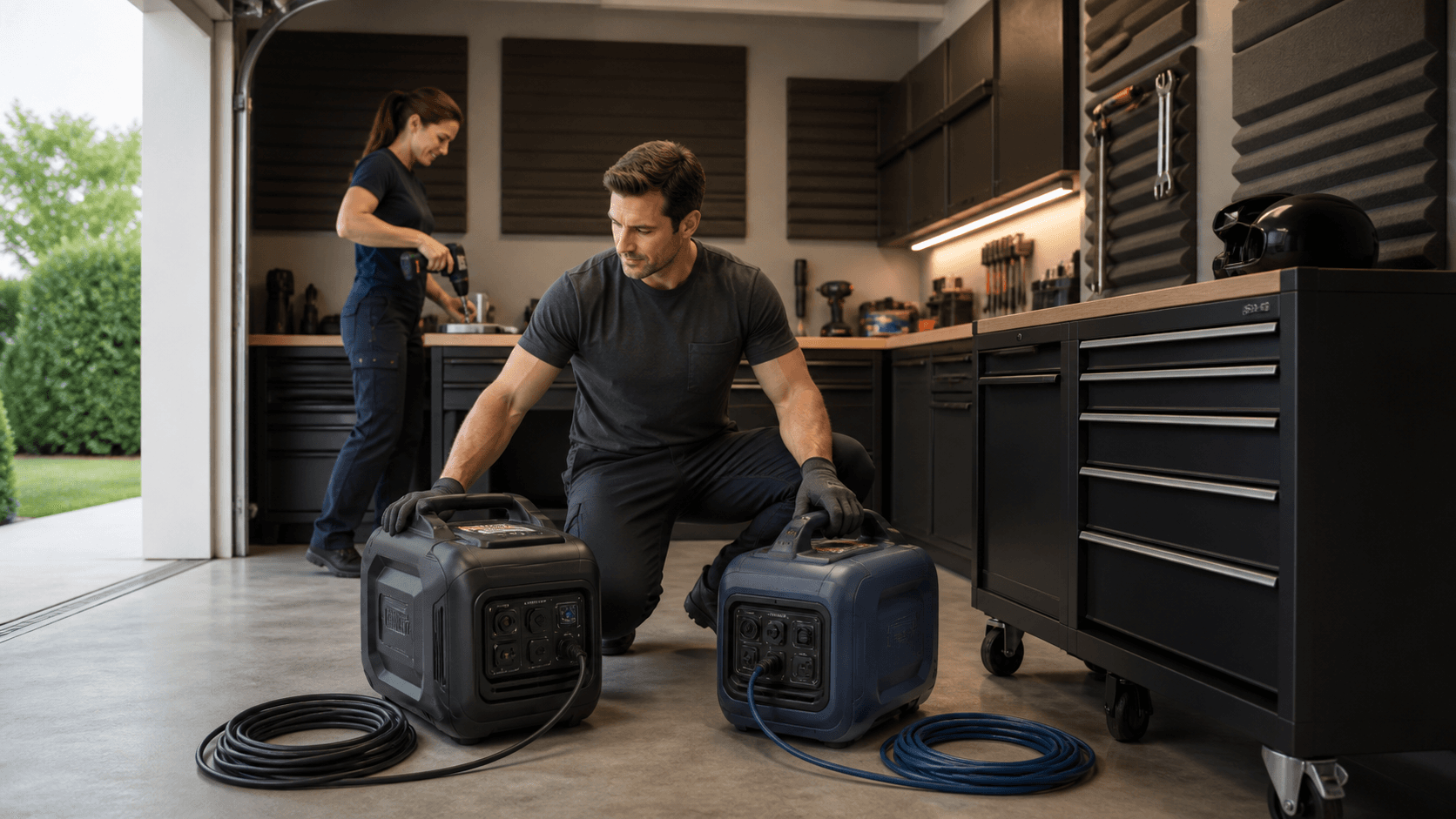
Traditional gas generators can help in a pinch, but they are not always the best fit for everyday garage work. They are loud, they smell like fumes, and they are built more for open job sites than attached garages or tight workshops. A modern garage power station often fits how people actually work: quick jobs, mixed tools, short outages, and long weekends in the shop.
At Garage Gear Direct, we focus on gear that turns any garage into a hard-working space, from storage to tools to power. Here, we are going to break down where old-school generators fall short, where a garage power station pulls ahead, and how to pick the right setup before the real storms and snow show up.
Where Traditional Generators Fall Short in the Garage
Gas generators do one thing well: make a lot of power for big loads. But inside or near a garage, they come with headaches.
Noise and fumes are the big ones. Generators are designed to run outdoors, away from people. In an attached garage, that is a problem because:
- Exhaust carries carbon monoxide, which is dangerous in enclosed or semi-enclosed spaces
- You often have to leave doors and windows wide open, which lets in cold, rain, or leaves
- The constant engine noise wears you down when you are trying to focus on careful work
Power quality can be another issue. Many common generators put out what is often called dirty power. That can lead to:
- Flickering lights or dimming when tools kick on
- Strain on battery chargers for cordless tools
- Trouble for diagnostic laptops, smart welders, or other electronics that like stable voltage
Then there is the upkeep. To keep a gas generator ready, you need to:
- Store fuel and treat it so it does not go bad in the tank
- Change oil and keep an eye on spark plugs and filters
- Deal with sticky pull-starts, chokes, and carbs that always seem to act up during the first big fall storm
On top of that, you have to roll the generator out, snake extension cords through a door or window, and then put everything away once the power comes back or the project is done. In a full garage, that setup can steal a big chunk of your working time.
When a Garage Power Station Is the Better Tool
A garage power station is built around batteries and an inverter, so it gives you AC power without an engine. For a lot of real-world garage work, that makes more sense than a gas generator.
For everyday projects, it shines. You can:
- Run LED work lights and task lights in dark corners
- Keep chargers, detailers, polishers, and a shop vac going
- Power smaller tools for quick cuts, sanding, or trim work
You just plug in and get to work, no warm-up time, no fumes.
When shoulder-season storms roll in, a garage power station can keep the basics running quietly. Many people use them to:
- Keep a freezer or fridge going through short outages
- Hold up Wi-Fi routers, phones, and a few outlets in the garage
- Run a small heater safely in a well-planned setup, within the limits of the unit
Because there is no exhaust, the unit can stay inside the garage, ready to go, while you keep the doors mostly closed against cold rain or early snow.
Modern tools are smarter, and they like clean, stable power. Inverter output from a good garage power station is friendly to:
- Scan tools and laptops for vehicle diagnostics
- Welders and plasma cutters with sensitive electronics
- Cordless tool charging systems and smart garage devices
Many units are also easy to move. Some roll on wheels, some tuck against a wall, and many are compact enough to ride in a trunk or truck bed. That means one setup can work in the garage, driveway, backyard, or even a remote job site.
Key Advantages You Only Get From a Garage Power Station
The first thing people usually notice is the quiet. A garage power station hums a little, but there is no engine sound. That makes it much easier to:
- Work early or late without waking the house
- Hear what your tools and engines are doing
- Stay calmer and more focused on careful tasks
Reliability also feels different. Lithium-based systems are simple to own. They sit on a shelf or cart and hold a charge well. When you need power, you just:
- Hit the power button
- Plug in tools or cords
- Get full output right away, no pull-start or choke
Charging is flexible too. Most quality units can recharge by:
- A standard wall outlet or garage circuit
- A higher-output 240V circuit, if the model supports it
- Vehicle power while you drive
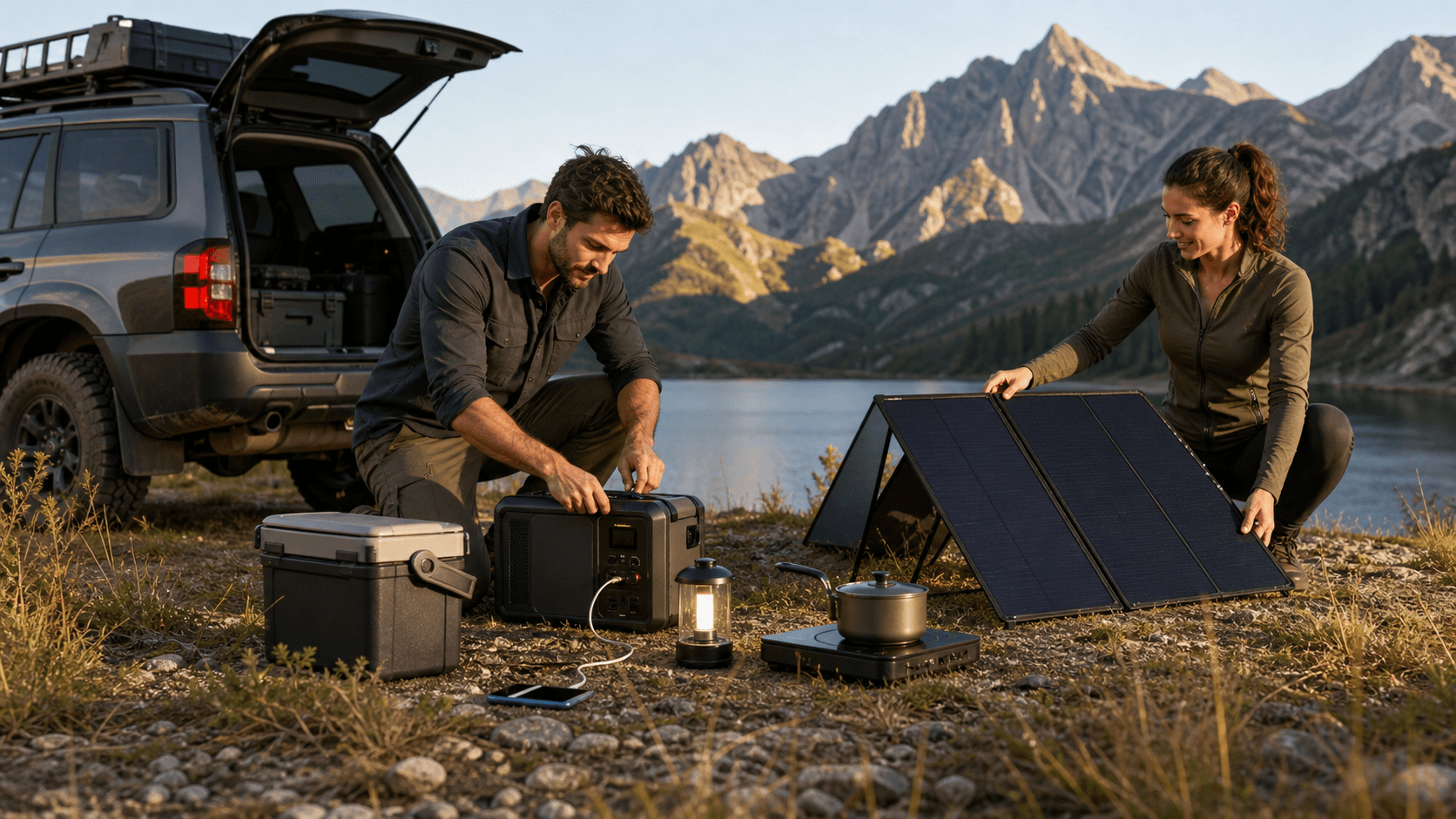
- Portable solar panels for off-grid or emergency setups
That last option is a big deal if you want a garage that can keep working when the grid is down for longer stretches.
A cleaner, safer workspace is another perk. With a garage power station, you have:
- No gas cans sitting by your tools
- No spill risk on concrete or near sparks
- Built-in protections like overload shutoff and temperature checks
Many systems also offer app-based monitoring so you can see load, time remaining, and charge level at a glance.
Choosing the Right Garage Power Station for Your Setup
Picking the right size starts with how you actually use your garage.
For power capacity, a simple way to think about it is:
- Weekend DIYer: lights, chargers, light-duty tools, maybe a fridge for short outages
- Serious wrench-turner: bigger mix of tools, compressors with higher starting loads, more backup needs
- Small shop: multiple circuits, several people working, and a goal to ride through longer power cuts
Look at wattage for peak tool use and watt-hours for how long you need to run things.
Build quality matters more than chasing the absolute biggest number on a box. When we look at units for Garage Gear Direct, we pay close attention to:
- Tough cases that can live near jacks, stands, and rolling tool chests
- Covered outlets and solid handles or wheels
- High surge ratings to start air compressors or heavy power tools
- Reasonable recharge times
- Options to expand with extra batteries if your needs grow
It also helps to think about your full power ecosystem, not just the power station itself. Consider:
- Which outlets in the garage should connect during an outage
- Which extension cords and splitters are safe and heavy-duty enough
- How the unit might pair with an EV charger or 240V tools if the model supports it
Finally, think about the long-term picture. With a generator, upkeep never really ends. You keep buying fuel and oil and tune-up parts. With a garage power station, most of the cost is up front, then you mainly manage how and when you charge it and how you store it.
Pairing Power Solutions for Peak Garage Performance
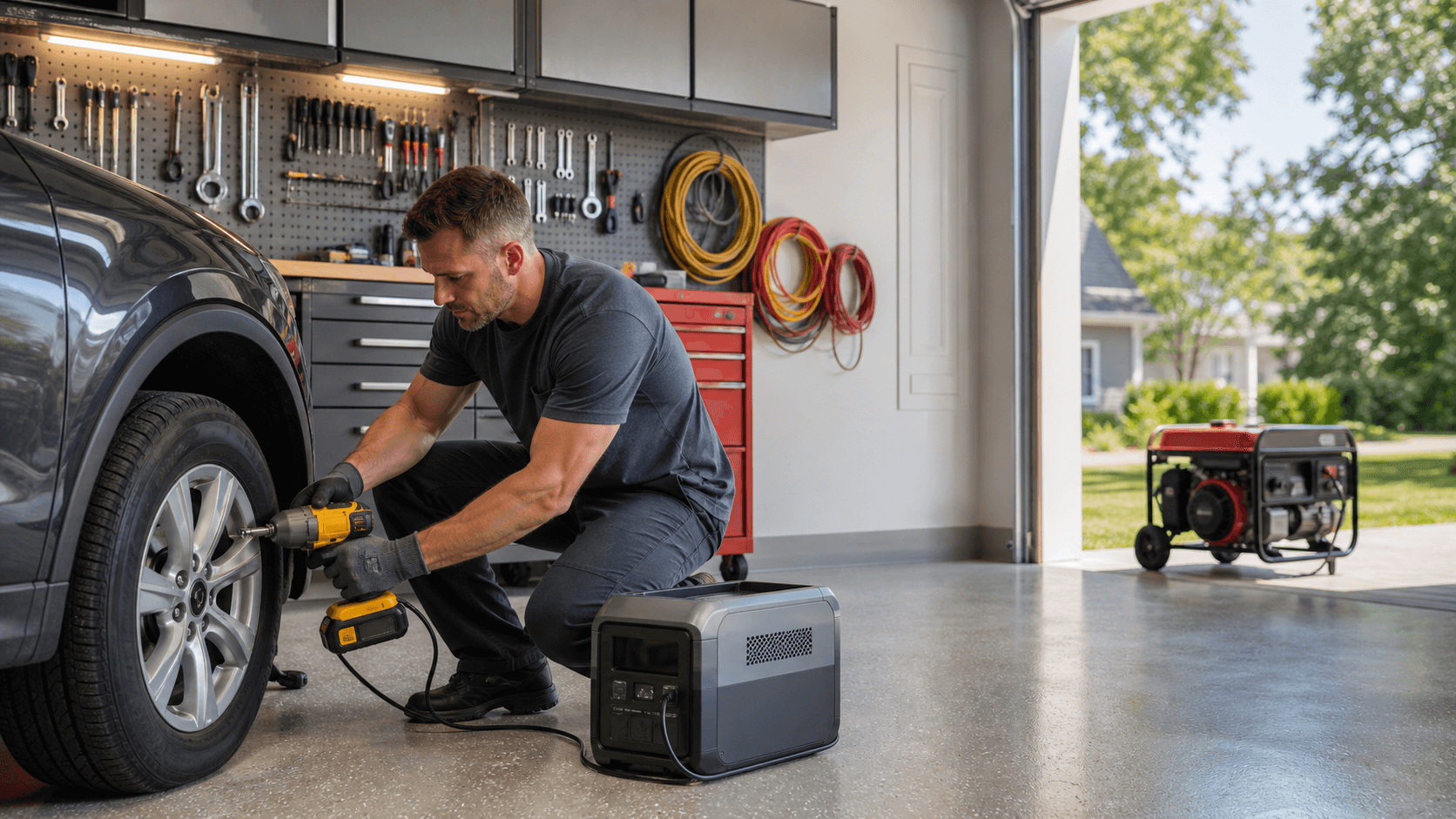
There are still times when a traditional generator makes sense. If you need very long runtimes or you are running multiple large 240V tools at once, a generator can be the heavy lifter. In those cases, a smart setup is to:
- Use the generator for the biggest loads and long stretches
- Keep the garage power station for quiet work, nights, or low-load times
- Recharge the power station from the generator when the grid is out, then shut the engine down and work from battery
For off-grid and mobile projects, a garage power station often wins outright. It is easier to bring to a remote property with no permanent power
- Track days or race pits where quiet, clean power is welcome
- Campsites or field repairs when you do not want to haul a bulky generator
As seasons change, many people end up with a simple plan: the garage power station handles day-to-day work and short outages, while the generator stays as a backup for long events. Both need to be stored and maintained correctly, but a little planning now can keep your garage working smoothly through cold, wind, and whatever the next storm brings.
Get Started With Your Project Today
Equip your space with reliable backup power so your tools, chargers, and equipment are always ready when you are. Explore our garage power station options to find the setup that fits your needs and budget. If you have questions or need a customized recommendation, contact us and we will help you build the right solution with Garage Gear Direct.