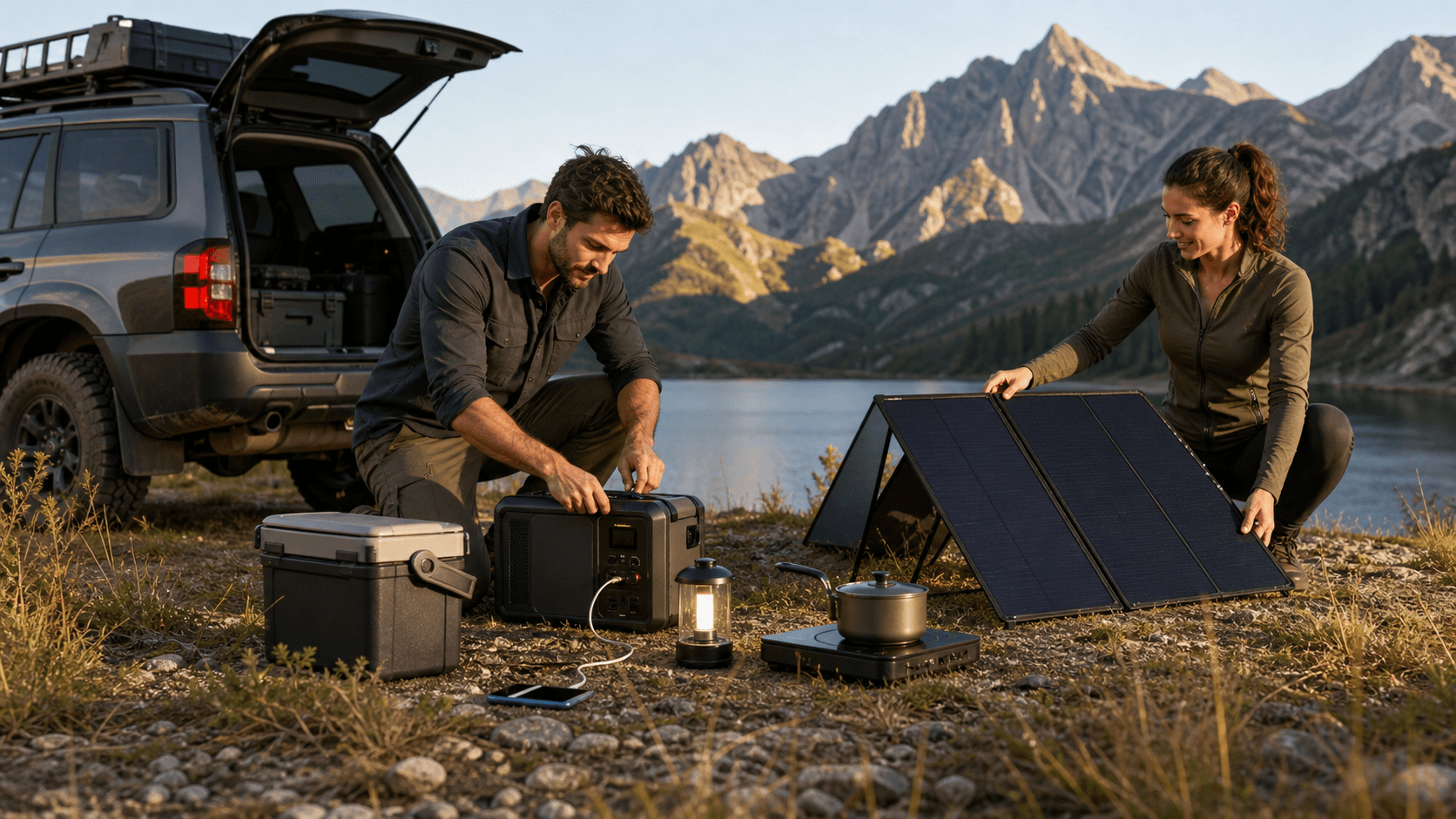
Fall camping gets a lot better when your favorite gear actually works all weekend. A portable solar generator can keep your lights on, your fridge cold, and your devices charged without that loud gas generator wrecking the quiet. To make that happen, you need to size your battery and solar panels the right way, not just guess and hope.
Here we will walk through simple math you can do at your kitchen table or in the garage. We will cover watt-hours, solar input, run time, and real examples so you can pick a portable solar generator that matches how you camp, not just what looks cool in a photo.
Power Your Fall Camping Trips with the Right Solar Setup
Cool September and October air is perfect for hiking, sleeping, and your battery. Batteries usually perform better in cooler, mild temperatures than in summer heat. The catch is that fall days are shorter, so you have less sunlight to refill what you use at night. That is why smart sizing matters even more for shoulder-season trips.
A quiet portable solar generator lets you:
- Run LED camp lights and string lights
- Keep phones, cameras, and GPS units charged
- Power a 12V fridge instead of messing with ice
- Support CPAP machines and other sensitive gear
When we match battery size and solar panel size to your real power needs, you get a smooth trip instead of hitting low battery on night two.
Core Power Terms Every Camper Must Know
Here are the simple terms we lean on in our own garages and campsites:
- Watts (W): Power at one moment, like the "strength" of a device. A 10 W LED lantern uses less power than a 60 W laptop charger.
- Watt-hours (Wh): Energy over time. If that 10 W lantern runs for 5 hours, that is 50 Wh. This is the big number on portable solar generator batteries.
- Volts (V) and amps (A): Volts are "pressure," amps are "flow." V x A = W. A 12V fridge pulling 4A uses about 48 W.
Battery capacity can be shown as watt-hours or amp-hours. If a battery is 12V and 50Ah, that is about 600 Wh. Most camping gear is easier to think about in watt-hours, so we like that unit.
Your inverter turns battery power into household AC power. Two key specs:
- Continuous watts: What it can output all the time, like 600 W.
- Surge or peak watts: Short bursts at startup, like 1200 W.
For camping, continuous watts usually matter more. You just need enough to run your gear at the same time, like a fridge plus a laptop plus some lights.
On the solar side, panel wattage is the rating in bright sun, like 100 W. Real output is lower and depends on:
- Peak sun hours per day
- Angle of the panel to the sun
- Shade from trees or clouds
Most portable solar generators also list a max solar input in watts and a max input voltage. Both matter when you string panels together.
Calculate Your Camping Power Budget Step by Step
We like a simple three-step process:
- List your devices
- Find or estimate their watt draw
- Multiply watts by hours per day to get Wh per day
A phone charger might average 10 W for 2 hours per day, so 20 Wh. A 12V fridge might average 40 W for 10 hours of compressor run time, so 400 Wh.
Example minimalist setup per day:
- Phones: 2 phones x 20 Wh = 40 Wh
- Headlamps and small lights: about 20 Wh
- Small USB fan: 10 W x 4 hours = 40 Wh
- String lights: 5 W x 5 hours = 25 Wh
That totals about 125 Wh per day.
Example power-hungry basecamp per day:
- 12V fridge: about 400 Wh
- Laptop: 60 W x 3 hours = 180 Wh
- Camera batteries: about 40 Wh
- Portable projector: 50 W x 3 hours = 150 Wh
- Lights and phone charging: about 80 Wh
Now you are closer to 850 Wh per day.
Add a 20 to 30 percent safety margin for:
- Inverter losses
- Cloudy weather
- Extra gadgets you toss in last-minute
So if your total is 500 Wh per day, aim for at least 650 Wh of battery for a one-day buffer. For a weekend, you might plan for one full day of use plus backup, then let solar refill as you go.
Match Portable Solar Generators to Real-World Runtimes
Let us look at common portable solar generator sizes and rough run times, assuming about 85 percent usable capacity:
- 300 Wh unit, about 255 Wh usable
- 600 Wh unit, about 510 Wh usable
- 1000 Wh unit, about 850 Wh usable
To estimate run time, use:
Usable battery Wh ÷ device watts = hours of run time
Then trim a bit for losses. Examples:
- 12V fridge at 40 W average:
- 300 Wh battery: 255 ÷ 40 ≈ 6 hours of compressor time
- 600 Wh battery: 510 ÷ 40 ≈ 12 hours
- 1000 Wh battery: 850 ÷ 40 ≈ 21 hours
- CPAP at 40 W on DC, A 600 Wh unit can often cover a full night plus some margin
- LED lights at 10 W total:
- Even a 300 Wh unit can run these many evenings before a recharge
For weekend trips with light loads and a fridge, a 500 to 600 Wh portable solar generator is a sweet spot. For longer off-grid setups or heavier gear like projectors and laptops every night, stepping up to 1000 Wh or adding an expansion battery gives you breathing room.
Size Your Solar Panels for Fall Sun and Faster Recharges
To estimate solar production, start simple:
Panel watts x peak sun hours x 0.6 to 0.7 (for real-world losses)
Early fall often means fewer sun hours and a lower sun angle. That is why panel placement matters:
- Tilt panels toward the sun, not flat on the ground
- Move them morning and afternoon to chase the light
- Avoid shade from trees and roof racks
Good panel-to-battery pairings for fall camping are:
- 100 to 160 W for a 300 to 500 Wh battery
- 200 to 400 W for a 1000 Wh or larger battery
If you use 500 Wh in a day, a 200 W panel in decent sun can usually get you close to a full refill. Planning for at least one full recharge every one to two days keeps your system from slowly draining over a long trip.
Choose the Right System for Your Style of Off-Grid Camping
Your ideal portable solar generator depends on how and where you camp. Car campers and weekend warriors often like smaller, lighter kits that are easy to move around the site and stash in the garage between trips. Overland rigs and off-grid basecamps often lean toward higher capacity units with more outputs and the option to expand later.
Features we find especially helpful for camping:
- Rugged build and solid handles
- Multiple DC outputs for 12V fridge and USB gear
- Quiet operation at night
- Pass-through charging so you can charge while using power
- Compatibility with folding, portable solar panels
We see a lot of campers treat their system as part of a bigger off-grid toolkit. The same portable solar generator that runs a fridge at camp can power tools for DIY projects at home or keep phones, lights, and a router running during short outages.
Turn Your Power Plan Into a Tested Camping Setup
Once you have your watt-hour math and a rough setup chosen, write a simple power playbook for your next trip:
- List each device and daily hours of use
- Note your total daily Wh target
- Decide which items are "must run" versus "nice to have"
- Add backup options for cloudy days, like using more DC power and less AC
Before your first big off-grid weekend, test everything at home or in the garage. Run your usual camping gear for a day or two, watch the battery state of charge, and see how fast your panels refill it when placed in open sun. That small test lets you fine-tune habits and placement so your fall camping trips feel calm, quiet, and powered the way you planned.
Power Your Home With Reliable, Portable Solar Backup
If you are ready to cut down on grid dependence and keep your essential devices running during outages, our portable solar generator is designed to make that transition simple. At Garage Gear Direct, we build solutions that are easy to set up, safe to operate, and ready for real-world use in your home or garage. Have questions about sizing or setup for your space? Reach out through our contact page so we can help you choose the right configuration.