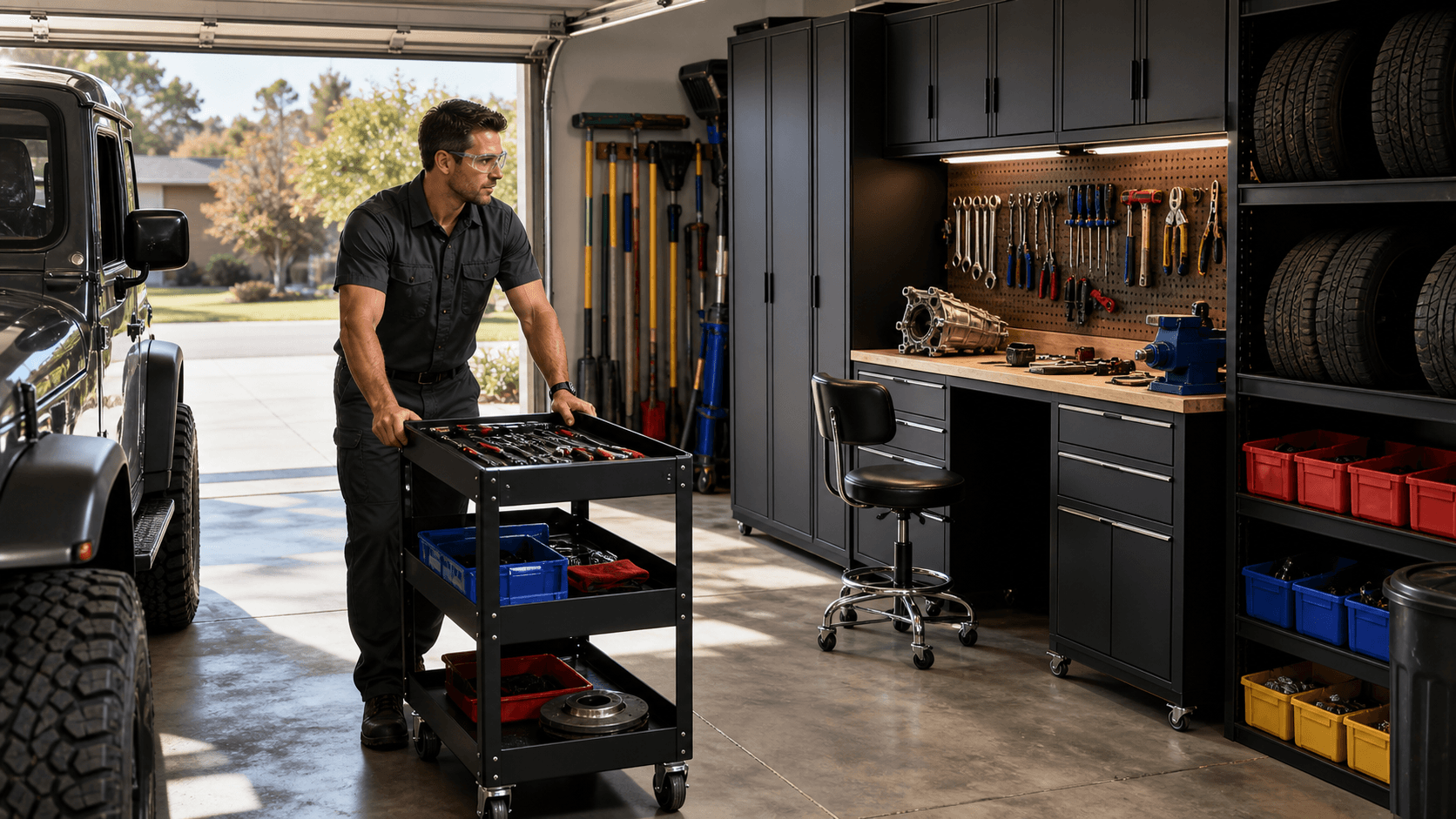
A summer storm knocks out the power right as you are tearing into an engine or ripping sheets of plywood on the saw. Lights shut off, fans stop, the compressor sighs to a halt. Glue starts to skin over, finishes cure wrong, and the garage turns into a dark, sticky sauna. Work stops, tempers rise, and a simple outage ruins a hard-earned project day.
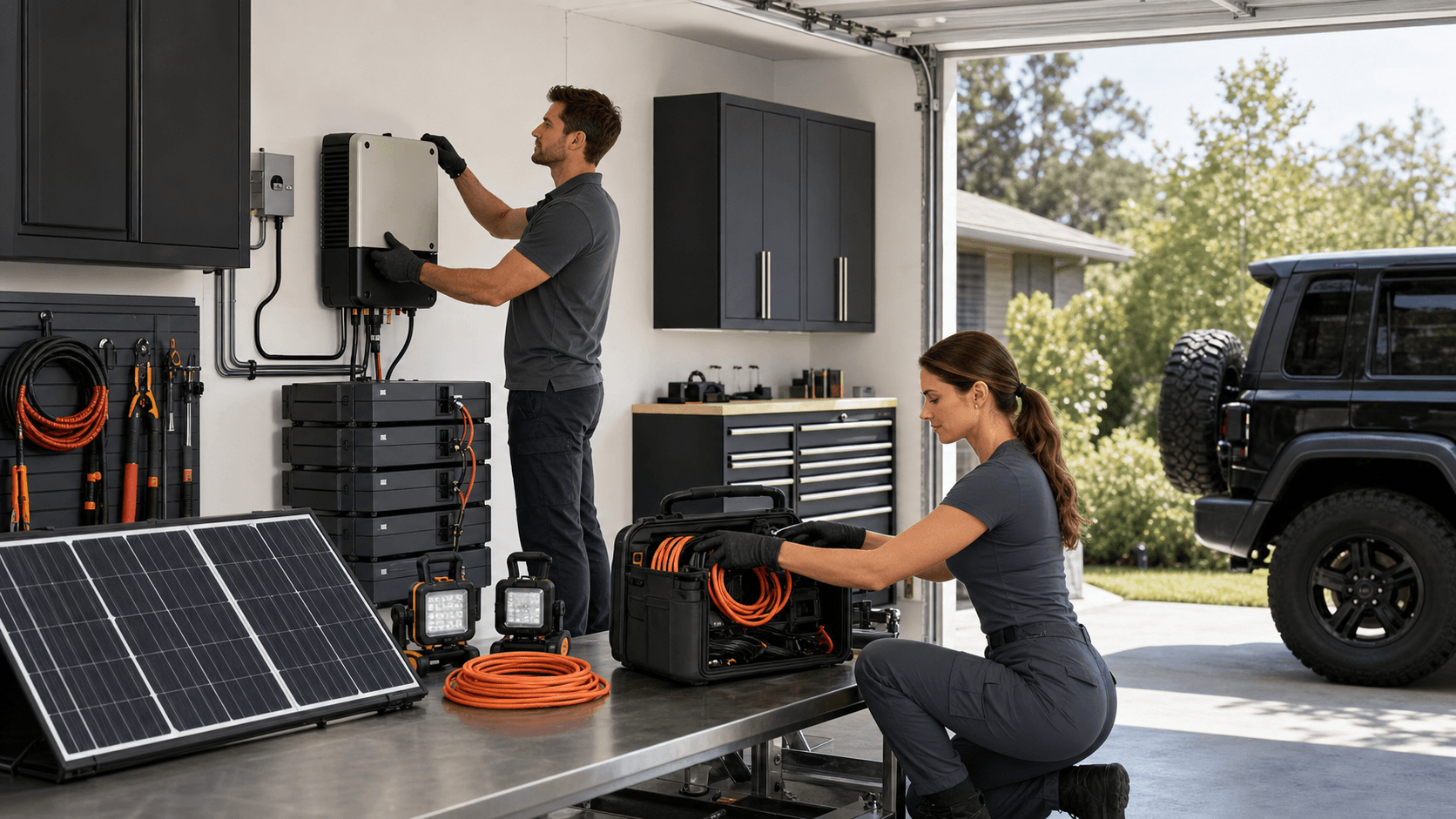
A serious DIY garage does not have to shut down when the grid does. With the right off-grid essentials in place, you can keep tools running, lights on, and batteries topped off through heat waves, blackouts, and surprise storms. At Garage Gear Direct, we think about the garage as a small power hub with layers: power generation, power storage, safe distribution, and comfort gear that protects both you and your tools.
Build a Garage That Stays Powered When the Grid Fails
A self-reliant garage starts with a simple goal: keep the work flowing. That means planning for what happens when the main power drops, not just when everything is perfect. When we build around backup power, we do three things:
- Keep tools and chargers running
- Keep lighting and fans on
- Keep safety gear active and reliable
This is not about hiding in a bunker or prepping for the end of the world. It is about respecting your time, your projects, and your gear. A garage that can power up during an outage protects finishes, saves materials, and keeps you out of sketchy, half-lit situations with sharp tools and heavy parts. Our focus at Garage Gear Direct is on reliable, hard-use gear that is made for real work, not just for sitting on a shelf until the next storm warning.
Power Foundations Every Off-Grid Garage Needs
When we talk off-grid essentials for power, we usually break things into three main pieces:
- Inverter generators
- Solar generators
- Battery power stations
Inverter generators are great when you need quiet, steady power that will not annoy the neighbors. They handle sudden tool loads better than old-school units and work well for saws, compressors, lights, and chargers. Solar generators pair solar panels with a built-in battery and inverter. These are perfect for sunny days, longer projects, and anyone who likes the idea of crossover use at a campsite or remote property.
Battery power stations are like big, smart tool batteries with outlets. They are clean, have no fumes, and are safe to run indoors. For many garages, the sweet setup is a small inverter generator that can feed and recharge one or more battery stations. That way:
- The generator runs outside and handles heavy loads
- The battery units stay inside for quiet, instant power
- You can scale by adding extra batteries as your tool collection grows
Sizing matters here. Think in watts and amp-hours. List your must-run gear: maybe an air compressor, a shop vac, a drill press, a few LED lights, a fan, and chargers for cordless tools. Check each tool's label for running watts, and plan for starting surges from motors. If you plan to weld or run large compressors, step up to higher power ratings so you are not tripping breakers or stalling motors during critical cuts.
In late July, power use often spikes. Fans, dehumidifiers, and sometimes a small AC unit may need to run to keep the space safe and not unbearable. The good news is that longer daylight hours can help solar setups, but storms also hit harder in peak summer. A layered system means you stay ready for both blazing sun and sudden black sky.
Smart Storage and Charging for Always-Ready Tools
Backup power is only helpful if your tools and batteries are ready to go. That starts with smart storage and charging. Think about building a "charge zone" instead of scattering chargers all over your benches.
A simple charge zone might include:
- Wall-mounted shelves with power strips
- A lockable cabinet with built-in outlets
- Hooks and reels for safe cord management
We like to keep cordless tool chargers on the wall or in a shallow cabinet so they stay clear of dust, oils, and moving tires. Backup power stations can dock on a dedicated shelf right under that cabinet, plugged in so they stay topped off. Small labels make a big difference: mark which outlets are tied to off-grid power so anyone helping in the garage knows where to plug in during an outage.
Safety matters with battery storage. Give batteries some breathing room, do not cram them into airtight boxes, and keep them away from direct heat. Use surge protection for sensitive chargers and electronics so sudden power shifts do not fry your gear. When everything has a home and stays on charge, your off-grid setup becomes part of daily life, not a dusty pile of "just in case" equipment.
Lighting, Ventilation, and Safety When the Power Drops
Working in a dark garage with no airflow and no alarms is asking for trouble. So we always include lighting, ventilation, and safety gear on our list of off-grid essentials.
For lighting, think in layers:
- Overhead LED shop lights on a battery backup or off-grid circuit
- Portable work lights you can move right to the project
- Motion-sensor lanterns that turn on automatically when the main lights go out
Ventilation is huge in summer storms, especially if you are spraying finishes, using solvents, or running fuel tools. Battery-backed fans or fans on a generator circuit keep fumes from building up when the big garage door is closed against wind and rain. Avoid improvised fixes like propping open doors in unsafe ways, and do not run fuel engines in the garage itself.
On the safety side, plan for:
- Battery-operated CO and smoke detectors
- Proper exhaust routing for any generator
- Fire extinguishers rated for electrical and fuel fires
- A first-aid kit tailored to cuts, burns, and eye protection issues
It is also smart to create a simple "safe shutdown and switch-over" routine. When power drops, cut nonessential loads, then power up your backup source. Plug in only critical tools and lights first. Confirm your ventilation before you start any engine-driven unit. Practice this plan when the weather is calm so a real outage feels like a normal drill, not a panic.
Off-Grid Gear That Crosses From Garage to Adventure
One of our favorite parts of off-grid planning is how well it lines up with outdoor fun. The same gear that keeps your garage moving can power a weekend adventure.
Portable power stations, compact solar panels, and rugged storage boxes can all move from the wall to the truck bed in minutes. In late July, that can mean:
- Running a fridge or cooler for backyard cookouts
- Powering lights at a campsite
- Inflating kayaks, paddle boards, or bike tires
- Running small tools for remote property work
A modular setup makes this easy. Keep cords, adapters, and mounting hardware in color-coded bins or drawers. Dock your portable units in the garage so they stay charged and organized. When it is time to leave, you just grab the marked bin, the power station, and the folded solar panel, then go.
This is where the long-term value shows up. Your investment in off-grid gear protects your projects during storms and expands what you can do outdoors without depending on campground hookups or fragile local power. At Garage Gear Direct, we see the garage as both workshop and launch pad for adventure, and we love gear that works hard in both places.
Turn Your Garage Into a Self-Reliant Power Hub
A serious DIY garage with off-grid essentials is built in layers. Start with reliable backup power, then add smart storage and charging, dial in lighting and ventilation, and finish with portable gear that can leave the garage when you do. It is a simple roadmap that pays off every time the sky turns dark or the temperature climbs.
If you want a clear next step, walk into your garage and ask: what fails first when the power goes out? Is it lighting, tool use, ventilation, or keeping food and drinks cold? Use that list to rank your upgrades and build your self-reliant setup piece by piece. At Garage Gear Direct, we are all about helping serious DIYers, auto enthusiasts, and pros build garages that keep working, no matter what the grid decides to do.
Power Your Off-Grid Setup With Confidence Today
If you are ready to turn your off-grid plans into reality, Garage Gear Direct is here to help you choose the right off-grid essentials for your space. We carefully select reliable gear so you can keep critical tools, appliances, and devices running when the grid goes down. Have questions about sizing, compatibility, or setup details? Reach out to our team anytime through our contact page for personalized guidance.