Power Up Your Garage for Welding, Air, and EVs
A garage that actually keeps up with you is not a fantasy. You can run a welder, kick on the air compressor, keep the lights bright, and charge an EV without tripping breakers or killing the mood right in the middle of a project. The secret is not one magic box; it is a planned garage power station that matches how you really work.
When we say garage power station, we mean a full setup built around your tools and vehicles, not leftovers from the house. It includes the subpanel, outlets, wiring, and backup power that all work together. With some smart planning, you can future-proof your garage for cold weather projects, holiday rush jobs, and the tools you have not even bought yet.
Assessing Your Real Power Needs Before You Buy
Before anyone runs wire or mounts an outlet, you need to know what loads you are feeding. A typical serious garage might include:
- MIG or TIG welder
- Plasma cutter
- 60 to 80 gallon air compressor
- Level 1 or Level 2 EV charger
- Electric heater
- Large battery chargers and benchtop tools
Each of these pulls power in a different way, so it helps to speak the same basic electrical language. Volts are the "pressure" (120 or 240 is common in a garage), amps are how much current a tool pulls, and watts are volts times amps.
You will rarely run everything at full blast at the same time. Welders have duty cycles, compressors cycle on and off, and EVs can charge overnight. The trick is to think about your true worst case, like a busy winter weekend where the EV is charging in the corner, the welder is in use for a project, the compressor is starting often for air tools, and the heater is running steady.
Next, look at your existing electrical service and panel. The main things to pay attention to are your main service size (often 100A or 200A), how many breaker spaces are open, and whether you already have or could add a subpanel for the garage. If it looks tight or confusing, that is the point where a licensed electrician should step in and give real guidance.
Designing a Garage Power Station That Actually Works
A dedicated garage power station means your garage is not fighting the kitchen, laundry, and AC for scraps. Instead, you create a layout around how you work and charge.
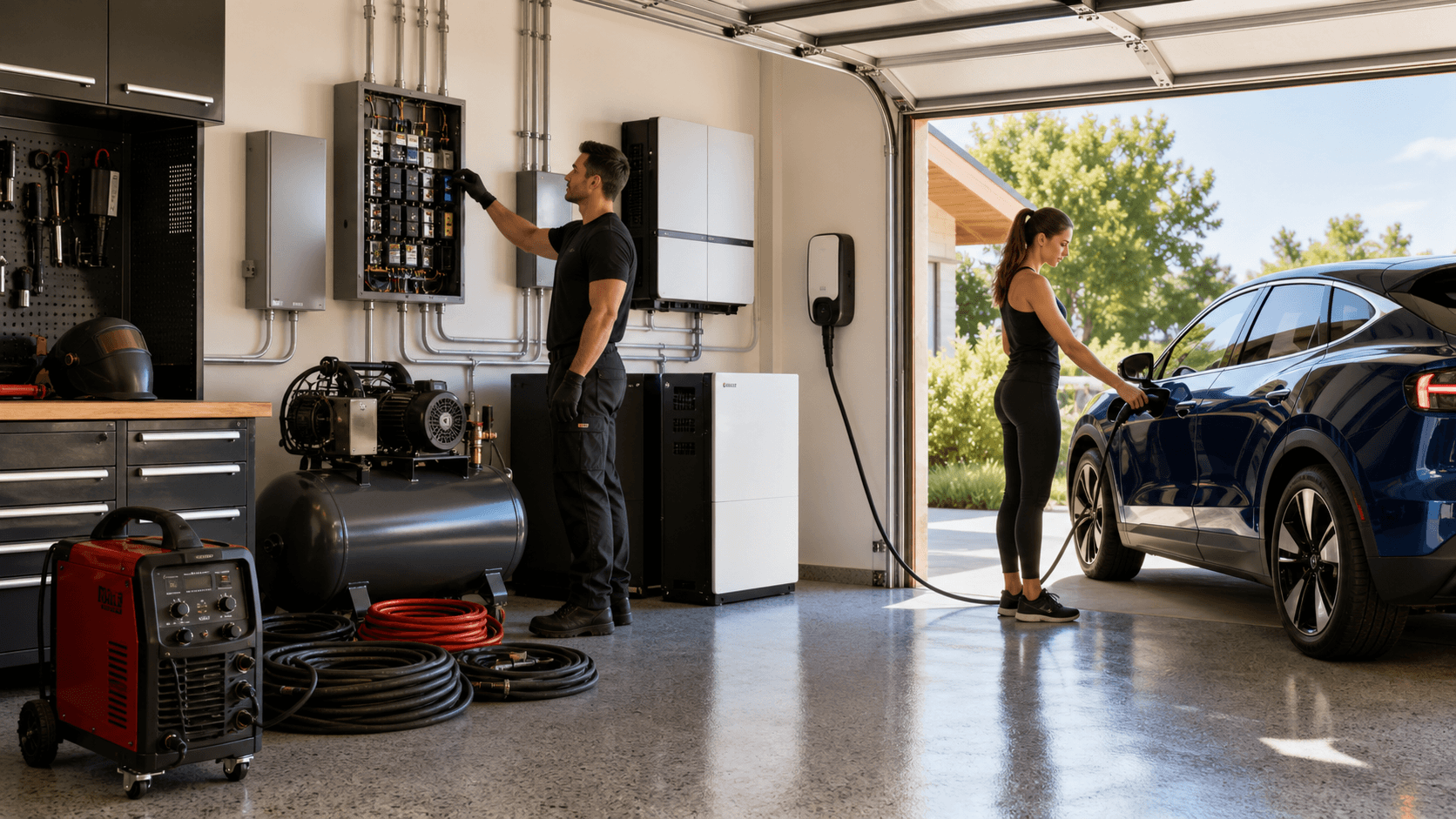
Start with a subpanel for the garage when possible. From there, you can group and prioritize circuits:
- Separate 240V circuits for welders and larger compressors
- A dedicated circuit or two for EV charging
- Lighting on its own circuit for safety
- General 120V outlets for small tools and chargers
This structure helps keep one tool from turning everything off. A tripped breaker should not make you weld in the dark.
Layout matters too, because outlet placement and equipment location affect convenience, safety, and voltage drop. Place 240V outlets near welding bays, lifts, or where heavy tools sit, and put 120V outlets above benches so cords do not drape across the floor. Plan a compressor location that limits noise and allows a short, heavy-gauge wire run. For EV charging, choose a spot close to the vehicle port with room for cable management.
Leave room for growth as well. You may start with one welder and a small compressor and later add a bigger unit or a second EV. Planning space in the subpanel and conduit paths now saves headaches later.
Wiring for Welders, Compressors, and Shop Heat
Welders are picky about power. Most mid-size to larger welders need 240V and do best on a dedicated circuit. The important details are using the correct breaker size for the welder rating, choosing the right plug type (or a hardwired connection if the code and manufacturer allow), and keeping runs short and heavy gauge where possible for less voltage drop and a stable arc.
Air compressors hit hard when they start. A unit may pull far more amps in the first second than it does while running. When planning for a compressor, you want to check both starting and running amp ratings, decide between 120V or 240V based on size and needs, and place it where you can run a stout circuit while still keeping noise out of your main work area.
Cold months add even more demand. Electric heaters pull steady power for long stretches, and EV batteries charge slower in the cold, so chargers may run longer too. Your power station plan should leave enough capacity so that on a freezing night you can run heat, charge an EV, and use a welder or compressor as needed, without every breaker screaming for mercy.
Integrating EV Charging Into Your Workshop Power Plan
EV charging is no longer a side thought in many garages. Level 1 charging uses a standard 120V outlet and is slow but light on demand. Level 2 uses 240V, charges faster, and draws much more power.
You do not want your EV charger fighting with your welder and compressor for the same amps. A few common options include:
- A fully dedicated EV circuit that is always ready
- Load sharing systems that let the charger back off if other loads are high
- A managed garage power station where circuits are planned so you do not overload the main panel
In real use, simple habits can also help:
- Setting your EV to charge overnight when tools are off
- Using off-peak hours if your utility offers cheaper rates
- Leaving headroom so if you need to grab a grinder or fire up the compressor, you are still in the safe zone
Backup and Off-Grid Power Options for Serious Garages
When the power drops during a storm, a thought-out garage power station can keep you working. There are several backup paths:
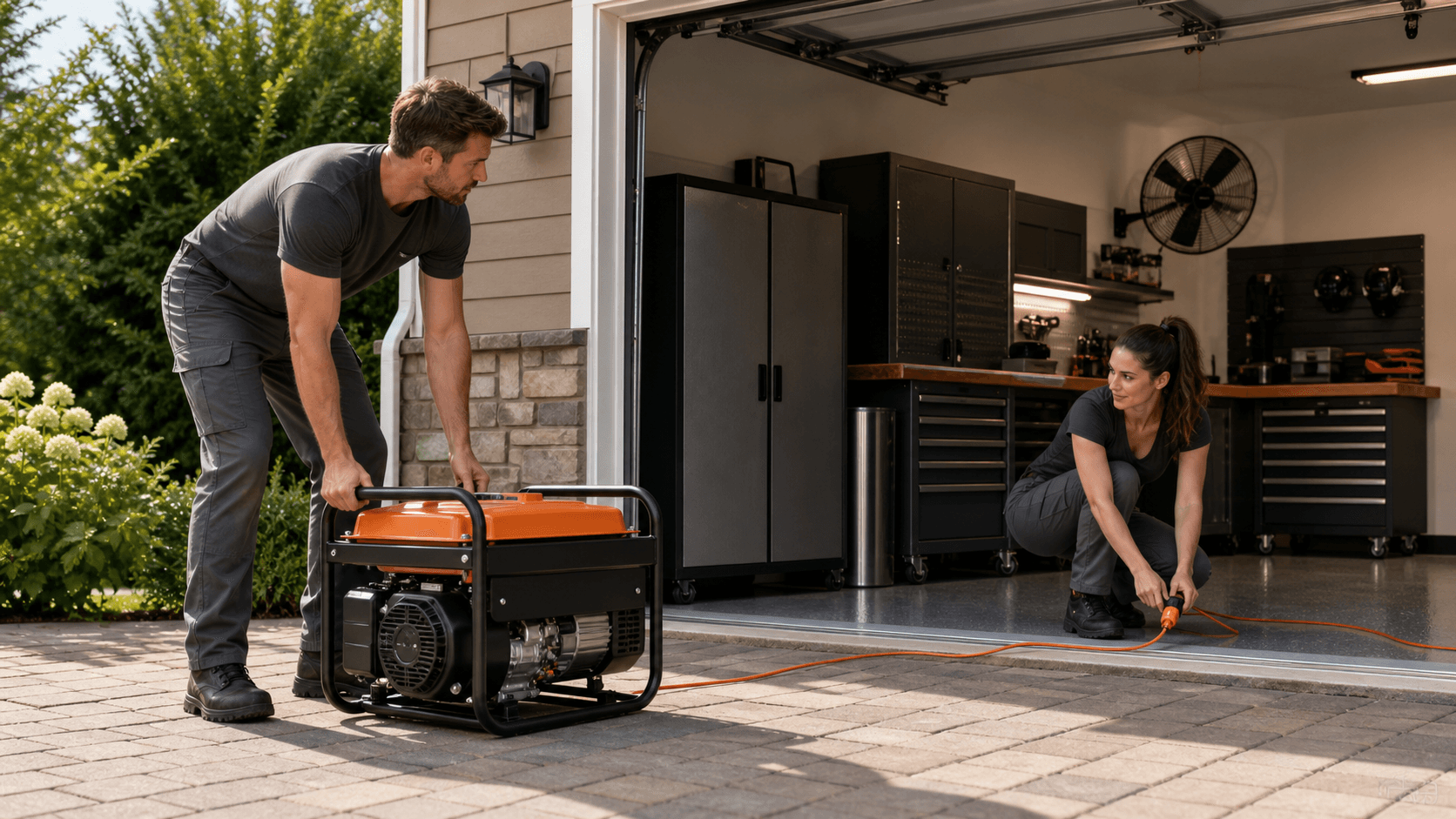
- Portable generators
- Standby generators
- Solar with battery storage
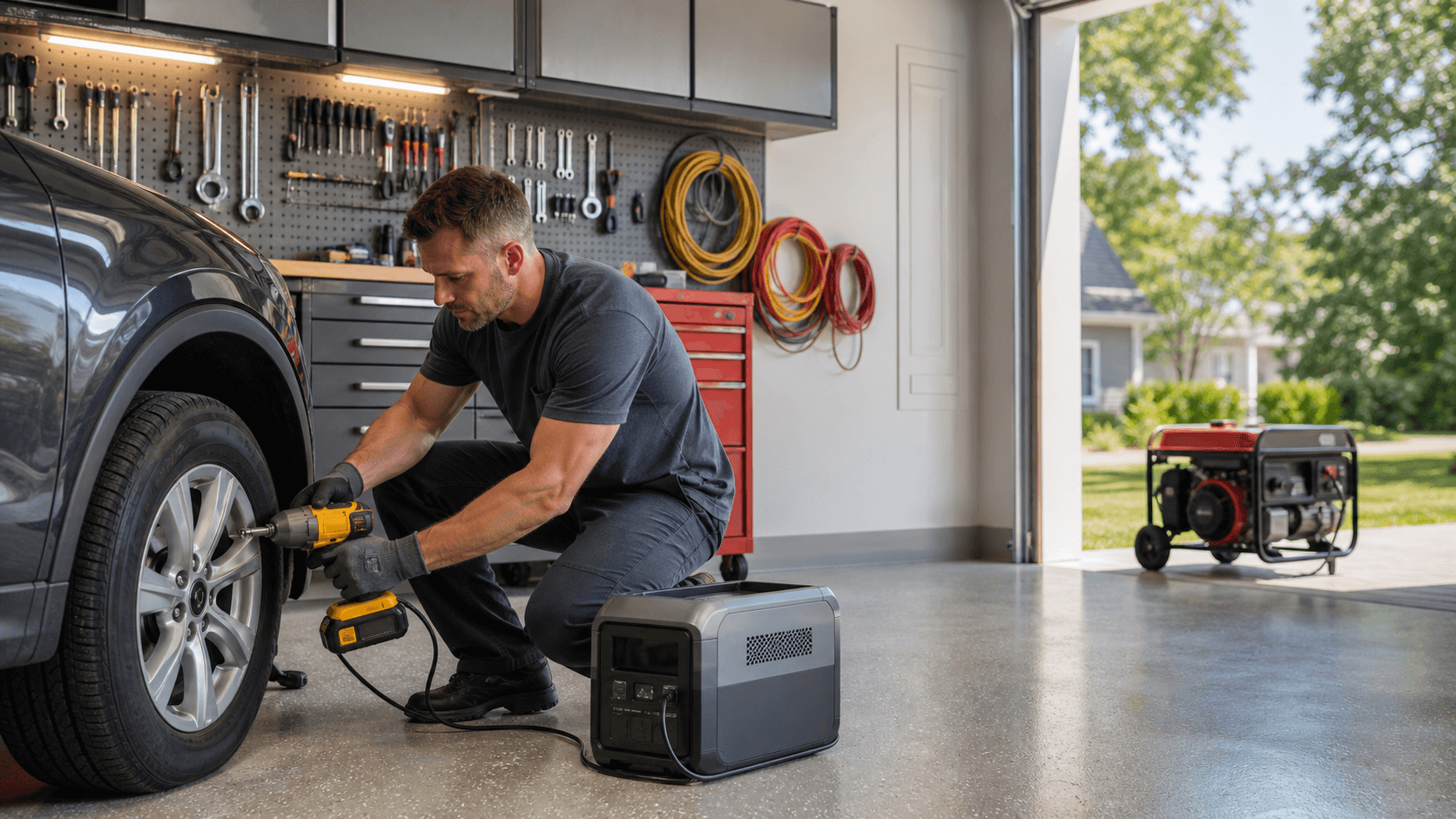
- All-in-one power stations for lighter but important loads
To use these safely, you need a way to feed backup power into select circuits. That usually means a transfer switch or panel interlock, clear labeling so you know which circuits stay live, and a plan for which tools and outlets should be on backup and which can stay dark.
For shops that deal with storm seasons or off-grid projects, it helps to think about what truly must run. Many people focus on:
- Lighting
- Air compressor for basic tools
- Key chargers for batteries and devices
At Garage Gear Direct, we focus on pro grade storage, tools, and power products that can sit at the center of plans like this and help build a garage power station that keeps up when the weather does not cooperate.
From Sketch to Switch On
Turning all of this into a real garage setup starts with a pencil, not a breaker. Begin by:
- Listing every tool, charger, and heater you care about
- Marking how often you run each and which ones overlap
- Looking at your current panel and noting any limits
- Sketching outlet, compressor, and charger locations on a simple floor plan
Then you can talk with an electrician about turning that sketch into a subpanel, circuits, and backup plan that fits your space and your projects.
Cold months and holiday breaks are when many garages see the most action. A planned garage power station lets you handle long welding sessions, steady compressor use, and overnight EV charging without surprise shutdowns. With the right layout and hardware, your garage can be ready for whatever you plug in next.
Power Your Garage Projects With Reliable Backup Energy
Take control of outages and keep your tools, lights, and essential gear running with a dedicated garage power station. At Garage Gear Direct, we help you match the right setup to your space, usage, and budget so you are prepared before the power goes out. If you have questions or want personal recommendations, contact us and we will help you plan your ideal backup solution.