Power Up Your Garage Workflow with Smart Backup
A solid backup power setup turns a regular garage into a real workshop that can keep moving when the grid does not. A workshop generator or power station keeps lifts, air tools, heaters, chargers, and lights running so you are not stuck waiting for the power company while a project sits half-finished. When outages hit in the middle of a brake job or paint prep, that backup is not a luxury, it is part of the workflow.
Late October is when many of us start thinking about winter storms, short days, and cold starts. That is the right time to plan where your power gear will sit, how cords will run, and how to keep fumes outside while your work stays inside. In this guide, we will walk through smart placement, safe ventilation, extension cord routing, and quick-connect setups that make your backup power feel like it was built into the garage from day one.
Choosing the Right Generator or Power Station
Not every backup power option fits a garage the same way. The best choice depends on what you run, how often you lose power, and how much noise you are willing to hear.
Here is a simple breakdown:
- Inverter generators: Quieter, smoother power that is easier on electronics and chargers, usually good for smaller to medium tool loads.
- Conventional portable generators: Louder but strong on surge watts, better for big start-up loads like compressors and some lifts.
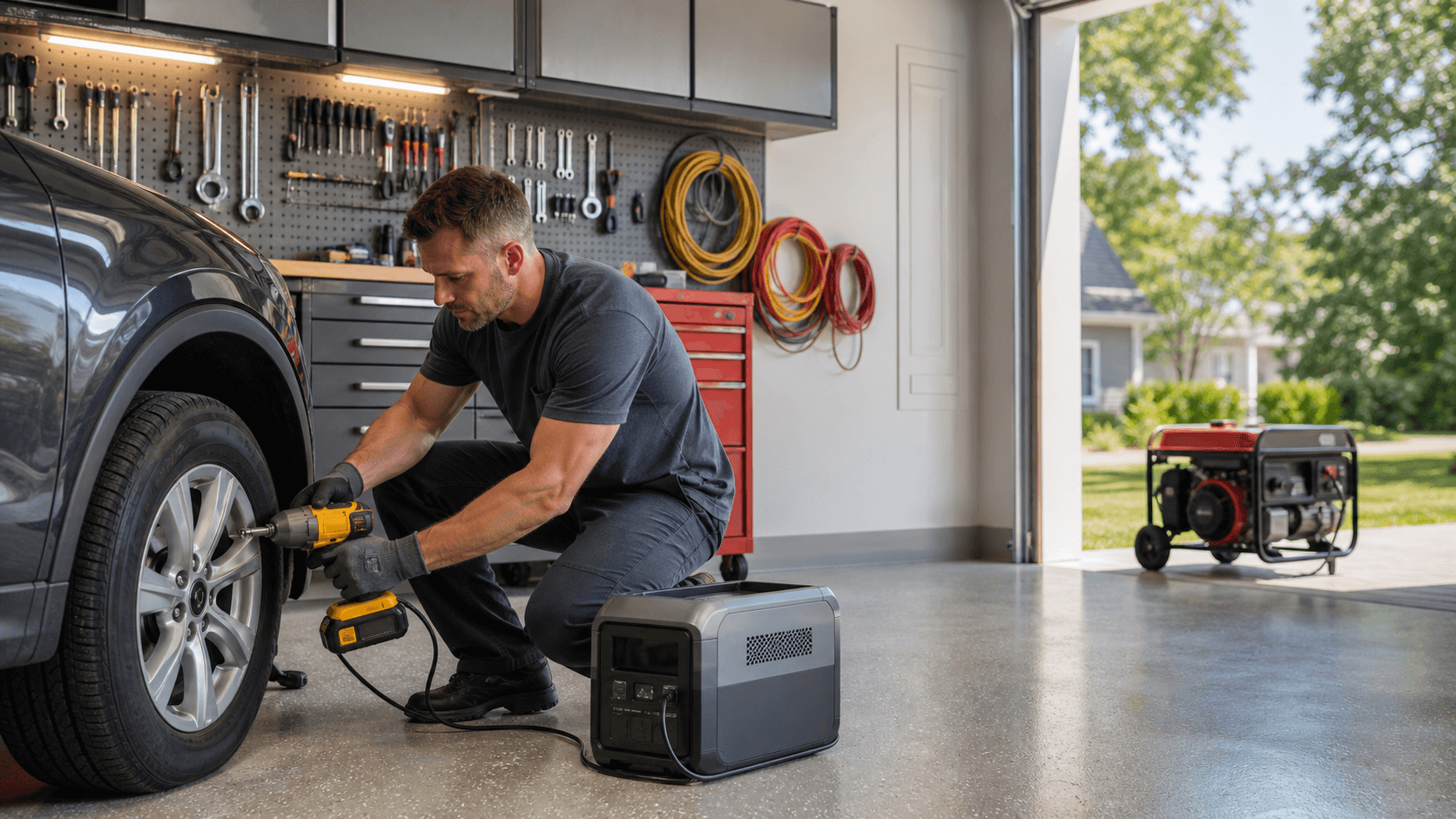
- Lithium power stations: No fumes, safe to keep inside the garage, but limited by battery capacity and best for lights, chargers, and lighter tools.
When sizing any workshop generator, think in terms of both running watts and starting watts. Many garage tools draw a big surge for a second or two when they kick on. Typical loads might include:
- Air compressor
- Table saw or miter saw
- Two-post or scissor lift
- LED lighting and task lights
- Dust collection or shop vac
- Battery chargers for tools or vehicles
- Mini-split heater or small electric heater
You want enough capacity so that when the compressor starts while the lights and a saw are already running, the generator does not bog down. Starting watts can be much higher than running watts, so planning for that bump keeps breakers from tripping and saves your tools from dim, low-voltage starts.
Pros and serious DIY users also look for a few extra features:
- Continuous-duty ratings for longer runtimes
- 240V output for larger tools or lifts
- Clean sine wave output for sensitive chargers and electronics
- Wheel kits and folding handles so you can move the unit in and out of the garage without strain
If you often move between home garage and job site, portability becomes just as important as raw power.
Safe Placement and Ventilation in a Real Garage
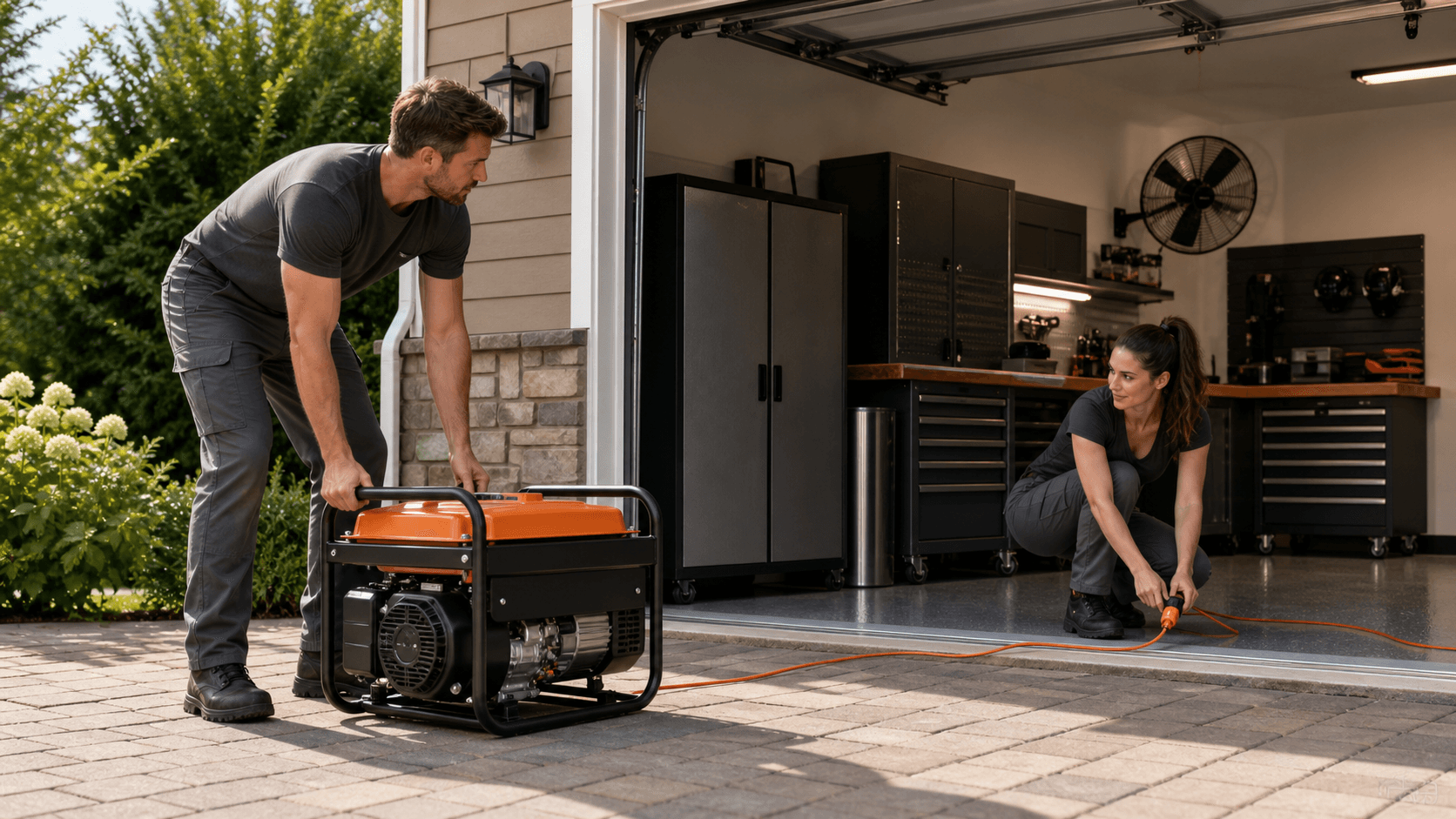
Gas and diesel workshop generators need fresh air and distance from where people are working. The safe choice is always to run them outdoors, never inside the garage, even with the door wide open. Carbon monoxide is colorless and odorless, and it can build up faster than most people think, especially on cold, still days.
Good placement tips for combustion generators:
- Set up outside, away from doors, windows, and wall vents
- Keep the exhaust pointed away from the house and garage
- Use a covered but open area like a carport or canopy, not an attached closed garage
- Leave plenty of space around the unit for airflow and maintenance access
An attached garage is not a safe place to run any combustion engine. Even with a door cracked, fumes can drift into the house or linger around parked vehicles. Having working carbon monoxide detectors in the home and near garage entry points adds another layer of safety, especially when the garage is part of the living space.
Power stations are different. Since they do not burn fuel, they can stay inside, which is handy in bad weather. Still, they should not be stuffed into a tight, hot corner. Give them room to breathe, keep them off direct heaters, and do not park them right next to welding work, solvents, or flammables. During heavy charging sessions, it helps to keep the area around the unit clear so heat can move away from the case.
Extension Cord Routing That Works Like a System
Once you know where your generator will sit, the next challenge is getting power into the garage without turning the floor into a snarl of cords. Good cord planning is part safety, part comfort, and part keeping your tools happy.
Some basics for workshop generator cord runs:
- Use heavy-gauge outdoor-rated cords sized for the amps you need
- Keep cord runs as short as you can to cut voltage drop, especially for big tools
- Use cords with molded plugs and intact strain reliefs, no sketchy repairs or taped splices
Treat your cords like part of the shop layout, not an afterthought. Helpful habits include:
- Routing along walls with hooks or cable clips
- Using retractable cord reels where you often plug in portable tools
- Adding floor cable covers or mats at doorways and walk paths to prevent trips
- Labeling or color-coding cords for key tools or circuits, so you know what is live at a glance
Weather is a big factor as the temperature drops. Outdoor connections should stay off bare wet concrete or snow. Use covers on plugs that sit in the weather, and keep slack loops coiled on stands or hooks instead of letting cords freeze into ice or get crushed under tires.
Quick-Connect Options for Faster Power Swaps
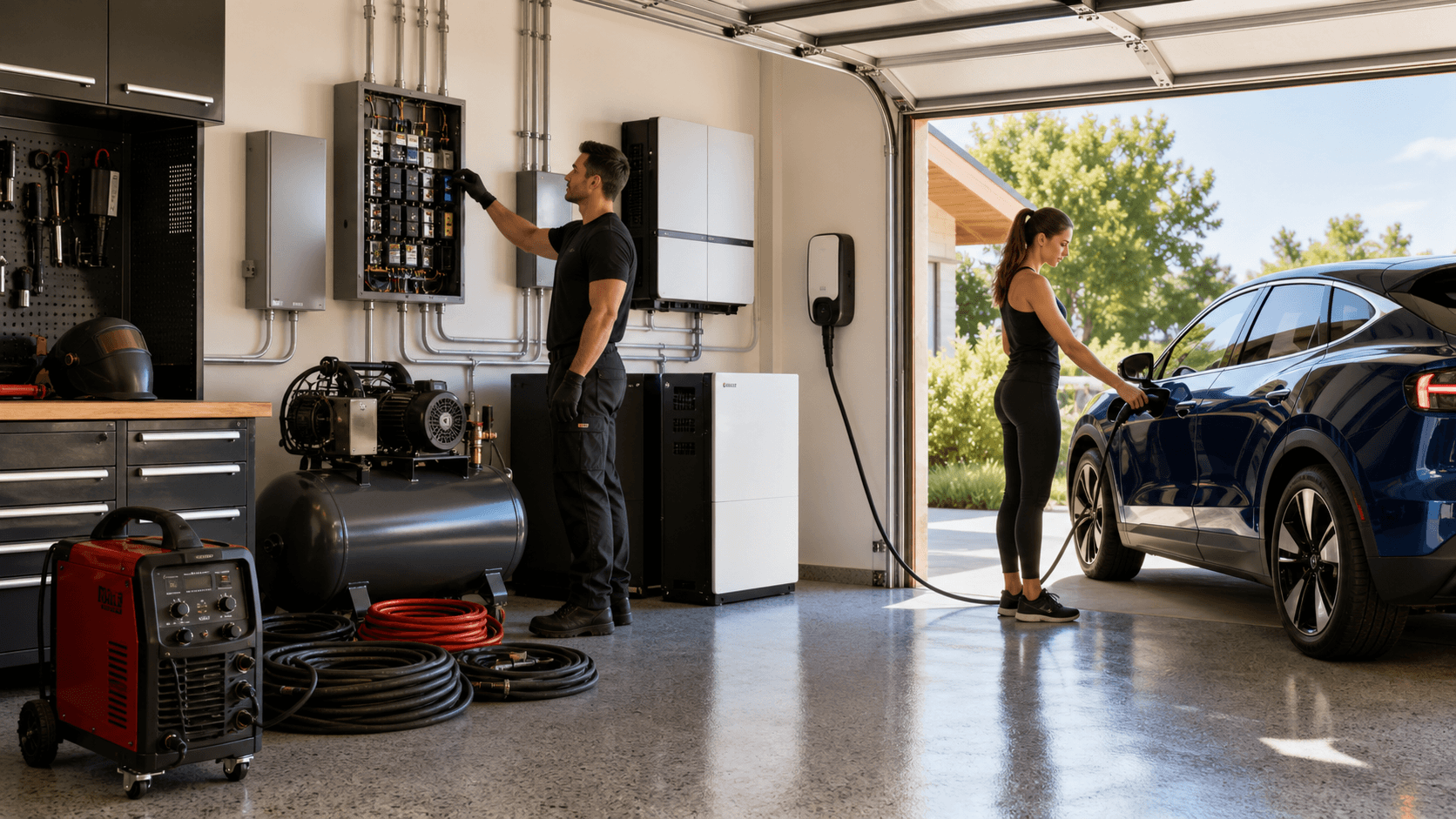
If you want your garage to shift to backup power quickly, quick-connect hardware is worth a serious look. Instead of plugging individual tools into a tangle of cords, you can send generator power straight to chosen garage circuits.
Common options include:
- Generator inlet boxes that let you plug the workshop generator into the building from outside
- Manual transfer switches dedicated to garage or shop circuits
- Interlock kits that tie into a panel and prevent backfeeding into the utility lines
A licensed electrician can help you pick which circuits to move onto a transfer setup. Most garages have a few top-priority loads:
- Overhead lights and key workbench outlets
- Garage door opener
- Small heater or mini-split
- Tool outlet circuits for core tools and chargers
Big surge loads that you do not need during an outage, like welders or large air dryers, are often left as cord-only tools. You can still run them directly if your generator can handle the draw, but they do not crowd the always-on list.
With a good system, an outage workflow might look like this: roll the generator to its outdoor spot, connect the main cord to the inlet box, start the unit, operate the transfer switch or interlock following the instructions, then bring up loads one at a time. When utility power returns, you reverse the process, shut down unneeded loads, flip back to line power, then shut off and cool down the generator.
Building a Safer, More Productive Powered Garage
A well-thought-out backup power setup turns storm season from a full stop into a short pause. With smart placement, safe ventilation, organized cord routing, and quick-connect hardware, your tools can stay ready, your projects stay on schedule, and your space feels more like a pro shop than a cluttered car bay.
This is a great time to walk your own garage and sketch out a plan. Map which tools and circuits you actually rely on, mark a safe outdoor spot for a workshop generator, think through cord paths that do not cross every walkway, and decide if a transfer switch or inlet box setup makes sense. At Garage Gear Direct, we focus on pro-grade storage, tools, and backup power gear that fit right into that kind of organized workflow, so your garage stays efficient, safe, and ready when the lights flicker.
Keep Your Workshop Powered Through Every Project
If a power outage could bring your tools to a halt, now is the time to set up a reliable workshop generator that keeps your projects moving. At Garage Gear Direct, we help you choose backup power that fits your equipment, space, and budget so you can work with confidence in any conditions. If you have questions or want help comparing options, just contact us and we will walk you through the best setup for your shop.