Turn Weekend Wrenches Into Real Progress
Most of us wait all week for that chance to roll up the garage door and get after a real project. Then the weekend shows up, and half the day disappears hunting for a missing socket, the right screws, or a fresh set of gloves. The work time shrinks, the frustration grows, and the project still is not finished when it is time to close up for the night.
We started Garage Gear Direct for people who are serious about their garage workshop setup and want those weekend hours to actually move projects forward. In this guide, we will walk through four simple habits that save real time: building a faster workshop layout, pre-job kitting, smart consumables restocking, and quick reset routines. All of it is geared toward practical use, cold-weather weekends, and gear that actually holds up.
Build a Garage Workshop Setup That Works Fast
A fast garage is not just about having good tools; it is about where everything lives and how you move. Think of your space in zones so work flows in a straight line instead of back and forth across the floor. For most DIY and garage projects, these zones help:
- Prep zone: planning, measuring, small layout work
- Cutting or teardown zone: saws, grinders, impact tools
- Assembly zone: bench work, fasteners, clamps
- Detail zone: fluids, cleaning, detailing, finishing touches
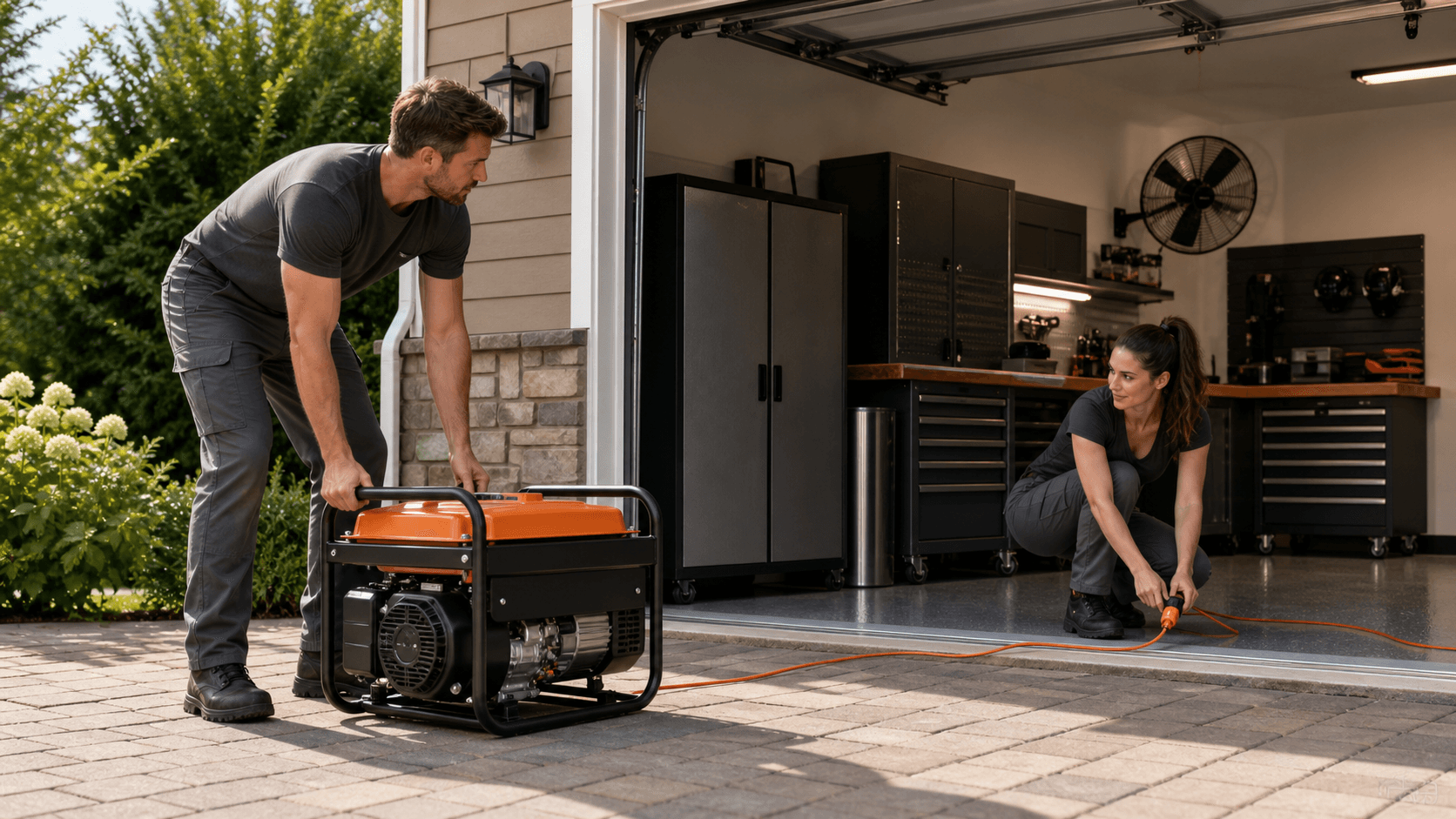
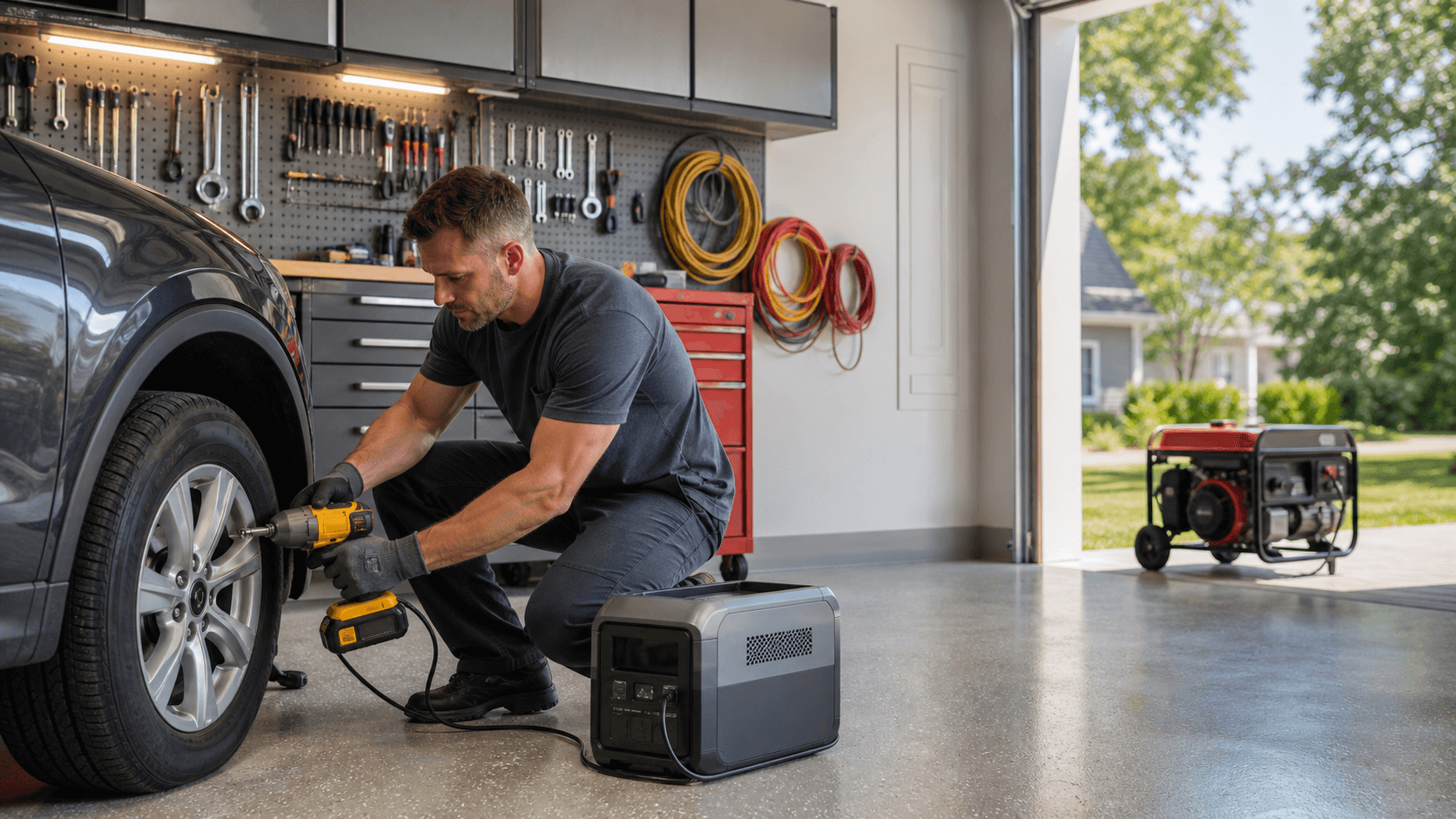
- Power and charging zone: chargers, power station, extension cords
When these zones are clear, you know where to stand for each step and what should be within arm's reach. A solid workbench as a home base, rolling tool chests that park nearby, wall panels with your most-used hand tools, and a stable power station or backup power unit all become anchor points. You are not crossing the garage to grab a bit or an extension cord; you are just reaching to the spot you set on purpose.
As late October weather cools down and days get shorter, this matters even more. Before winter projects and vehicle maintenance pile up, do a quick seasonal tune-up:
- Check lighting, especially over the main bench and the vehicle bay
- Make sure key outlets are easy to reach, or add power strips and reels
- Clear floor space so you can roll tool chests and carts without weaving around clutter
- Stage your power backup so you can keep chargers and lights on during storms
A few small layout tweaks now make cold evenings in the garage a lot more comfortable and a lot more productive.
Pre-Job Kitting: Pack Your Project Before It Starts
Pre-job kitting is a simple habit that feels like a trick: you pack the project before you work on it. The day or night before your weekend session, you load a bin, cart, or rolling cabinet with everything you expect to need for that job. Then when project time hits, you are not searching; you are rolling your kit into position and getting to work.
Here's an easy way to build a project kit:
- Look over the manual, build plan, or checklist and note every tool and material
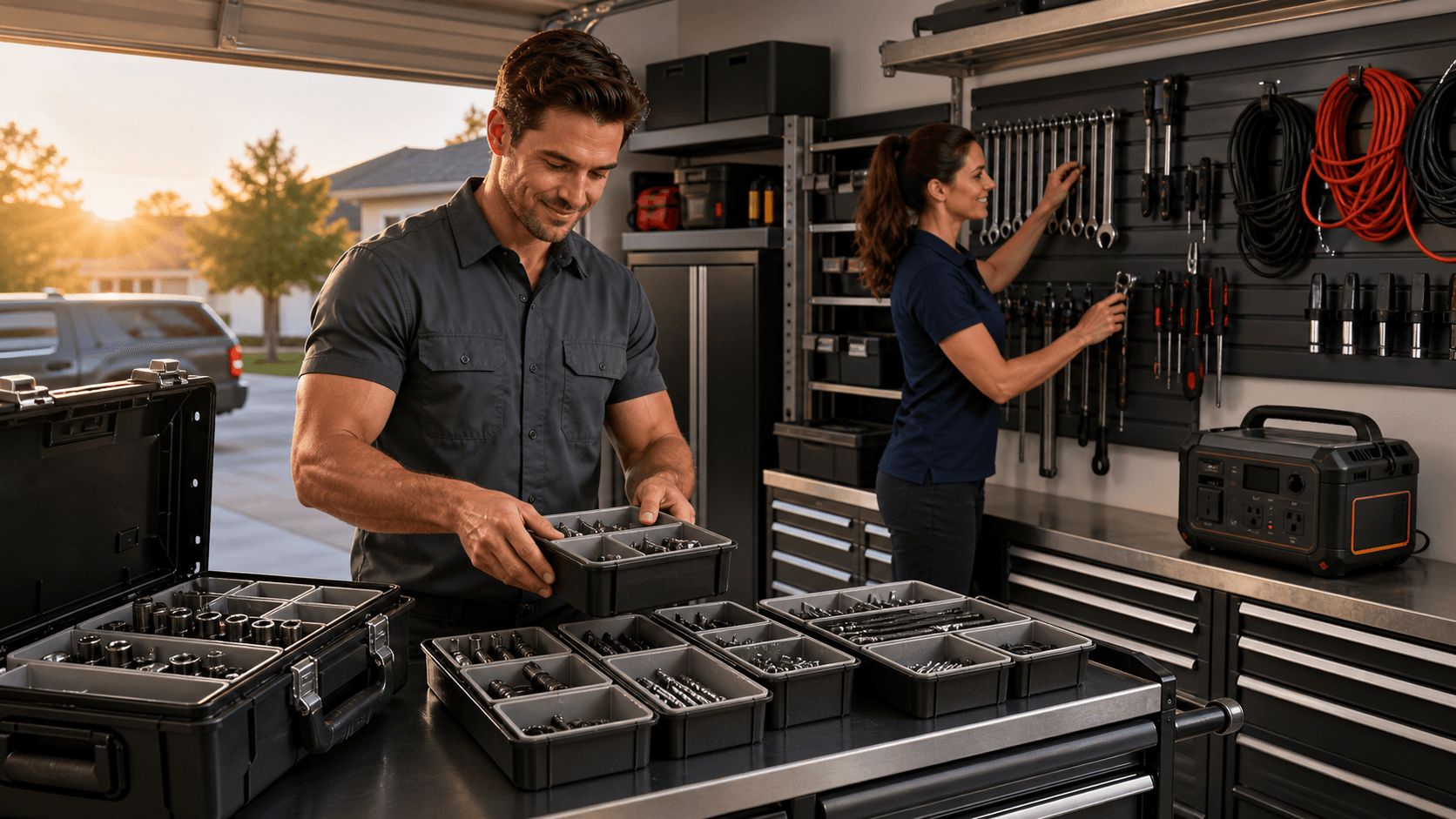
- Pull the exact sockets, bits, wrenches, and specialty tools and drop them into a drawer or tray just for that kit
- Add hardware, sealants, fluids, shop towels, and PPE that match the task
- Label the bin or cart by project name or vehicle so you can grab it fast
Pro-grade drawer organizers, modular tool trays, and labeled wall racks turn this into a quick routine instead of a messy hunt. When your tools have a clear home, you can see what needs to move into the kit and what goes back when the job is done.
Pre-job kitting keeps you out of traffic and away from last-minute store runs. It also cuts down on half-finished work where you discover you are missing one odd socket or a specific clamp. When you only have a short window of daylight and the temperature drops fast after sunset, not losing an hour to mistakes makes a big difference.
Never Run Out Again: Smart Consumables Restock
Tools get most of the attention, but consumables are what quietly wreck a weekend when they run out. A strong garage workshop setup keeps the high-usage stuff easy to see and easy to reload. Common items include:
- Hardware assortments and spare fasteners
- Sandpaper, sanding discs, and cutting wheels
- Shop towels, rags, gloves, and masks
- Zip ties, electrical tape, fuses, and connectors
- Fluids, grease, cleaners, adhesives, and sealants
A simple system works best. Many people like a two-bin or min-max method. You split a consumable into two labeled containers. You use the first one until it is empty, then move to the second. The moment you open the second container, you add that item to a small reorder list on your phone or a notepad. Once a month, you run through the list and refill.
Clear bins, labeled drawers, and a dedicated consumables cabinet make it easy to see at a glance what is low. This is also where reliable power comes in. Keeping cordless tool chargers, work lights, and a backup power station together means your batteries stay topped off and ready. When storms or grid hiccups roll through, you can still cut, sand, and run lights without losing your weekend to a blackout.
Reset Routines That End Every Session Strong
The way you end a work session decides how fast the next one starts. A reset routine is just a 10- to 20-minute checklist you run through before you close the garage for the night. It clears the deck so future you can walk in and get straight to work.
A solid reset might include:
- Return every tool to its main home
- Toss trash, empty the shop vac bin, and clear scrap off the bench
- Sweep the main walk paths and in front of the bench
- Stage the next project kit or at least park carts and chests where they belong
To make the reset almost automatic, set a trigger. That could be the time of day, like the last 20 minutes before you head in, or the moment you complete the last big task for the session. A small laminated reset list on a cabinet or wall panel keeps it simple and consistent, even when you are tired.
Good storage makes the reset faster. Shadow foam in drawers shows you what tool is missing in a second. Drawer organizers keep sockets and bits in order so you are not sorting piles every weekend. Wall panels and mobile carts give every item a clear, visible home. This matters even more on chilly fall evenings when you want to shut the door and get inside without leaving a disaster waiting for tomorrow.
Lock in Your New Weekend Workflow
All these habits work together. A clear garage workshop setup with smart zones, pre-job kitting that packs the project before it starts, consumables that never sneak to empty, and a short end-of-day reset all stack into one smooth weekend workflow. Instead of fighting chaos, you are actually getting to the fun part: turning wrenches, building, fixing, and dialing in your gear.
You do not have to change everything at once. Pick one upgrade per weekend. Maybe you set up a single consumables cabinet, build one complete project kit for your next vehicle job, or write and post your first reset checklist. As you go, you can start to see where stronger cabinets, rolling tool chests, wall systems, and off-grid power from Garage Gear Direct would support the way you like to work. Bit by bit, your garage stops feeling like a catch-all storage space and starts working like the pro-grade workshop you have wanted all along.
Transform Your Garage Into a Productive Workshop Today
If you are ready to turn your ideas into finished projects, we can help you create a smart, efficient garage workshop setup that fits your space and goals. At Garage Gear Direct, we curate storage, workbenches, and accessories that work together so you spend less time organizing and more time building. Explore your options online, and if you have questions or need tailored recommendations, just contact us.