Unlocking Forced Induction Power for Your Garage Build
Forced induction is one of the most effective performance modifications if you want serious, repeatable power gains from a gas or diesel engine. Instead of relying only on atmospheric pressure, you pressurize the air going into the engine, so every cylinder fill packs in more oxygen and supports more fuel. More air plus more fuel, managed correctly, equals a lot more power without changing displacement.
For serious DIY builders and automotive pros, the big question is not just whether to add boost, but which path to follow. Turbocharger or supercharger? Both are forced induction, but they make power in very different ways, with unique benefits, trade-offs, and install demands. At Garage Gear Direct, we focus on helping you build a pro-level garage that can handle either route, from turbochargers and superchargers to the tools, storage, and backup power that keep projects moving.
How Turbochargers Work and Where They Shine
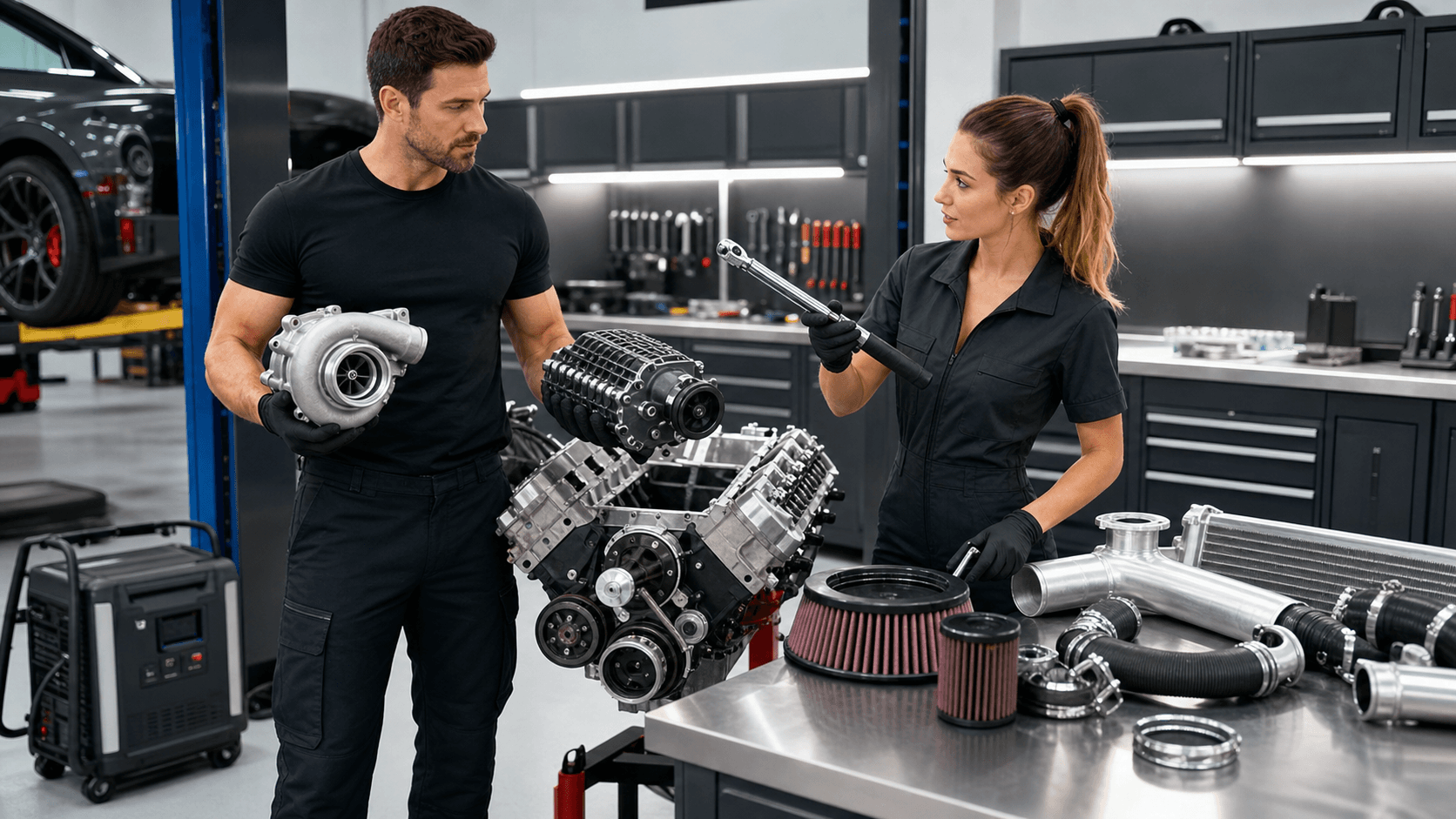
A turbocharger is driven by exhaust flow. Exhaust gas spins a turbine wheel, which is connected by a shaft to a compressor wheel on the intake side. As the compressor wheel spins, it pulls in ambient air, compresses it, and feeds it into the engine at higher than atmospheric pressure. This boost pressure turns what would be wasted exhaust energy into new horsepower.
Turbo setups shine in performance modifications where efficiency and big power from smaller engines matter. By adjusting boost levels, tuning, and supporting mods, turbos can be scaled from mild street builds to serious track machines. They are a favorite in modern performance platforms because they make it possible to get strong power and good cruising efficiency from the same engine when the tune is set up correctly.
There are some trade-offs. Turbochargers often have lag, that slight delay before the turbo spools and delivers full boost, especially at low RPM. They also add heat, which means you need to think about intercoolers, charge pipes, better cooling systems, and high-quality oil supply and return. That is where a well-organized garage really matters. Laying out plumbing, routing lines, clocking the turbo, and torquing fasteners is a lot easier when your tools are sorted and your work area is set up like a professional bay.
For builders who want proven components instead of rolling the dice on random parts, starting from a curated turbocharger selection keeps the project focused on building reliable power, not fighting parts compatibility.
How Superchargers Work and Why Drivers Love Them
Superchargers do the same basic job as turbos, pressurizing intake air, but they are driven mechanically by the engine's crankshaft, usually through belts and pulleys. There are a few main types. Roots and twin-screw blowers sit on top of the engine and move large volumes of air, while centrifugal superchargers mount off to the side and behave a bit more like belt-driven turbos. In all cases, the blower spins as engine RPM rises, compressing air and feeding it straight into the intake.
The big appeal here is instant response. Because the supercharger is tied directly to crank speed, you get boost as soon as you hit the throttle, with almost no lag. That translates to linear, predictable power delivery and strong low-end torque. For street cars, muscle builds, towing rigs, and anyone who loves that immediate punch when they roll into the throttle, superchargers can feel incredibly satisfying.
They are not free power, though. A supercharger takes mechanical energy to spin, which is often called parasitic loss. You are trading some of the engine's raw output to drive the blower, in exchange for a much larger gain in overall power. Fuel demands go up, too, and you have to think about belt routing, bracket alignment, and clearance under the hood. High quality hand tools, torque wrenches, and organized storage help keep all the hardware, pulleys, and brackets in order, which cuts down on install frustration and rework.
If you prefer a bolt-on style approach to performance modifications, supercharger kits are often designed to match specific engine platforms, which can simplify the planning process for serious DIYers and shop owners.
Turbocharger vs Supercharger in Real-World Builds
How do these two approaches feel from the driver's seat? Turbos often deliver a surge of power as RPM climbs and boost builds. You get that addictive rush when the turbo comes fully on, which works well for track cars that live in the upper half of the tach or smaller engines that thrive on revs. Superchargers feel more like a bigger engine from idle upward, with consistent pull that makes daily driving, highway passing, and towing feel effortless.
Both systems require you to think through installation and future maintenance. Turbos usually mean more complex exhaust and intake plumbing, potential changes to the downpipe, oil and coolant lines, and careful heat management. Superchargers may be simpler on the exhaust side but can get intricate with brackets, belts, and accessory drives. In either case, supporting mods matter, such as:
- Upgraded fuel injectors or pump, when required
- Proper engine management or tuning solution
- Intercooler or charge cooling strategy
- Strong, heat-resistant gaskets and hardware
- Reliable tools for accurate torque and alignment
Your performance modifications goals should drive the choice. If your priority is peak horsepower and you like the idea of tuning flexibility and future boost increases, turbos often make sense. If you want a fat torque curve, instant response, and a more straightforward power feel for the street, a supercharger is often the better fit.
General scenarios play out like this: a weekend track car or time-attack build often leans turbo for high RPM power and tunability. A daily-driven muscle car that needs to be fun in traffic and on back roads often feels perfect with a positive-displacement supercharger. A boosted truck or SUV that tows or sees off-road use might go either way, but many owners prefer superchargers for predictable low-end torque and immediate throttle response.
Building a Pro-Level Garage for Forced Induction Projects
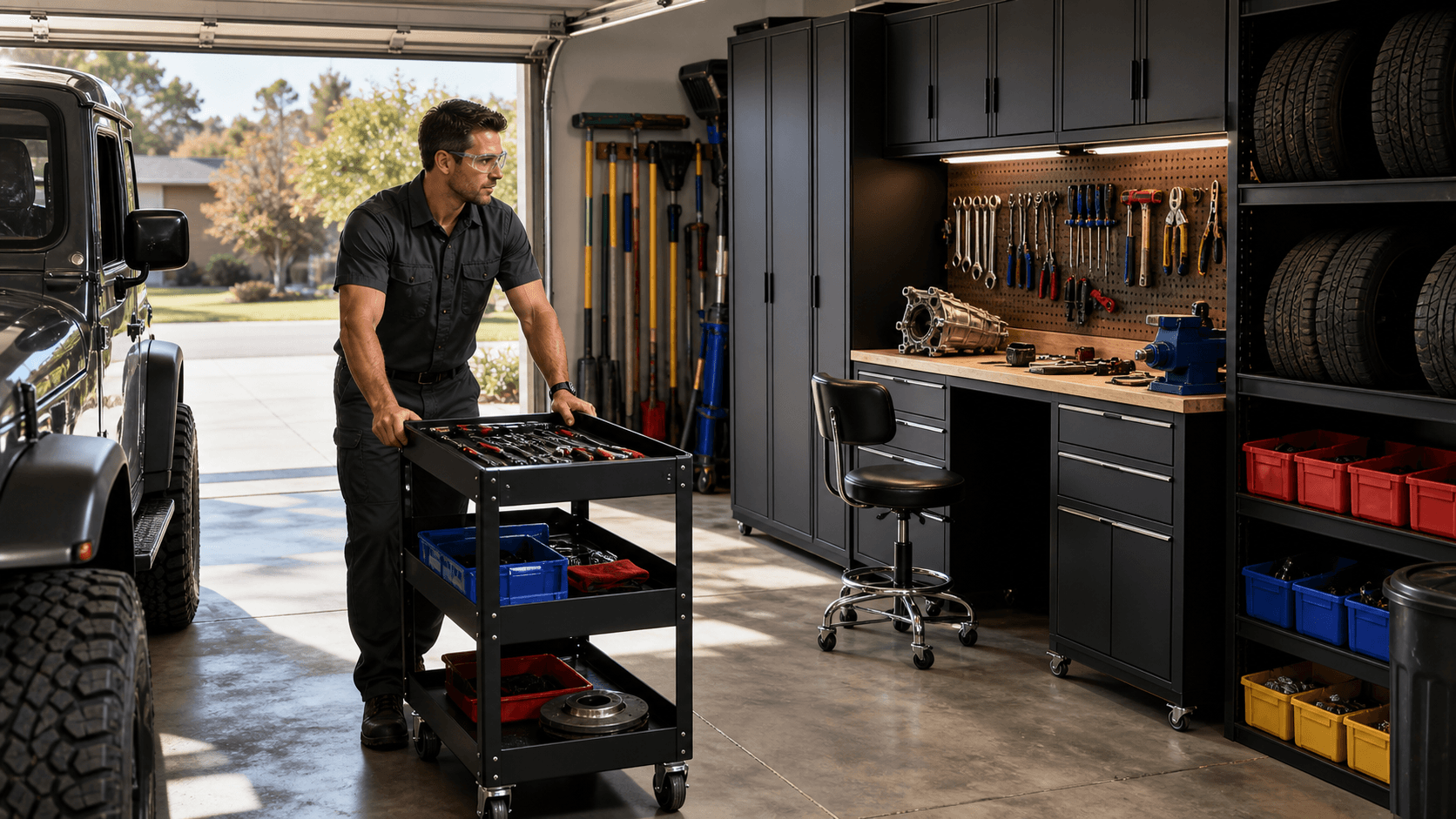
Whichever path you choose, boosted builds reward preparation. Forced induction installs involve tight clearances, precise torque specs, and plenty of small parts that you do not want to misplace. We see a big difference in how smoothly projects go when builders treat their garage like a professional workspace instead of a random pile of tools and parts.
Some core gear that pays off for turbocharger and supercharger work includes:
- Quality torque wrenches for accurate fastener clamping
- Comprehensive socket and wrench sets, including deep and specialty pieces
- Diagnostic tools that can read and log engine data
- Sturdy toolboxes with organized drawers for fittings, clamps, and sensors
- Clean work surfaces and lighting that make small leaks or cracks easier to spot
Professional-grade storage systems help you keep hardware grouped by system, so turbo oil feed fittings do not end up mixed with random interior screws, and supercharger belt hardware stays labeled for future service. When you are dealing with expensive compressors, intercoolers, and engine components, good organization reduces mistakes and protects your investment.
Backup power solutions are another underrated part of a serious home or small-shop garage. Long installs and late-night tuning sessions rely on steady lighting and power for fans, chargers, and diagnostic laptops. If the grid drops right as you are logging data or finishing a critical torque sequence, having reliable backup power keeps you working safely instead of rushing to wrap up in the dark.
At Garage Gear Direct, we focus on bringing together the forced induction hardware and the surrounding garage infrastructure that make complex performance modifications feel manageable instead of overwhelming.
Choosing Your Boost Path and Getting Your Garage Ready
When you strip it down, turbos recycle exhaust energy to spin a compressor and deliver scalable, tunable power, especially at higher RPM. Superchargers take mechanical drive from the crank to push air immediately, rewarding you with instant, linear torque and a muscle-car feel. Both paths can deliver serious performance gains when supported by the right tools, organization, and planning.
Before committing to one or the other, get clear on what you want from your build. Are you chasing top-end horsepower, or do you care more about low-end shove and easy street manners? Is this a daily driver, a weekend track weapon, a tow rig, or something that has to do a bit of everything? How much room do you have in the budget not just for the blower or turbo, but for fuel, cooling, tuning, and the garage upgrades that make the install realistic?
Once your goals are set, you can look at turbocharger options, supercharger systems, and the tool storage, power tools, and backup power setups that will keep your project on track. Our role at Garage Gear Direct is to support serious DIYers and automotive professionals with the gear they need to build efficient, pro-level garages and workshops that are ready for real forced induction power.
Upgrade Your Garage For Serious Performance Results
If you are ready to turn your ideas into real gains at the track or on the street, we are here to help you choose the right tools and setup. Explore our curated power tools built for precise, reliable performance modifications so every upgrade is done right the first time. If you have questions about which tools fit your project or skill level, contact us and we will walk you through your options at Garage Gear Direct.