Take Control of Your Power: Why Battery Sizing Matters
Reliable off-grid power starts with the right battery bank. Panels get all the attention, but batteries are what keep your tools spinning, your off-grid lighting on, and your essentials running when the sun is down or the grid is out. If the batteries are undersized, you end up in the dark or constantly babysitting generators. If they are oversized in the wrong way, you waste money on capacity you will never realistically use.
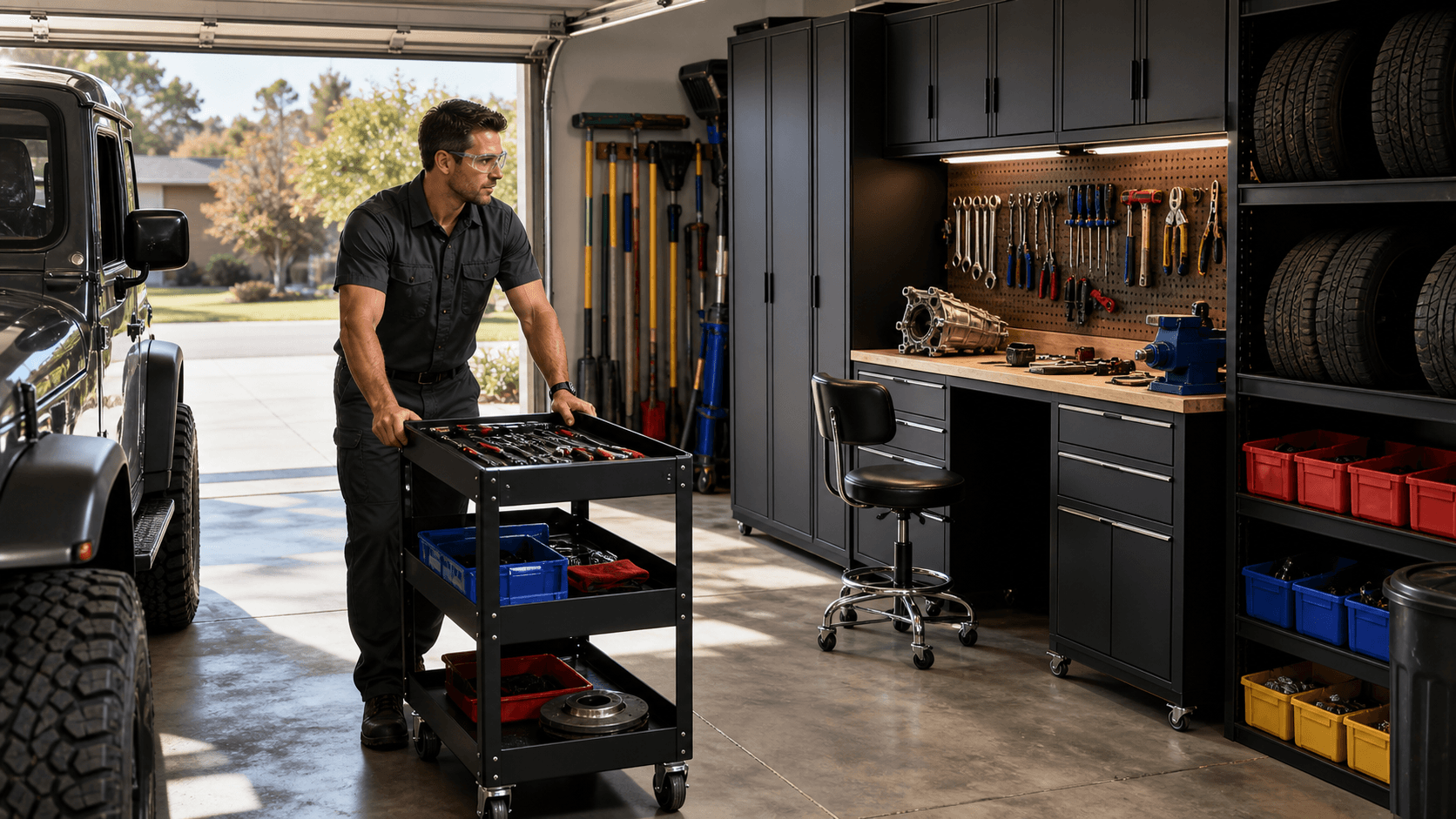
At Garage Gear Direct, we focus on serious gear for people who actually work in their garages, shops, and off-grid spaces. In this guide, we walk through how to estimate your power needs, translate watts into amp-hours, choose a system voltage, and size a real battery bank for real-world use. We will also touch on key choices like battery chemistry, inverter sizing, and special concerns for off-grid lighting that runs every single night.
When we talk about off-grid systems, there are two broad styles. A true off-grid setup runs everything from batteries and solar every day, with the grid either unavailable or only used as a last resort. A backup-only setup, on the other hand, mostly sits in standby and only kicks in when the grid fails. Both need proper sizing, but a full-time off-grid system has tighter requirements and less room for guesswork. We will cover both as we go.
Clarifying Your Off-Grid Power Goals
Before grabbing any battery specs, we start with a simple question: what are you actually trying to power, and for how long? A weekend cabin, a full-time off-grid home, a detached garage workshop, an RV, and a storm backup system all have very different expectations.
Think about your setup in terms of use cases such as:
- Weekend or seasonal cabin
- Full-time off-grid home
- Garage or shop with power tools
- RV or van build
- Emergency backup for storms or outages
Next, split your loads into two buckets. Critical loads are the things you truly do not want to lose, such as:
- Off-grid lighting, especially safety or security lights
- Well pump or sump pump
- Fridge or small freezer
- WiFi and a few outlets for chargers
- Essential garage door opener or key tools
Comfort loads are nice to have, but not essential if the batteries are low. That might include shop heaters, extra lighting, entertainment electronics, or a second fridge. It is important to be honest here, because critical loads define the minimum battery capacity you need.
Finally, decide how long you want to run with little or no solar charging. This is your autonomy in days. For backup-only systems, you might only need one day of autonomy. For a truly off-grid cabin or shop, some people plan for two or three days of cloudy weather. More autonomy means a larger, heavier, and more expensive battery bank, so it is a balance between comfort and cost.
Understanding Watts, Volts, and Amp-Hours
Once your goals are clear, we need a bit of basic electrical vocabulary. We keep it simple.
- Watts (W) are power, what a device uses at any given moment.
- Watt-hours (Wh) are energy over time, what you use across an hour or a day.
- Volts (V) are system pressure.
- Amp-hours (Ah) are how much current a battery can provide over time.
The core relationship is: Watt-hours = Volts × Amp-hours.
For a small garage, you might have:
- LED shop lights, maybe 40 to 100 watts total
- A garage door opener around a few hundred watts but only used for seconds
- A cordless tool charger, 50 to 100 watts while charging
- An air compressor or saw that briefly pulls a thousand watts or more
The steady loads, especially off-grid lighting, matter a lot more to daily energy use than short, high-power bursts, but those bursts still define your inverter size.
Battery voltage, like 12V, 24V, or 48V, changes how much current flows for the same power. Higher voltage means lower current, which lets you use smaller cables, improves inverter efficiency, and makes expansion easier. Small RV or van builds often stick with 12V, while serious shops and home systems lean toward 24V or 48V.
From Daily Energy Use to Battery Bank Size
Now we do the part that actually tells you how many batteries you need. Start by building a load list, either on paper or a simple spreadsheet. For each device, note:
- Device name
- Power in watts
- Hours used per day
Multiply watts by hours to get watt-hours for each item, then add everything together for your total daily energy use. For example, a garage-focused list might include LED shop lights, motion-sensing security lights, a small fridge, intermittent power tools, door openers, and chargers.
Add a margin on top of that total for startup surges, seasonal changes in daylight, inverter losses, and the reality that most of us use more than we plan. A simple way is to bump your daily watt-hour estimate up by a comfortable buffer rather than treating it as a precise number.
Off-grid lighting deserves special attention. Older bulbs or high-wattage floods chew through energy, while LEDs can cut that dramatically. Dusk-to-dawn lights that run all night and motion lights that trigger frequently can quietly become one of your biggest daily loads. When in doubt, choose efficient LED fixtures and controls that only run them when needed.
To turn daily energy use into battery size:
- Step 1: Total your daily watt-hours.
- Step 2: Multiply by your chosen days of autonomy.
- Step 3: Adjust for depth of discharge. Lead-acid batteries are often sized so you only use about half their rated capacity, while lithium batteries can often deliver a much higher usable fraction.
- Step 4: Divide your required watt-hours by your system voltage to get amp-hours.
For example, if a small off-grid garage uses a certain amount of watt-hours per day, needs two days of autonomy, and you plan to use a 24V lithium bank, you divide the total watt-hours by 24 to find the amp-hours required. For an AGM bank with a lower allowed depth of discharge, you increase the amp-hour total to compensate. Remember, rated capacity is not the same as usable capacity, and planning to run any battery to zero is a fast path to failure.
Choosing Voltage, Battery Type, and Supporting Gear
A 12V system works well for compact setups like RVs, vans, and very small cabins, especially if you mostly use low-power DC loads and a modest inverter. When you start adding higher-wattage tools, larger inverters, or want room to grow, 24V or 48V usually makes more sense. Higher-voltage banks keep cable sizes manageable and reduce stress on equipment.
Battery chemistry also matters. Flooded lead-acid batteries are time-tested and often have a lower upfront cost, but they need ventilation, periodic maintenance, and they do not like deep discharge. AGM or gel batteries are sealed, spill-resistant, and lower maintenance, which can be helpful in a busy garage or compact shop area. Lithium iron phosphate, often written as LiFePO4, is lighter for the same capacity, offers a higher usable depth of discharge, and typically has a long cycle life, but comes with a higher purchase price and needs a compatible charging setup.
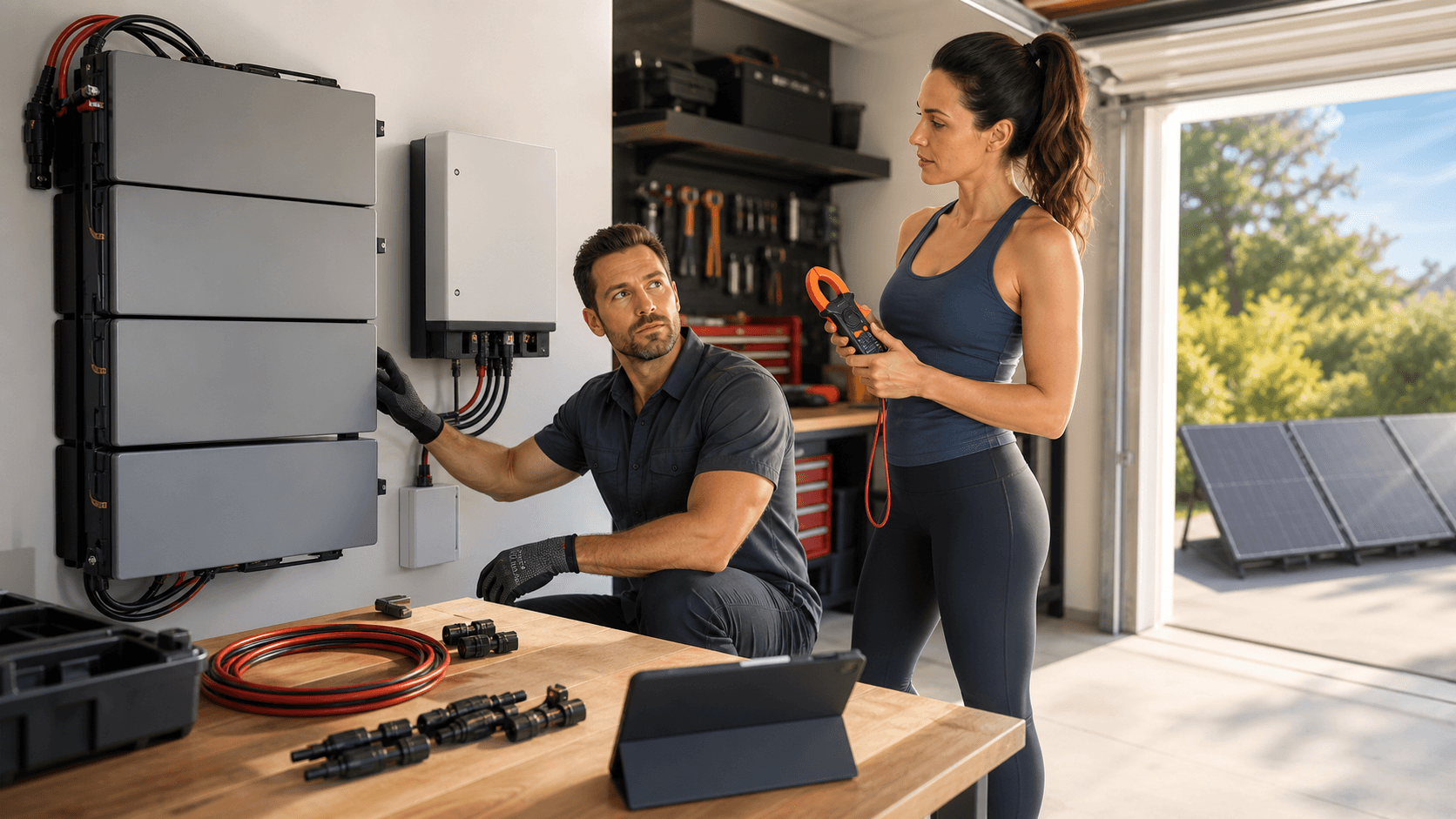
Think about safety and temperature too. Batteries should be protected from extreme cold and heat and securely mounted so they are not at risk if you are moving around heavy tools or vehicles. Charge controllers and solar array sizing must match your bank. Undersized solar means your batteries never fully recharge, which shortens their life. The inverter must handle the peak tool load and starting surges without tripping, while still being efficient at your normal everyday loads.
By walking through your loads, daily watt-hours, autonomy, depth of discharge, and voltage choice, you end up with a clear target for total amp-hours and battery type. That is the foundation of a reliable off-grid system, whether you are lighting up a small weekend garage, powering a serious DIY workshop, or building a hybrid home-and-garage power hub that keeps your essential off-grid lighting and tools ready whenever you need them.
Get Started With Your Off-Grid Lighting Project Today
If you are ready to make your space more reliable and independent, explore our curated selection of off-grid lighting solutions tailored for garages, workshops, and outbuildings. At Garage Gear Direct, we focus on practical, dependable products that keep your projects moving even when the power goes out. If you want help choosing the right setup for your needs, just contact us and we will walk you through your options.