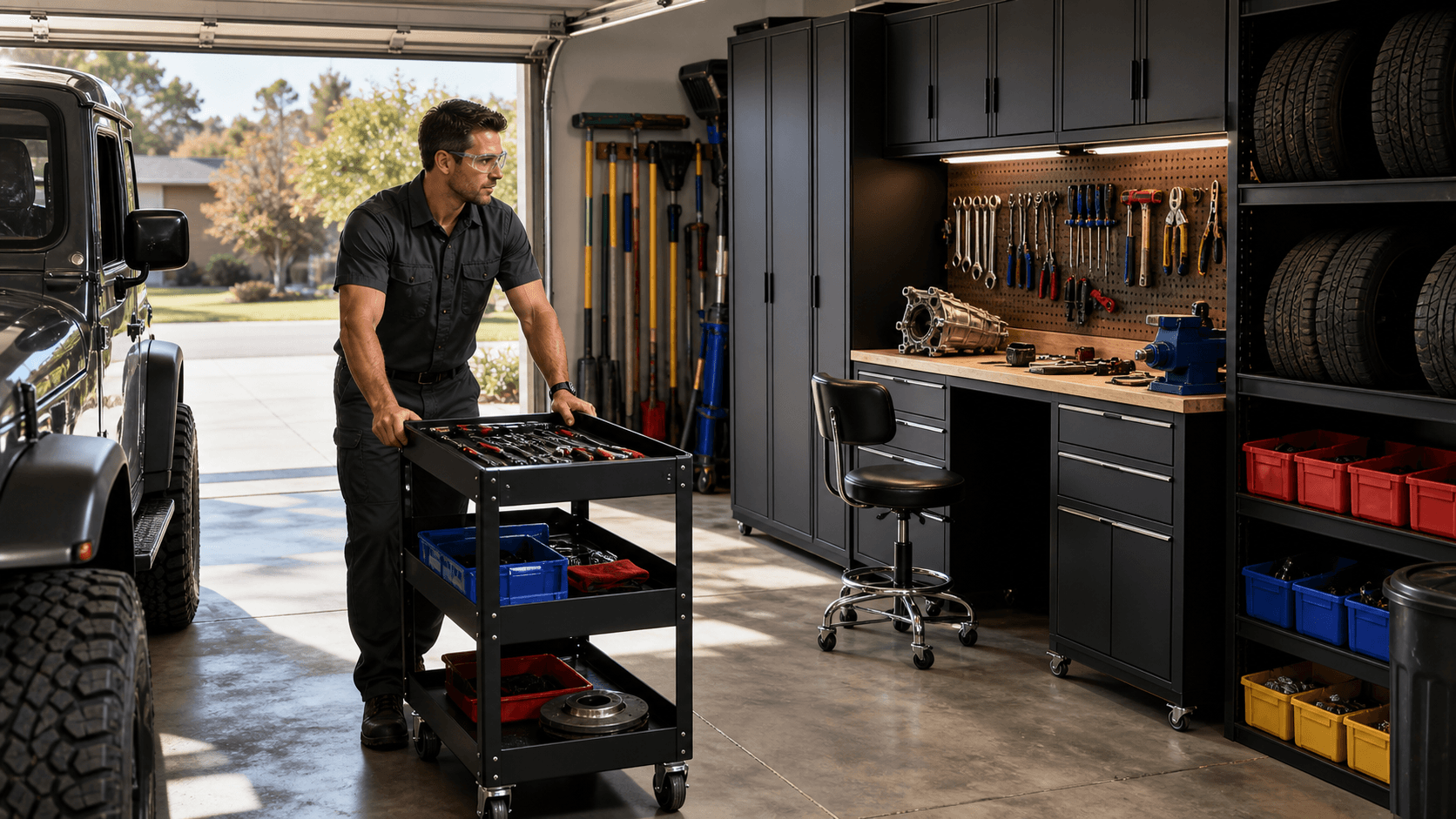
A strong garage setup should make real auto work smoother, safer, and a lot less stressful. When long summer days hit and big projects start, the last thing anyone wants is to spend half the weekend hunting for a missing socket or fighting a hot, cramped space. A good garage is a problem-solving space that helps you fix problems faster, not create new ones.
In this guide, we will walk through how to set up a serious DIY or small-shop garage so it feels closer to a pro bay than a crowded parking spot. We will talk layout, storage, power, lighting, and a simple process that keeps projects moving, even when the heat and the to-do list both get intense.
Build a Garage Setup That Handles Real Auto Work
Big summer auto projects need more than a floor jack and a hope. When suspension parts, brake jobs, and wiring work all land at once, a "stash it anywhere" garage slows everything down. Tools pile up on the floor, you lose hardware in the chaos, and every step takes longer than it should.
A smart garage setup works like a problem-solving machine. It should:
- Speed up diagnostics and teardown
- Keep tools and parts where you can reach them
- Stay safe when you are welding, grinding, or dealing with fuel
- Stay as cool and breathable as your local weather allows
Here at Garage Gear Direct, we see the garage as a working system, not just a place to park. When the setup is right, you can roll a car in, do the job, clean up, and roll the next one in without starting from zero each time.
Map the Space Like a Pro Shop, Not a Parking Lot
Before buying any gear, map how work should flow in your space. Think through the path step by step, from the moment the car rolls in to the final test drive. A simple workflow might look like this:
- Vehicle arrives and parks in the main bay
- Quick inspection and diagnosis
- Teardown and parts removal
- Parts cleaning and bench work
- Reassembly and torque checks
- Cleanup and final checks
Use that path to decide where the bench, main tool box, parts washer, and trash cans should live. Keep the highest-use tools close to the main bay, and keep dirty jobs, like grinding or heavy cleaning, off to the side.
Give your vehicle real service zones. Aim for enough room to:
- Walk fully around the car
- Open doors wide without hitting cabinets
- Slide a creeper in from front or side
- Place jack stands in the right points without tripping over clutter
Look up, too. Low-profile cabinets and ceiling storage can hold bulky items like wheels, spare tires, and seasonal gear. That frees floor space for summer project cars or a second vehicle.
Safety and comfort matter just as much as layout. Set a dedicated area for:
- Flammables like fuel, solvents, and spray cans
- Chemical storage in closed cabinets
- Jack and stand storage where you can grab them without bending and twisting
For hot months, plan airflow like you plan tool layout. Box fans, window units, and open paths for air to move across the bay can make long wrench sessions much easier on the body.
Design a Garage Setup That Keeps Tools in Reach
Nothing kills momentum faster than tool hunting. A weekend job can stretch way too long when sockets, bits, and specialty pullers disappear into random drawers or piles.
Think in layers of storage:
- Wall cabinets for bulk items, fluids, cases, and less-used gear
- Drawer-based tool chests for hand tools and precision tools
- Pegboard or steel wall panels for daily-use items like ratchets and pliers
- Mobile carts that roll alongside the car with only what you need that day
Then add simple system thinking. Group gear by how you actually work:
- One drawer for electrical tools, another for mechanical hand tools
- Color bands or labels for socket sizes and drive types
- Clear bins for each active project, so the engine refresh parts do not mix with daily maintenance items
When everything has a clear "home," cleanup is fast. You finish a job, reset the cart and bench, and you are ready for the next project without sorting through a random pile every time.
Create Dedicated Power, Lighting, and Air Zones
Real auto work needs more than a couple of random outlets on one wall. Power should be part of your garage setup plan from the start. Around your main workbench and vehicle area, aim for:
- Multiple outlets within easy reach
- Dedicated circuits for welders, compressors, and heavy tools
- Surge protection or quality strips for diagnostic tools, laptops, and chargers
Good lighting is like a second set of eyes. Try a mix of:
- Bright overhead LED fixtures for full garage coverage
- Focused task lights over the main bench
- Hood lights and magnetic lights for engine bays
- Portable work lights for under-car and wheel-well inspections
Air is power too. Plan where a compressor lives so hoses can reach the whole bay without becoming a trip hazard. Consider hose reels on walls or ceilings so air power is always ready but never in the way.
It can also help to think about off-grid or backup power. Portable power stations, battery banks, or inverter setups can keep fans, lights, and chargers running when summer storms knock power out. That way, a blackout does not put your whole project on pause.
Turn Chaos Into a Repeatable Project System
A solid garage setup is not only about hardware. It is also about habits. A simple project routine keeps even big jobs under control.
Before a project starts:
- Stage tools on a mobile cart
- Lay out parts and gaskets on the bench
- Set up magnetic trays and labeled bags for hardware
During the work, keep fasteners grouped by location. Label bags with a marker and toss them into a project bin. Use a rolling cart as your "moving workbench" so you are not crossing the garage every two minutes.
Parts and consumables deserve their own zone. Set up shelves or cabinets just for:
- Fluids like oil, coolant, and cleaners
- Filters, belts, and common wear items
- Assorted hardware like clips, nuts, and bolts
Use simple labels or clear bins so you can see when you are running low. That cuts down on last-minute store runs right when you are ready to bolt everything back together.
Treat the garage itself like a project. A quick audit at the start of summer and again mid-season helps a lot. During these checkups, you can shift layout, retire worn-out tools, and add tougher, pro-grade pieces as your projects grow more complex.
Turn This Summer's Garage Into a Long-Term Shop
One focused weekend spent reworking your garage setup can pay off every time you twist a wrench. Start with mapping zones and clearing obvious clutter so the space feels open again. Then upgrade the storage that slows you down the most, like adding a better tool chest, wall panels, or a rolling cart. After that, fine-tune power, lighting, and air so your shop feels ready for real work, even in peak heat.
At Garage Gear Direct, we love helping serious DIYers and small shops turn basic garages into spaces built for real jobs. When you treat this summer's projects as the start of a long-term shop, each upgrade has a purpose, and every project feels a little more like working in a pro bay.
Get Started With Your Project Today
Transform your space into a functional, organized workshop with a customized garage setup that fits how you actually work. At Garage Gear Direct, we help you choose the right storage, work surfaces, and accessories so every tool has a place and every project feels easier. If you have questions or need help planning, just contact us and we will walk you through your best options.