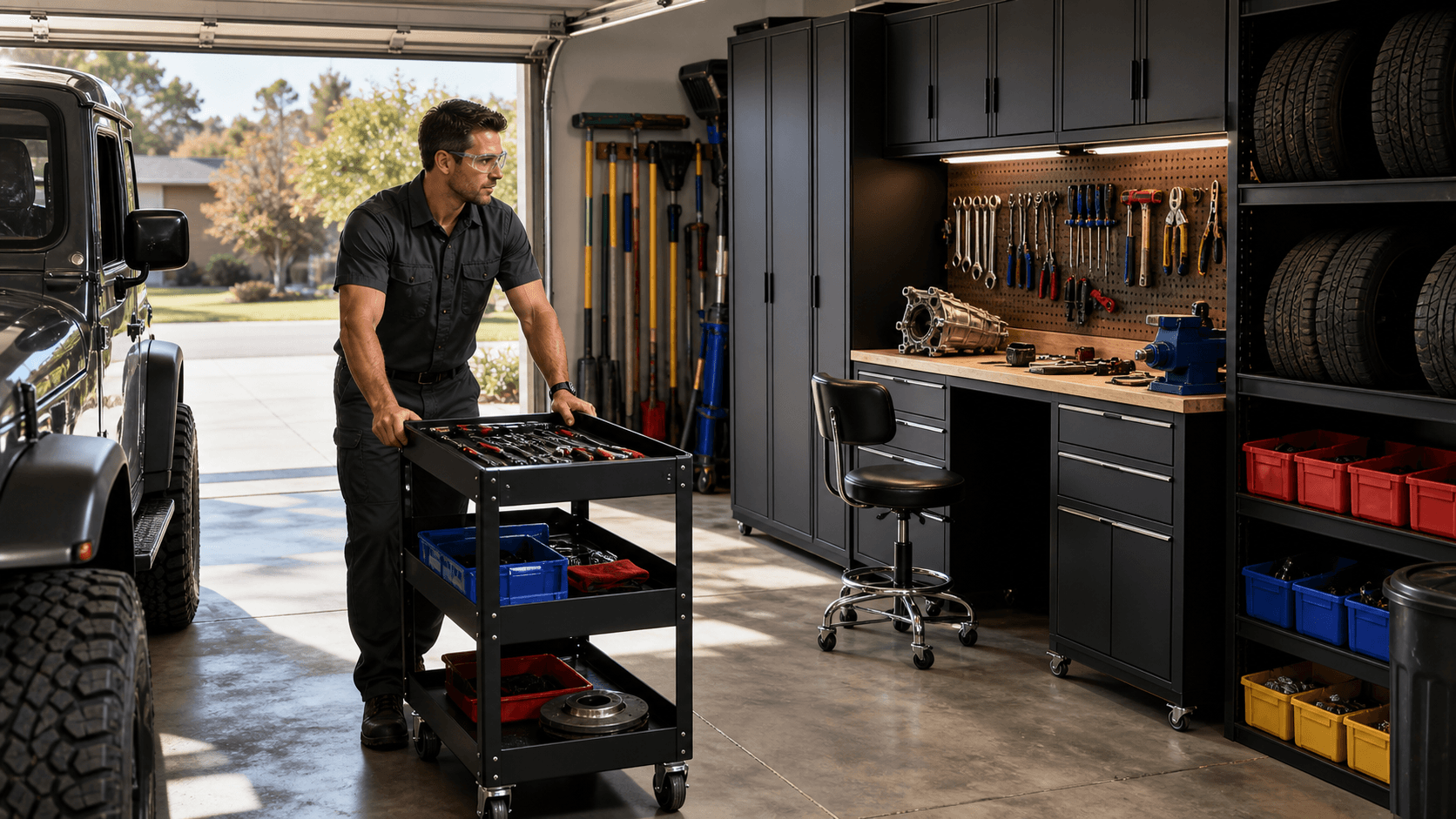
Turn Your Garage Into a True Automotive HQ
A serious DIY garage is not a pile of plastic bins and random shelves. It is a small, efficient shop where you can pull a car in, lift it safely, reach every tool fast, then clean up and shut the door with everything in its place. When your automotive storage is planned on purpose, the whole space feels calmer and you get more real work done.
Many home garages are stuffed with old boxes, sports gear, and half-empty paint cans. That setup fights you every time you try a brake job, oil change, or tire swap. With intentional automotive storage design, you build around how you actually wrench. At Garage Gear Direct, we focus on pro-grade, non big box gear that holds up to daily use and keeps your workflow smooth. Late summer is a perfect time to rethink the layout so you are ready for fall and winter maintenance, vehicle prep, and even backup power when storms roll through. We are going to walk through layout, storage systems, tool organization, and power planning built for serious DIYers and home shops.
Plan Your Garage Like an Automotive Shop
Start with zones, not with products. Before you buy a single cabinet, sketch your space and break it into clear areas:
- Vehicle bay for lifting, jacking, and service
- Tool and workbench zone along one wall
- Detailing and cleaning corner with water access if possible
- Parts and consumables wall for fluids and common spares
- Seasonal wheel and tire storage up high or on a dedicated rack
Think about how you move around a car on jack stands. Where do you stand at each corner? Where does the creeper roll in and out? Jacks, jack stands, wheel chocks, and the creeper should live right near the front of the bay, not buried behind totes. When you pull in, everything you need for basic service should be a few steps away.
Check your measurements. Many garages are tight from bumper to door. Leave enough depth for:
- Opening the hood with room to walk in front
- Opening both front doors without hitting cabinets
- Working at each corner with a jack or impact gun
Use your walls and ceiling. Tall walls are great for hanging ramps, long breaker bars, and recovery gear. Overhead space can hold seasonal tires or bulky items on strong racks, as long as they do not block the garage door or lights. While you are planning, mark where outlets and lights are. Good automotive storage design always includes:
- Outlets near the workbench and vehicle bay
- Bright LED overhead lighting
- Task lights above the bench and near the front of the car
If you ever want a small hoist or taller storage, check your ceiling height now so you do not box yourself in later.
Build Smart Automotive Storage From the Ground Up
Once zones and flow are clear, build from the floor. Heavy-duty base storage sets the tone.
- Steel cabinets with strong hinges and real handles
- Workbenches with high weight ratings and solid tops
- Drawer units with ball-bearing slides that stay smooth under heavy sockets and air tools
Automotive work is rough. Impact sockets slam down, greasy parts drop on surfaces, and metal shavings find every corner. This is why we like powder-coated steel and chemical-resistant tops. Thin, wobbly cabinets bend, flex, and fail right when you are in the middle of a job.
Specialized storage makes the space feel like a real shop. That can include:
- Tire racks that hold a full seasonal set safely off the floor
- Oil and fluid cabinets with trays for spills
- Lockable drawers for torque wrenches, scan tools, and specialty items
Safety matters as much as convenience. Tall cabinets should be anchored to the wall so they cannot tip if you load the top shelves. Flammables and aerosols should be separated from general storage, not sitting next to the space heater. Jacks, jack stands, and wheel chocks deserve one clear, low, easy-to-reach home so you never skip them because they are hard to grab. At Garage Gear Direct, we look for cabinet lines, wall panels, and racks that work together and can grow with you, so each upgrade clicks into the bigger system.
Organize Tools and Parts for Faster Wrench Time
Good automotive storage is not just boxes and cabinets; it is how you fill them. Most people use the same core tools for almost every job. Keep those front and center.
A clean layout might include:
- Shallow drawers for sockets, sorted by drive size and metric/SAE
- One drawer for ratchets and extensions
- Another for wrenches laid out by size
- Separate drawers for pliers, cutters, and screwdrivers
When every socket has a clear home, you spend less time hunting and more time turning bolts. The same logic works for small parts and fasteners. Use bins and labeled drawers for:
- Clips, trim fasteners, and push pins
- Fuses and electrical connectors
- Nuts, bolts, and washers
- Common wear items like filters, bulbs, and small belts
Wall storage is great for bulky, frequently used gear. Steel pegboard or slatwall with real weight ratings can hold impact guns, air hoses, extension cords, and detailing tools. Hooks and shelves let you grab what you need without bending into a deep cabinet.
To smooth out your workflow, set up simple kits:
- A quick service caddy for oil changes with filters, funnels, drain plug washers, and gloves
- A mobile cart for brake jobs with brake tools, cleaner, and a small parts tray
- A detailing cart or cabinet for chemicals, towels, and brushes
Do not forget your brain tools. Keep service manuals, torque charts, and maintenance logs in one place near the bench, either in a binder or on a tablet stand. That way you can check a spec without walking back into the house with greasy hands.
Prep Your Garage for Power Tools and Power Outages
A serious DIY garage runs on more than hand tools. Compressors, welders, grinders, and chargers all draw power. Work with a qualified electrician to set up safe circuits for heavy gear, and plan your storage around those outlets. Retractable cord reels, bench-mounted power strips, and clear cable routing help keep cords off the floor and out from under creeper wheels.
Backup power turns your garage into a more useful space when storms hit, especially in areas that see rough weather and outages. Inverter generators or home backup units can keep:
- Overhead and task lights on
- Air compressors and critical tools running
- Battery chargers and trickle chargers working
Store generators on ventilated shelves or carts so air can move around them when in use. Keep fuel in approved containers, away from open flames, and give extension cords and transfer switch cables a clean storage spot where they will not tangle.
Cordless tools also need a home. A simple battery station might include:
- Shelves for chargers and extra batteries
- Labeled spots for each battery size or tool family
- Hooks or trays for jump packs and 12 V trickle chargers
If you set this up in August, you are ahead of winter. When cold hits and batteries struggle, you will have chargers, jump packs, and snowblower tools ready instead of buried.
Turn Today's Ideas Into Tomorrow's Dream Garage
You do not have to redo the entire garage at once. Pick one zone, often the vehicle bay or the workbench wall, and fix that first. Clear out what you do not need, measure the space, and think about your most common jobs. Do you mostly do oil changes and brake work? Are seasonal tires always in the way? Are you constantly fighting poor lighting or missing sockets?
Write down your main pain points, then match them to a few targeted upgrades: maybe a tire rack and oil cabinet for the bay, a stronger workbench with better drawers for tools, or a new wall panel and power strip over the bench. At Garage Gear Direct, we build our lineup around serious DIY garages and home workshops, so pieces are made to handle daily use and work together as a system. With some planning now and the right automotive storage, your garage can slowly turn into a clean, safe, efficient shop that is ready for every season and every project you have been putting off.
Upgrade Your Garage With Smart, Space-Saving Storage Solutions
Transform wasted wall and floor space into a clean, organized work area with our curated automotive storage systems. At Garage Gear Direct, we help you match the right cabinets, toolboxes, and organizers to the way you actually use your garage. If you have questions or want a tailored recommendation, simply contact us and we will walk you through the best options for your space.