Keep the Lights On When the Grid Goes Down
Power can go out fast during late fall and winter storms. One minute you are making dinner, the next you are standing in the dark wondering how cold the house will get and how long the food in the fridge will last. Rolling blackouts and older power lines make this even more common, especially in suburban and rural neighborhoods.
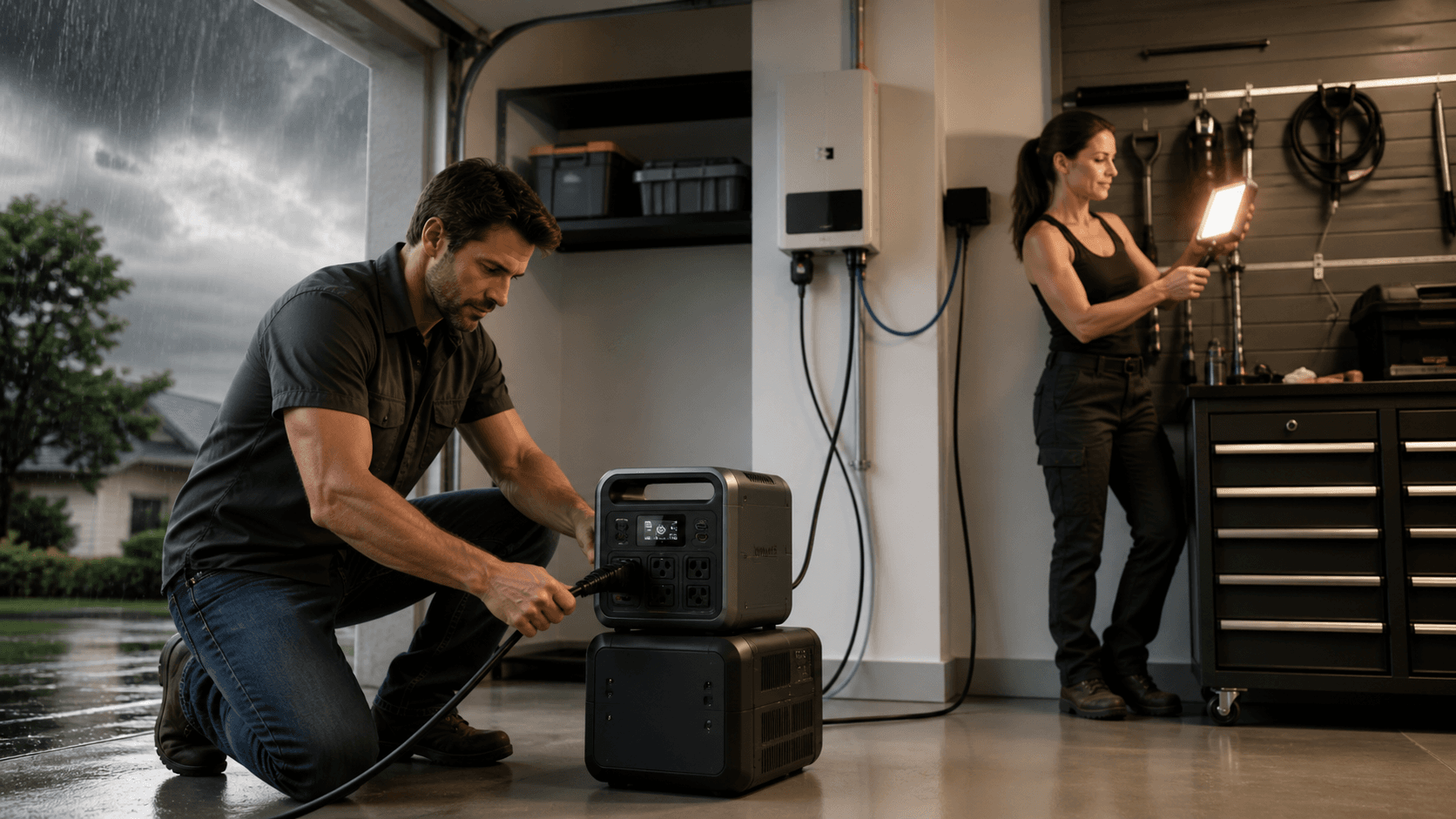
A garage power station turns that stress into a plan. Instead of dragging a noisy gas generator around in the rain, you can set up a central backup spot right in your garage. From there, you keep fridges running, sump pumps working, phones charged, and a few lights on so you can move around safely.
At Garage Gear Direct, we focus on pro-grade, storm-ready gear that fits the way serious DIY fans and home shops already work. In this guide, we will walk through how to choose the right size, fuel type, features, and setup so your garage is ready before the next big storm hits.
Why Your Garage Is Your Emergency Command Center
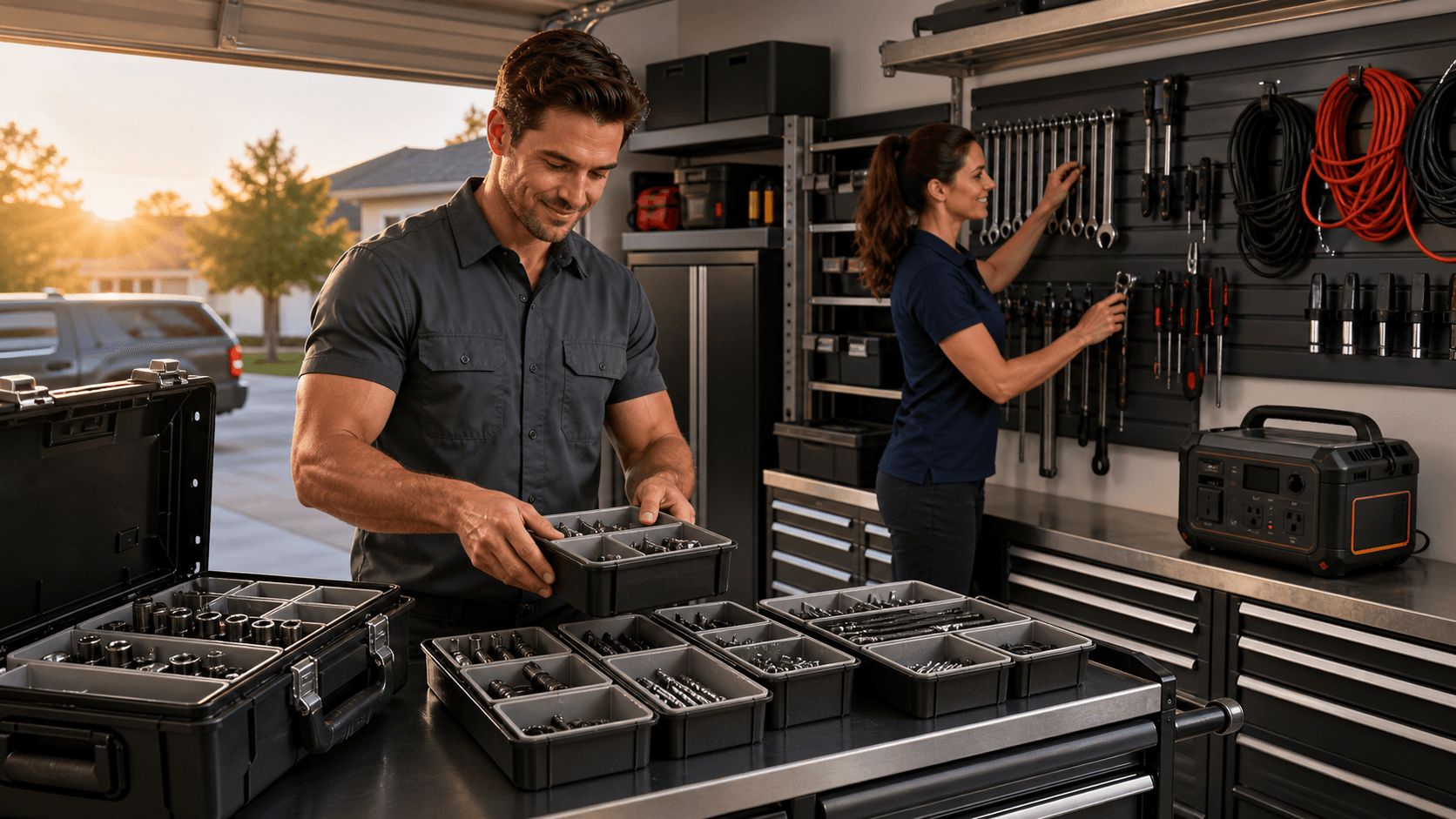
When the power goes out, the garage is one of the smartest places to get organized. It usually has a door that opens to the outside for fresh air; it sits close to your main electrical panel, and it is where most people already keep tools and cords. That makes it the natural command center for backup power.
Think of your storm-ready garage in simple zones:
- Power zone: your garage power station, gas or solar inputs, and any transfer equipment
- Storage zone: extension cords, heavy-duty power strips, fuel cans or solar cables, spare batteries
- Safety zone: flashlights, work lights, first aid kit, small radio, phone and power tool chargers
By planning around these zones, you can bring key parts of your home back online faster. For example, you can:
- Keep the garage door working so you can move vehicles in and out
- Run bright work lights so you are not tripping in the dark
- Power a small space heater safely where there is good airflow
- Charge phones, tablets, and radios so you can follow weather updates
When everything lives in one place, there is less hunting for gear with a flashlight and more doing the right things in the right order.
Choosing the Right Garage Power Station Capacity
Sizing a power station sounds messy, but the basics are pretty simple. Two main terms matter most:
- Watts: how much power the unit can give at one time, like how big the pipe is
- Watt-hours: how much energy it can hold in total, like how much water is in the tank
You will also see running watts and surge watts. Running watts are what a device needs while it is on. Surge watts are the short spike when it first starts, like when a fridge compressor kicks on. Your garage power station has to handle that surge.
Start by listing and ranking your outage loads:
- Must-haves: fridge or freezer, sump pump, Wi-Fi modem and router, phone chargers
- Nice-to-haves: garage lights, power tools, laptop, electric grill or hot plate
- Luxuries: TV, gaming systems, big space heaters in multiple rooms
Then match that list to your style of garage:
- DIY garage: bench lights, drill or impact driver, air compressor, shop vac, plus a fridge. This setup often needs a unit with higher surge watts for tools, even if run time is shorter.
- Family backup: fridge, freezer, modem, phone chargers, one or two rooms of LED lamps. Here you want more watt-hours so things can run longer on a single charge or tank.
- Small shop: multiple tools, work lights, maybe a small dust collector or compressor. This calls for a higher capacity system and clear planning about which tools run together.
When in doubt, many people choose a slightly larger capacity than they think they need. That gives you breathing room when the storm lasts longer than expected.
Gas, Solar, or Hybrid Backup for Garage Use
Next, decide how you want to feed your garage power station: gas, solar, or a mix of both. Each type has tradeoffs.
Gas generators:
- Long run times as long as you have fuel
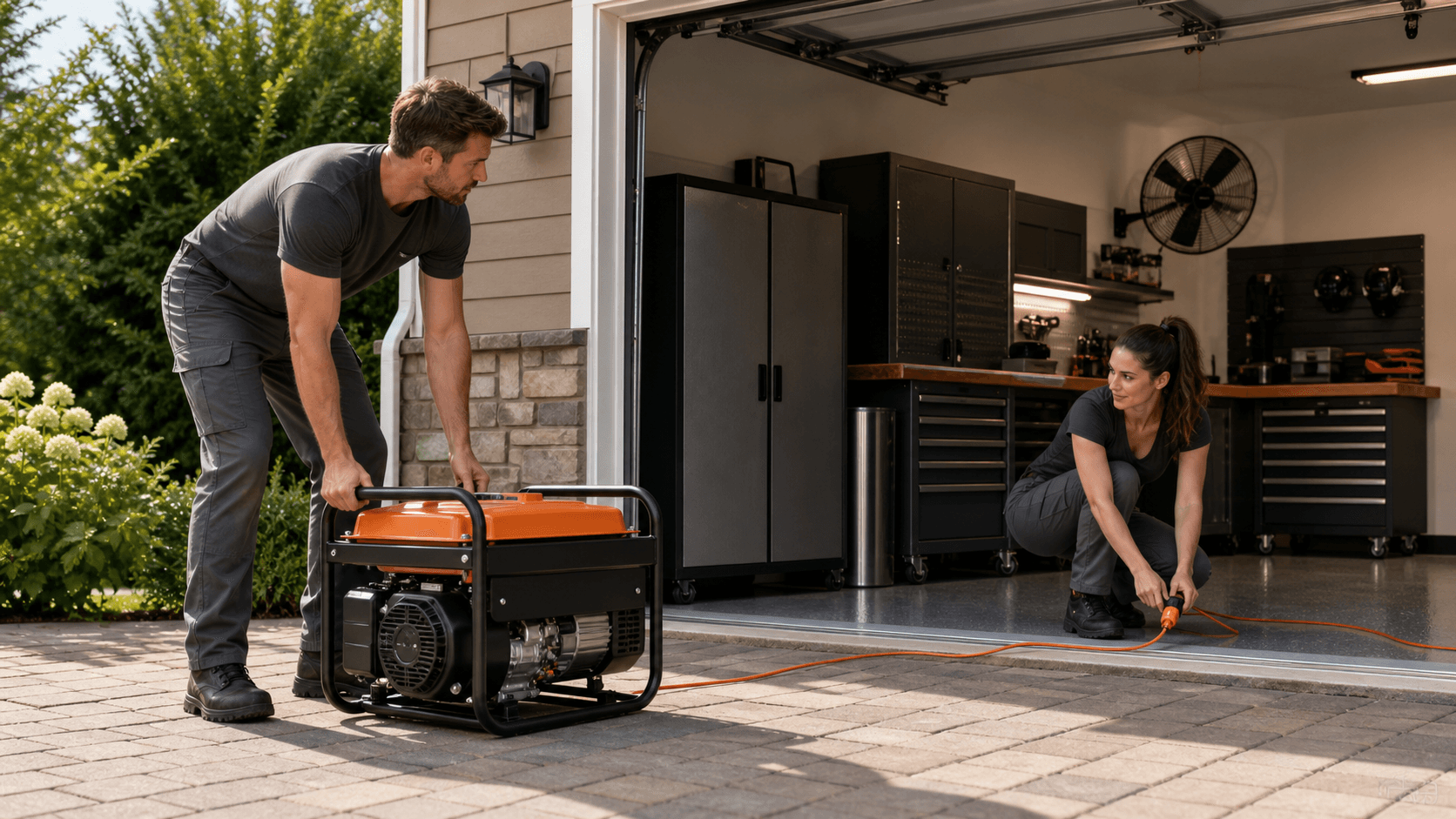
- Louder, with fumes that must stay outside
- Need regular care so they start when you need them
Solar power stations and battery units:
- Quiet and clean, good for attached garages
- No fumes, can sit safely inside on a stable surface
- Need time and sunlight to recharge through panels
Hybrid setups combine a battery power station with a gas generator or solar panels, so you can top up the battery either way.
Safety in and around the garage is non-negotiable. Combustion engines should never run inside the garage or near open windows. They belong outside on level ground with exhaust pointed away from doors. Battery-based power stations, on the other hand, can live inside the garage, away from standing water and where cords can be routed cleanly.
Match the tech to your lifestyle:
- Frequent DIY users may lean toward hybrid setups that can power tools and charge batteries often
- Homeowners in storm-prone areas might like a gas unit for longer outages plus a battery station for quiet overnight use
- Those who want low maintenance and minimal noise often start with a solar-capable battery power station
Smart Features That Matter When the Power Fails
Not every feature on a spec sheet helps in a cold, dark garage. Some do, and they are worth watching for.
Key ports and outputs:
- Multiple 120V standard outlets for common tools and appliances
- Optional 240V output if you plan to power heavier loads and your setup supports it
- 12V ports for automotive tools and inflators
- Plenty of USB and USB-C ports for phones, tablets, and small lights
Helpful smart features include:
- App monitoring so you can check battery level from inside the house
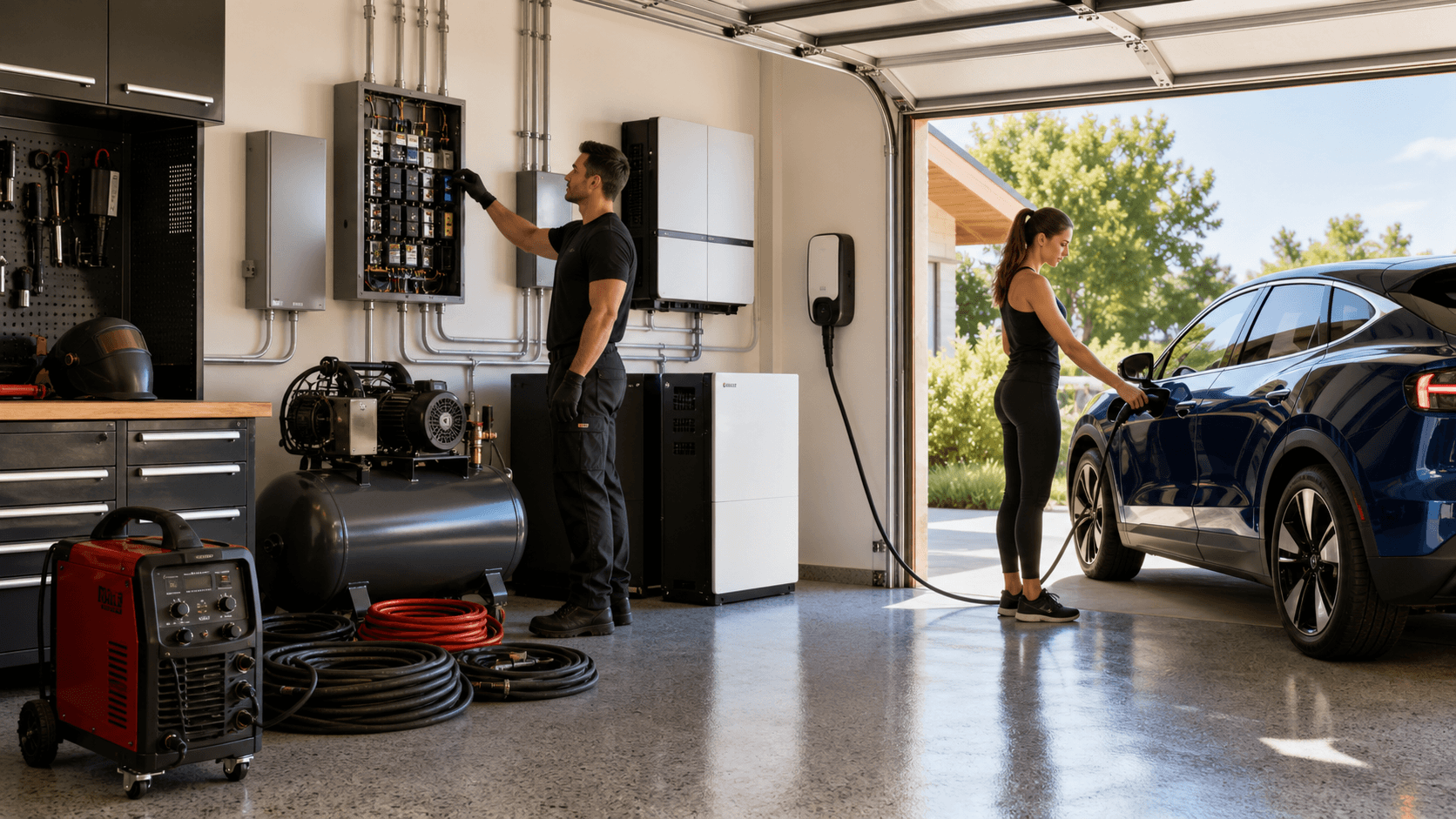
- Compatibility with transfer switches or interlock kits installed by a pro
- Fast recharge options from wall, gas generator, or solar
- Clear, backlit displays you can read by flashlight or work light
Durability and form factor really show up during storms. Look for solid housings, stable wheels, and strong handles that roll easily across a garage floor. Good cord management, like built-in wraps or hooks, keeps walkways open so no one trips while carrying gear or fuel.
Set Up Your Storm-Ready Garage This Weekend
You can build a storm-ready plan in a single weekend if you keep it simple.
First, pick the type and size of garage power station that fits your needs and space. Decide where it will live in the garage, keeping in mind airflow, distance to the door, and reach to your gear. Then map which devices or circuits you want to power and in what order during an outage.
Next, put together a labeled outage kit so everything is ready to go:
- Heavy-duty extension cords and power strips rated for outdoor or garage use
- Fuel cans or solar cables stored safely, away from sparks and open flames
- Surge protectors for sensitive electronics
- A printed checklist taped near the power station that shows what to plug in first
Garage Gear Direct curates power stations and accessories for serious DIY users and working garages, with gear suited to different layouts, climates, and storm patterns. With a little planning now, your garage can become a calm, organized command center when the lights go out and the weather turns rough.
Power Your Garage Projects With Reliable Backup Energy
Take the next step toward a more resilient and productive workspace by exploring our garage power station options tailored for real-world garage needs. At Garage Gear Direct, we help you match the right capacity and features to your tools, EVs, and backup requirements. If you have questions or need personalized guidance, reach out through our contact page so we can help you plan the ideal setup.