Complete Guide to Building a Reliable Home Backup Power System
A reliable home backup power system turns a stressful outage into a controllable inconvenience instead of an emergency. Instead of scrambling for candles and watching your fridge warm up, you keep the lights on, the food cold, and the Wi-Fi or medical gear running while everyone else on the block goes dark. That peace of mind is exactly what we want to help you build.
In this guide, we walk through how to design a practical, DIYer-friendly backup setup that fits your home and budget. We cover everything from deciding what you actually need to power, to choosing between a gasoline generator, a Jackery solar generator or similar power station, and full battery backup. We also look at safe wiring options, solar integration, and how to test and maintain your system so it is ready when the grid fails.
Keep the Lights on When the Grid Goes Down
When storms hit, lines fail, or the grid stutters, the difference between prepared and unprepared feels huge. A basic portable generator can keep a few things running, but a real backup power system is planned, integrated, and safer to operate, with clearly defined loads and repeatable steps for switching over.
At its core, a home backup power system is a combination of:
- Power source (generator, power station, or battery bank)
- Energy storage (batteries built into a power station or separate battery bank)
- Charging sources (grid, solar panels, or fuel-driven generator)
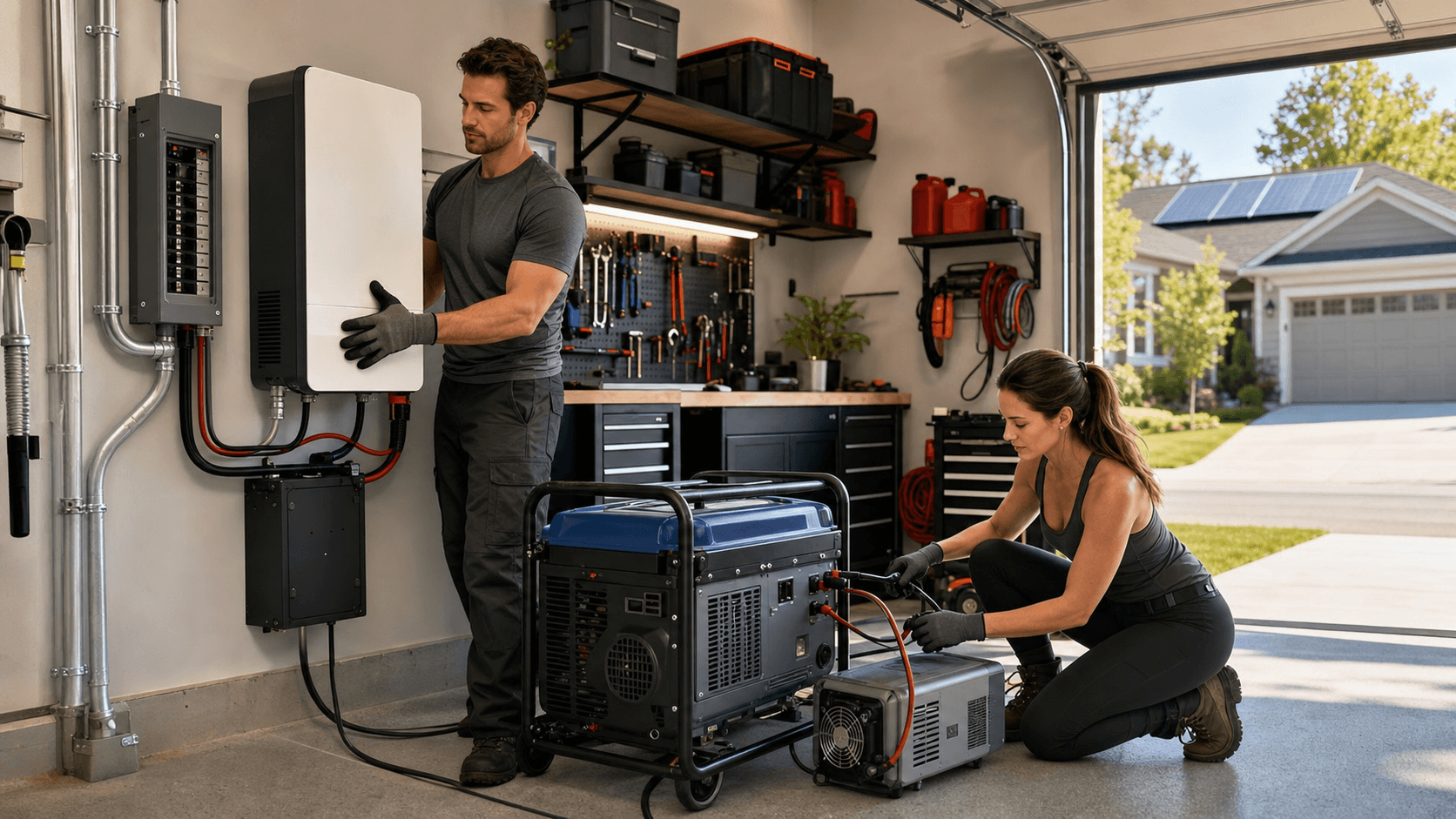
- Safe connection hardware (transfer switch, interlock, or subpanel)
Compared to a simple portable generator and a tangle of extension cords, a designed system uses proper wiring, usually through a transfer switch or critical-load panel. It lets you power specific circuits like your fridge, sump pump, or Wi-Fi without guesswork or dangerous backfeeding into the utility lines. Our goal here is to give serious DIYers and homeowners a step-by-step roadmap, from concept to a working, reliable setup.
Decide What You Need to Power and for How Long
Before buying anything, we need to know what you actually care about keeping on. We usually split loads into two groups.
Critical loads often include:
- Refrigerator or freezer
- A few key lights, mostly LED
- Wi-Fi router and phones or laptops
- Sump pump or well pump
- Medical devices
- Small space heater or fan, depending on season
Nice-to-have loads are things like extra lighting, a TV, power tools, or partial HVAC. You might decide that during an outage, comfort takes a back seat to food safety and keeping water flowing.
To size your system, look at each device's power draw in watts. Nameplates usually show watts directly or show amps and volts, in which case watts equal volts times amps. Many appliances, like fridges or pumps, have a higher starting wattage for a brief moment, then a lower running wattage. Your inverter or generator must handle those surges.
Add up the running watts for everything you want to power at the same time, then factor in the largest starting load. That gives you a target for inverter size and surge capacity. Next, think about how long outages typically last where you live. A few hours calls for a smaller energy storage capacity than planning for 24 to 72 hours.
Finally, decide if you want:
- Whole-home backup, where almost everything can run
- Partial-home backup, where only a critical-load subpanel is backed up
- Portable-only backup, where you plug in a few items directly
For most DIYers, partial-home backup is the sweet spot, giving a lot of resilience without the cost and complexity of whole-home systems.
Choose Your Backup Power Strategy and Components
Once you know what you want to power and for how long, you can choose your main strategy. Most setups fall into four categories.
Portable gasoline generators are common and relatively affordable. They can power heavy loads if sized correctly, but they are noisy, need regular fuel and maintenance, and must always be run outdoors. Exhaust and carbon monoxide hazards mean strict safety discipline.
Solar generators, such as a Jackery solar generator, combine an inverter, battery, and charge controller into one quiet, portable unit. They charge from wall outlets, car ports, or solar panels, and can be used indoors because there are no fumes. They are great for critical loads, flexible around the home, and offer modular building blocks for a broader backup system.
Hybrid power stations pair a power station or solar generator with a gasoline or propane generator that can recharge the batteries when the sun or grid is not available. This approach lets you run the loud generator less often, topping off your batteries and using quiet battery power most of the time.
Full battery backup systems use fixed battery banks and inverters tied into your home wiring. They can be paired with solar for long outages. These are excellent but require careful design and often professional installation.
When comparing units, pay attention to:
- Inverter type (pure sine wave is best for electronics)
- Continuous and surge wattage ratings
- Battery chemistry and expected life
- Expandability with extra batteries
- Solar input limits and connector types
A Jackery solar generator or similar power station can serve as your initial backup, then later be integrated into a larger system as a portable backup for specific circuits or areas.
Design Your Backup System Layout and Wiring
Safe, code-compliant wiring is where planning pays off. There are a few main options for connecting backup power to your home:
Manual transfer switch: a dedicated switch that lets you choose between utility power and your backup source for specific circuits. This is a popular and safe route for generators and larger power stations.
Interlock kit: a mechanical device on your main panel that prevents your main breaker and generator breaker from being on at the same time. It effectively turns part of your panel into a backup-fed segment.
Critical-load subpanel: a smaller panel that only contains the circuits you want backed up. Your backup power feeds this panel, which keeps things organized and easy to manage.
Direct plug-in: where you plug devices directly into a power station like a Jackery solar generator. This is simple and safe for smaller setups, as long as you are not trying to backfeed the house.
Whatever method you choose, never connect a generator or power station to a home circuit without a proper transfer device. Backfeeding the grid can endanger utility workers and damage equipment. Equipment should be located where there is good ventilation, protection from rain or snow, and easy access for refueling, resetting breakers, and connecting solar panels.
Local code often requires an electrician for installing transfer switches, interlocks, or new panels. Even if you are a confident DIYer, partnering with a licensed pro for the electrical tie-in and permits is a smart move, and you can still handle planning, mounting, and non-electrical work yourself. Leave room for growth in your design, like extra space on a subpanel or higher-capacity wiring runs if you might add more solar or battery capacity later.
Install, Test, and Maintain Your Backup Power Setup
Once the plan is set, it is time to build. A typical DIYer-friendly sequence might look like this:
- Mount solar panels on a roof or ground rack where they get good sun
- Install any transfer switch, interlock, or subpanel with an electrician
- Place your generator, power station, or Jackery solar generator in its designated location
- Run and secure cables between panels, power stations, and inverters, following polarity and wiring diagrams
- Label every circuit and outlet that is part of the backup system
After installation, run a simulated outage drill. Turn off the main breaker, switch over using your transfer device, and then power up your backup source. Verify that each critical load behaves as expected. Watch how long your system runs and how quickly it recharges from the grid, generator, or solar.
If you are integrating solar for off-grid resilience, size your array based on daily energy needs, not just peak watts. Solar will recharge your batteries steadily, not instantly. A Jackery solar generator and similar units often come with matched panels and built-in charge controllers, which simplifies this step.
Maintenance matters just as much as installation. Some simple habits go a long way:
- Test your system a few times a year
- Cycle batteries periodically, following the manufacturer's guidelines
- Store gasoline with stabilizer and rotate it regularly if you use a fuel generator
- Keep firmware up to date on smart power stations when updates are offered
- Inspect cables, connectors, and mounting hardware for wear or corrosion
Treat your backup system like any other tool. The more familiar you are with it during calm weather, the more confident you will be when the lights go out.
Turn Your Backup Power Plan Into Everyday Readiness
Building a reliable home backup power system comes down to a few clear decisions: which loads matter most, how long you want to support them, what type of power source fits your lifestyle, and how you will connect everything safely. Once you have those answers, choosing between a portable generator, a Jackery solar generator, hybrid options, or a full battery backup becomes far easier.
Many DIYers start small, perhaps with a single power station and a compact solar panel, then grow into transfer switches, subpanels, and larger battery capacity as they see how the system fits their home. That step-by-step approach keeps costs under control and helps you learn as you go. At Garage Gear Direct, we focus on gear that serves serious DIYers and professionals, and the same mindset of planning, testing, and steady upgrading works beautifully for home backup power too.
Power Your Garage Projects With Reliable Off-Grid Energy
If you are ready to keep your tools, lighting, and essential gear running in any situation, explore our Jackery solar generator options designed for dependable backup power. At Garage Gear Direct, we help you choose the right setup so you can work confidently through outages or off-grid adventures. Have questions or need a hand comparing models? Simply contact us and we will walk you through the best solution for your space.