Dialing in Your Power: Why Inverter Choice Matters
Choosing the right power inverter is one of the most important steps in building a dependable garage or off-grid setup. If you are running tools, chargers, a fridge, and off-grid lighting from batteries, the inverter is the heart of that system. Get it right and your gear runs smoothly, quietly, and reliably. Get it wrong and you can end up with overheated tools, buzzing lights, tripped protection circuits, and batteries that never seem to stay charged.
At Garage Gear Direct, we focus on professional-grade gear for serious DIYers, home workshops, and pros who want their garage to work as hard as they do. In this article, we will break down how inverters work, the difference between pure sine wave and modified sine wave, and how to match the right type and size to your garage and off-grid plans, including off-grid lighting that you can trust during outages.
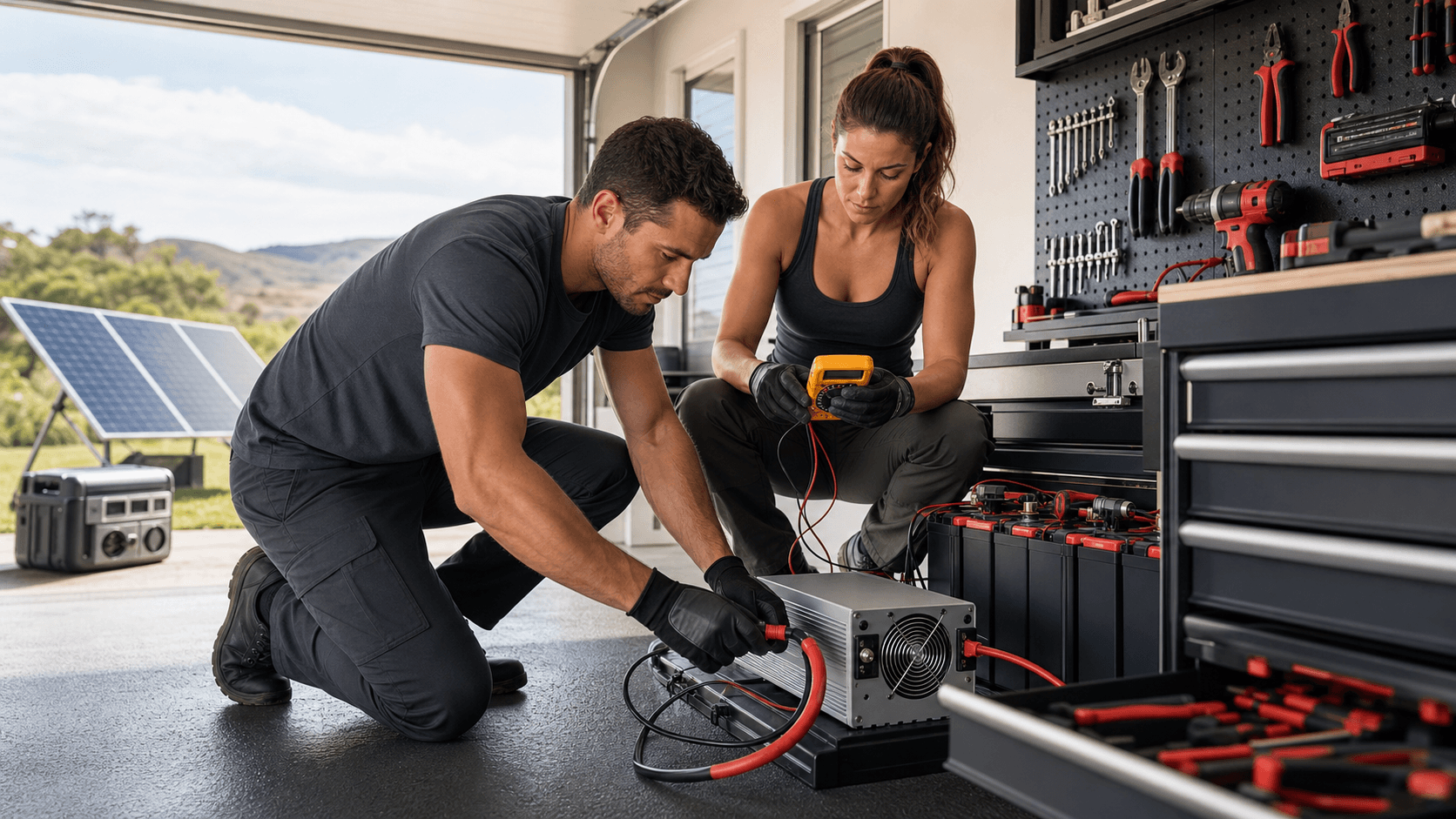
A power inverter converts DC power from a battery bank into AC power that your tools, chargers, and lights expect. That could be a deep-cycle battery system feeding your garage subpanel, a mobile workshop in a vehicle, or a compact battery box dedicated to off-grid lighting and electronics. The type of AC waveform your inverter creates has a big impact on performance, safety, and the life of your equipment, so it pays to understand the basics before you buy.
Sine Wave 101: What Pure and Modified Really Mean
Utility grid power is essentially a smooth, rolling wave of voltage that rises and falls in a clean curve, called a sine wave. A pure sine wave inverter aims to copy that curve as closely as possible. The result is clean AC power that sensitive electronics, smart chargers, and LED drivers are designed for. Most gear you plug into a standard outlet is happiest on this type of power.
A modified sine wave inverter, on the other hand, produces a stepped or squared version of that wave. Instead of a smooth curve, the voltage jumps in chunks. This design is simpler and usually costs less, which is why modified sine wave inverters are popular in budget builds and occasional-use backup setups.
That waveform shape is not just an engineering detail. It affects how your gear behaves in the real world. Motors may run hotter or noisier, some battery chargers may not work correctly, and audio gear can pick up electrical buzz. With off-grid lighting, especially LED fixtures and drivers, modified sine output can lead to flicker, audible humming, or shorter lifespan. Pure sine tends to keep heat, noise, and odd behavior to a minimum.
Pure Sine Wave Inverters: When Clean Power Is Non-Negotiable
Some loads in your garage or off-grid system are picky about power quality. For these, pure sine wave is less of a luxury and more of a requirement. In most setups, we strongly recommend pure sine wave inverters for:
- Variable speed power tools and compressor motors with electronic controls
- Newer cordless tool chargers and smart battery chargers
- Laptops, tablets, and phone chargers
- Smart TVs, media gear, and test instruments
- Fridges or freezers that have digital control boards
- Most LED off-grid lighting systems and drivers
These devices are designed with the expectation of smooth AC power. With pure sine wave, they generally run cooler, hit their proper power levels, and are less likely to glitch or shut down unexpectedly. Audio systems tend to sound cleaner, sensitive meters read more accurately, and LED lighting maintains consistent brightness without annoying flicker.
There is a cost tradeoff. Pure sine wave inverters usually come at a higher upfront price compared to similarly sized modified units. But in a serious garage or off-grid setup, the long-term picture is different. Running gear cooler and closer to design specs can help extend equipment life, reduce odd failures, and improve charging behavior for your battery tools. If you count on your garage power during outages or for off-grid work, the lower risk of damaging expensive tools or appliances often justifies the added cost.
Modified Sine Wave Inverters: Where You Can Safely Save Money
Not every load cares about a perfect waveform. Modified sine wave inverters still have a place, especially in targeted or budget-conscious setups. Many simple resistive loads work just fine on modified sine power, including:
- Incandescent work lights and basic shop lights
- Simple space heaters without digital controls
- Older corded tools with brushed motors and no speed electronics
- Basic appliances that lack electronic boards
If your goal is to power a single pump, a basic tool, or a box of incandescent bulbs for emergency lighting, a modified sine inverter can be an economical solution. That said, there are real limitations. Some motors may run hotter or make a noticeable hum. Certain chargers run less efficiently, or may refuse to charge at all. LED fixtures can buzz, flicker, or wear out sooner, especially in off-grid lighting setups that run many hours.
A modified sine inverter tends to make sense when you have a clearly defined, simple load, limited runtime, and a tight budget. A good use case might be a small emergency kit that powers one pump and a couple of basic lights, or a rarely used backup for a single tool in a detached garage.
Matching the Right Inverter to Your Garage and Off-Grid Plan
Choosing between pure and modified sine wave starts with a clear inventory of what you plan to power. Before you spend a dollar, grab a notepad and work through these steps:
- List every device you want to run, including tools, chargers, appliances, and off-grid lighting
- Mark anything with electronics, digital displays, variable speed, or LED drivers as sensitive
- Check labels for wattage and note both running and starting surge needs, especially for motors and compressors
- Decide which devices must run flawlessly during an outage or off-grid-use, and which are optional
- Use that information to decide where pure sine is required and where modified might be acceptable
Consider a full garage workshop with backup power for a compressor, tool chargers, off-grid lighting, and a fridge. In that case, a larger pure sine wave inverter as the main system usually makes sense, because there are multiple sensitive loads and several that you rely on heavily.
If you run a vehicle-based mobile workshop, you may split the difference. Many owners choose a pure sine inverter sized for chargers, electronics, and LED lighting, and a separate, smaller modified unit for a single legacy tool or heater that can tolerate it.
For a small battery bank dedicated only to off-grid lighting and low-power electronics, the decision often hinges on the type of lighting. If your system is mostly LED, pure sine wave is typically the safer bet for stable, flicker-free operation. Modified sine might work in some cases, but the risk of buzz and shortened lifespan is higher.
When you look at overall cost of ownership, the inverter price is only part of the equation. Replacing burned-out lighting, fried chargers, or damaged electronics adds up. So does lost productivity when a key tool refuses to run on your inverter. Reliable backup power has value, especially when your garage is part of how you earn a living or keep your home running during outages.
Powering up with Confidence
Pure sine wave and modified sine wave inverters both have their place, but they serve different priorities. Pure sine is usually the right call for your main system, especially if you rely on LED off-grid lighting, smart chargers, and modern appliances. Modified sine can be a smart, cost-conscious option for simple, occasional loads that are not sensitive to waveform quality.
When in doubt, design around your most sensitive and most important equipment first. Make sure your off-grid lighting, electronics, and key tools are covered with clean power, then size and select the inverter type that fits the whole picture. At Garage Gear Direct, we build our recommendations around that same approach, so your garage or off-grid setup feels solid every time you flip the switch.
Power Your Space With Reliable Off-Grid Lighting Solutions
If you are ready to make your garage or workspace more resilient, explore our curated range of off-grid lighting options designed for real-world performance. At Garage Gear Direct, we focus on practical setups that are easy to install and maintain, so you get dependable light when the grid goes down. If you have questions about sizing, compatibility, or choosing the right system, contact us and we will help you plan the best solution for your space.