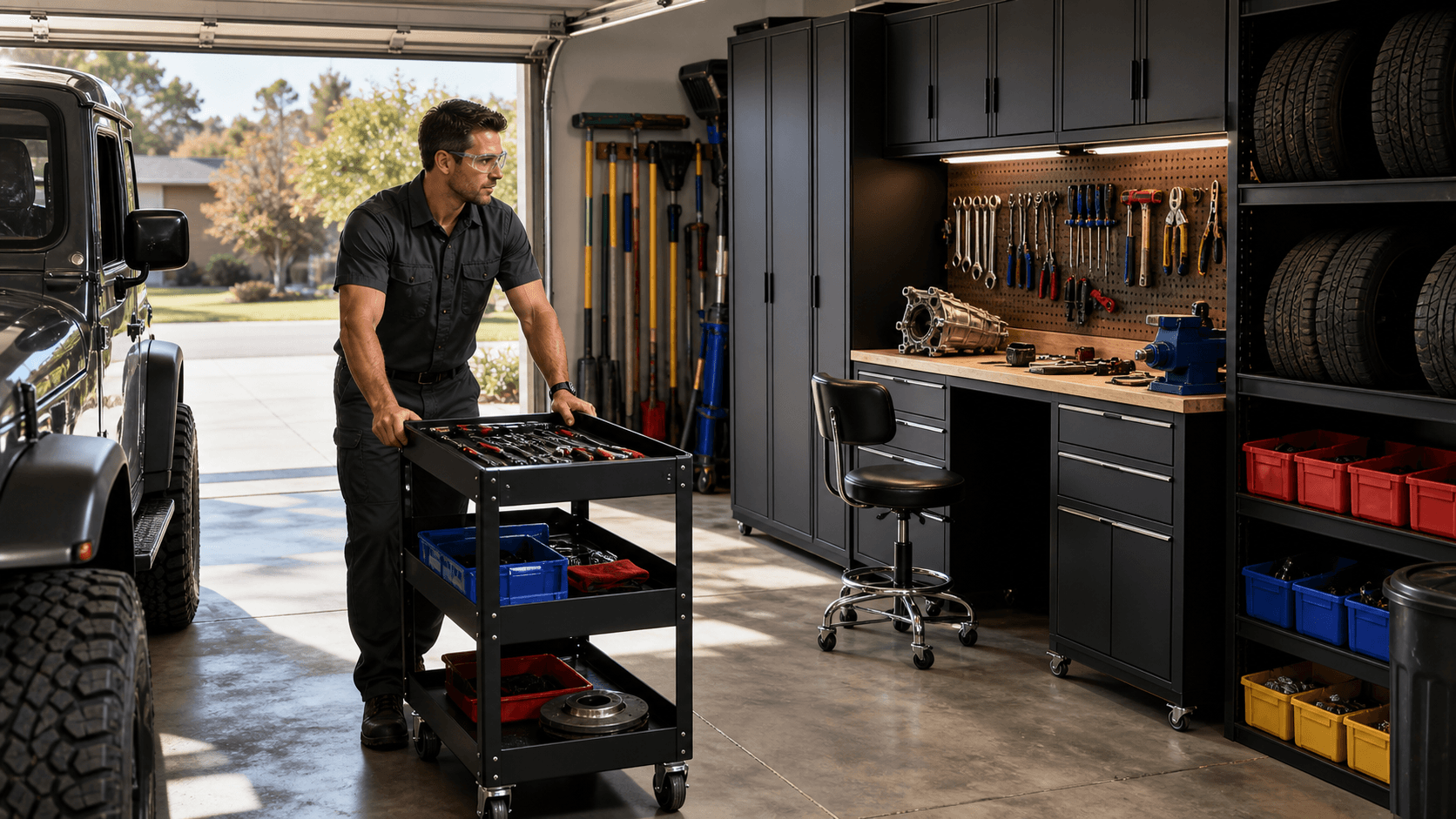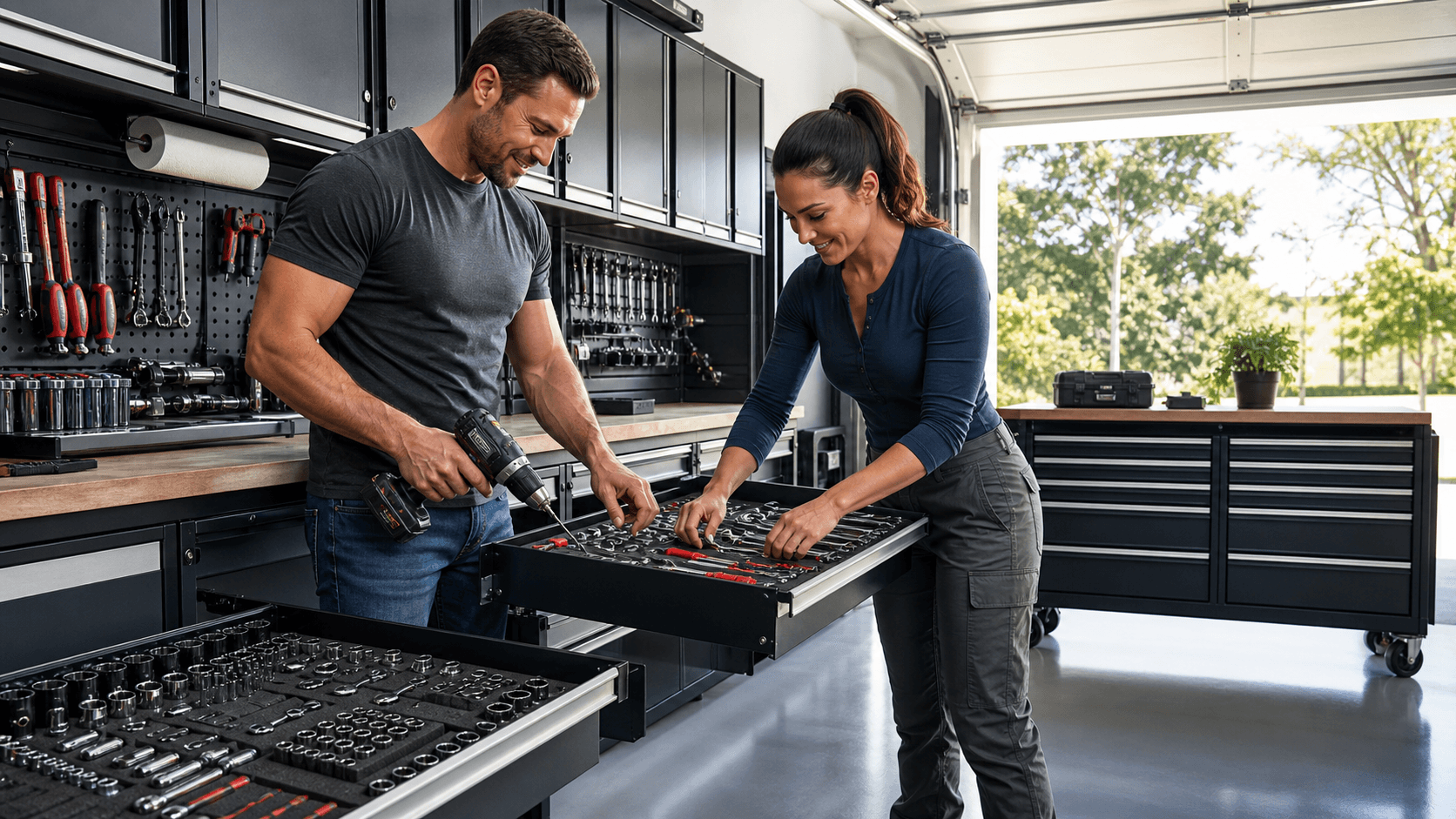
From Cluttered Garage to Pro-Shop-Ready Space
A pro-grade shop does not happen by accident. It comes from clear decisions about how you work, what you need to store, and how you want your tools and power arranged so nothing slows you down. When tool storage, layout, and power are planned together, your garage starts working like a real shop instead of a crowded catch-all.
In this article, we walk through how to turn any garage or small commercial bay into a pro-level workspace. We will cover layout, zones, tool storage, workbenches, and backup power, all from the perspective of gear built for serious DIYers and commercial shops. By the end, you will have a practical plan to upgrade your space step by step, without feeling overwhelmed.
A casual garage often means stacked totes, random shelves, and a rolling cart that always seems to be in the way. A true pro shop is the opposite: every tool has a home, projects move from prep to finish without backtracking, and the space feels safe and predictable. Reliability and safety are not extras; they are baked into where you put your storage, how you run power, and what kind of equipment you buy.
Planning comes first. Are you building a serious DIY garage, a side-hustle workshop, or a full commercial pro shop? Your answer drives everything, from how much heavy tool storage you need, to whether you prioritize vehicle access, big workbenches, or dedicated bays for different types of work.
One of the most helpful concepts is working in zones. Common shop zones include prep, cutting, assembly, finishing, mechanical, and electrical. When you tie your zones to your tool storage, you get less walking, less clutter, and fewer mistakes, because the right tools live where the work actually happens.
At Garage Gear Direct, we focus on pro-grade equipment because big-box storage often falls short in hard-working garages and commercial shops. Thicker steel, higher load ratings, and more durable finishes give you storage that can handle real abuse and keep working when consumer-grade pieces are falling apart.
Planning Your Pro Shop Layout for Flow and Safety
Before buying a single cabinet, grab a tape measure. Measure the wall lengths, ceiling height, door openings, and any tight spots you need to respect. Then think about traffic patterns: how vehicles pull in, how large sheets, engines, or equipment move through, and where people need clear walkways around tool storage and machinery.
Work zones should follow a logical flow. Put your main workbench near the center of action, with your most-used tools and tool chests within a couple of steps. Heavy cabinets and tall lockers usually belong against walls, anchored and out of traffic lanes, while rolling boxes can live closer to your primary work area for flexibility.
Power and lighting deserve early attention. You will want enough outlets and circuits so you are not daisy-chaining power strips. That often means:
- Dedicated circuits for big tools like compressors or welders
- Plenty of outlets along walls near tool storage and benches
- A mix of bright overhead lighting and focused task lighting at benches
- A clear spot for backup power solutions, away from flammable materials
Safety is part of layout, not an afterthought. Plan clear egress paths so you can get out quickly in an emergency. Place fire extinguishers where they are easy to grab, not buried behind a toolbox. Think about ventilation for fumes and dust, and try to keep grinding and cutting away from clean assembly or electronics work. Noise control also matters, so loud tools and compressors should be grouped where they bother you least.
Choosing Pro-Grade Tool Storage That Works as Hard as You Do
Not all tool storage is built for pro use. Consumer-grade cabinets often use lighter steel, weaker drawer slides, and finishes that chip or rust fast. Pro-grade systems usually step up with thicker gauge steel, heavy-duty ball-bearing slides, higher drawer load ratings, better locks, and durable powder coat finishes that can take real shop abuse.
Different formats fit different styles of work. Common options include:
- Rolling toolboxes for mobile access around vehicles or large projects
- Stationary base cabinets that anchor worktops and support benches
- Tall lockers for bulky gear, detailing supplies, or safety equipment
- Workbench combos that combine drawers, cabinets, and a solid top
- Wall-mounted panels or cabinets for tools you want visible and off the floor
We like organizing by function, since many shops mix mechanics, woodworking, electrical, and detailing. Keep each discipline grouped: mechanics wrenches and sockets in one bank of drawers, woodworking layout tools and bits in another, detailing chemicals and towels in a tall cabinet. Frequently used tools can live in top drawers or wall panels where they are visible, while high-value or delicate tools go in locking drawers.
Scalability is key if you plan to grow. Modular storage systems let you start with a core set of cabinets or a tool chest, then expand outward with add-on drawers, uppers, and overhead storage. That way, your investment grows with your tool collection or your business instead of forcing a full reset later.
Integrating Storage, Workbenches, and Power Solutions
The best pro shops blur the line between storage and workspace. Heavy-duty tool storage can sit directly under a thick worktop, with vises and fixtures mounted on top and integrated power strips along the back. This keeps tools in reach, cords under control, and work surfaces solid enough for serious hammering or precise assembly.
Backup power is another piece of the pro puzzle. If your income or project timeline depends on staying productive, a power outage cannot shut you down completely. Backup options can keep lifts cycling, compressors running, and LED lights on so you can finish a job. Even in a home shop, having generators, inverters, or battery backup ready for essentials adds real peace of mind.
Mounting and anchoring matter for safety and longevity. Tall cabinets should be anchored to walls, especially in earthquake-prone areas or busy commercial bays. Wall panels, shelving, and charging stations need solid backing so they do not work loose over time. A little extra effort here keeps your storage straight, safe, and ready for heavy loads.
Cable and hose management keeps your shop from turning into a tripping hazard. Ceiling or wall-mounted reels for air hoses and power cords, floor or wall channels for routing cables, and specific charging areas for batteries all reduce clutter. Less time untangling cords means more time turning wrenches.
Organizing for Speed, Accuracy, and Easy Maintenance
Once your main storage is in place, small organization habits will determine how fast you can work. Labeling drawers, adding foam inserts, and using shadow boards for hand tools help you see what is missing at a glance. Color coding, for example by tool type or zone, speeds up both grabbing and putting away.
For busy shops, a few best practices keep tool storage under control:
- Assign a specific home for every tool or kit
- Use checklists for mobile carts so nothing gets left behind
- Lock key drawers or cabinets in high-traffic areas
- Reserve top drawers for the tools you reach for constantly
Maintenance and cleaning routines keep your shop looking and performing like a professional space. Set a recurring time to wipe down benches, clear dust from cabinet tops, and check drawer slides and locks. Give backup power equipment and charging stations a quick inspection so you are not surprised the next time you really need them.
Inventory control does not need to be complicated. A simple list or spreadsheet that tracks what you own, what needs replacing, and what upgrades you want next will help you invest wisely. When you prioritize durability and performance in each new purchase, your shop steadily moves closer to the pro vision in your head.
Turning Your Vision Into a High-Performance Pro Shop
A high-performance shop is the result of thoughtful choices about layout, tool storage, work surfaces, and power, all working together. When your zones are clear, your pro-grade storage is dialed in, and your benches and backup power are ready for serious use, the entire space starts supporting your best work instead of fighting it.
The key is to start with a clear plan and then improve one zone at a time. Measure your space, sketch a layout around your workflow, and audit what tools and storage you already have. From there, you can choose commercial-quality systems that match your workload and expand as your projects or business grow. The payoff is a safer, smoother, and more satisfying place to work, whether you are wrenching in a home garage or running a busy pro shop bay.
Transform Your Garage With Smart Tool Storage Today
If your tools are scattered and hard to find, we can help you reclaim that space and make every project easier. Explore our modular tool storage solutions to create a setup that fits the way you work. At Garage Gear Direct, we focus on durable, practical designs that keep everything organized and within reach. Have questions or need guidance on planning your layout? Just contact us and we will walk you through your options.