Turn Your Garage Into a Flexible Work HQ
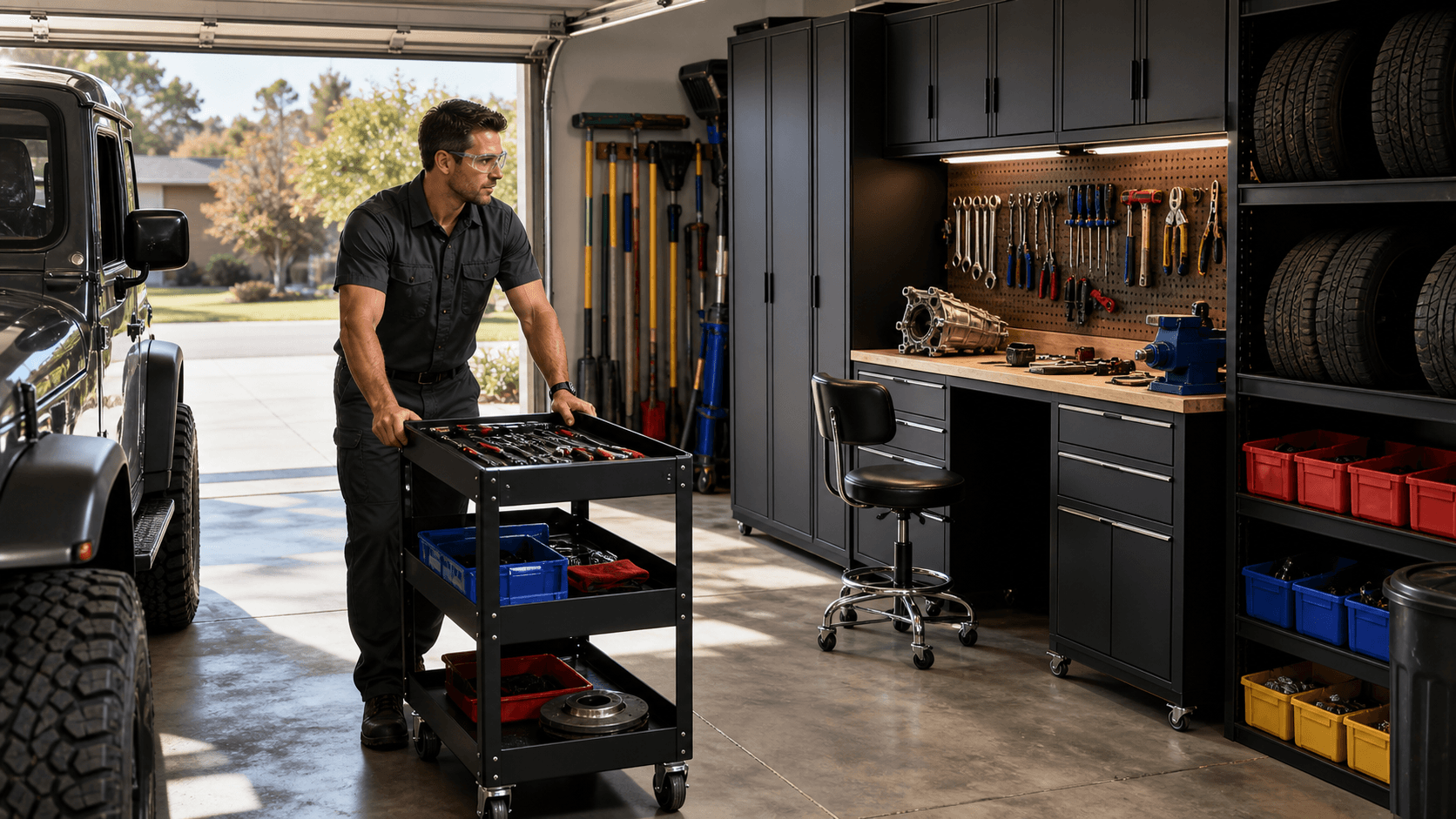
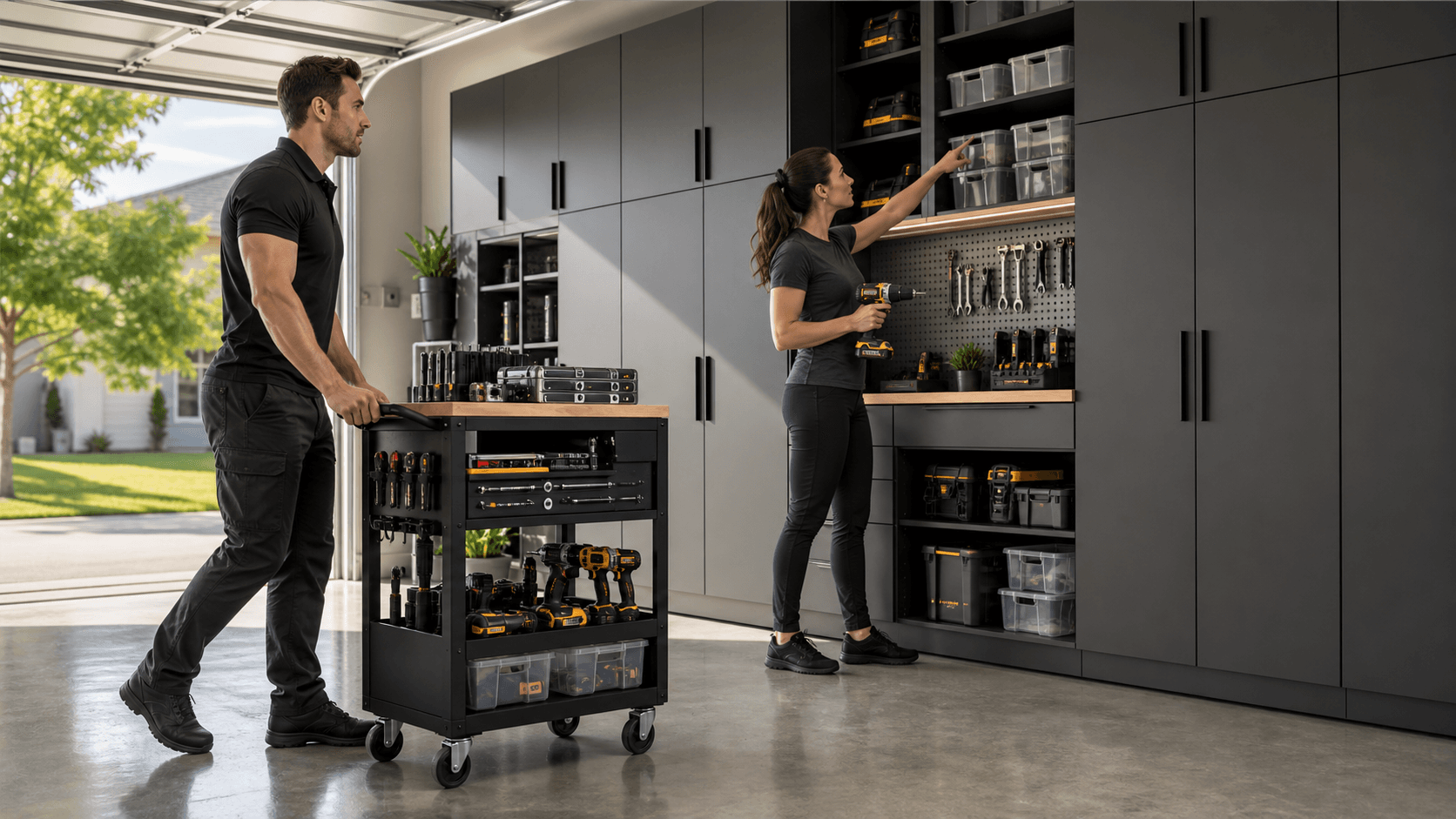
A hybrid garage storage system turns a cluttered space into a place that actually works with you. Instead of fighting piles of tools and gear every time you start a project, your tools come to you, then tuck away again when you need to park.
Right now, late July is a sweet spot. Summer projects are still going, but back-to-school, fall tune-ups, and storm season are all on the way. This is the perfect time to rethink how your garage is laid out so it can flex between parking, projects, and storage without chaos.
When we say "hybrid" storage, we mean mixing mobile tool carts, rolling cabinets, and wall cabinets into one clear plan. The result is simple: faster setups, less tool hunting, safer work zones, and a garage that feels like a pro shop instead of a storage unit with a car squeezed in the middle.
Why Hybrid Storage Beats a Static Garage Layout
A wall full of cabinets and pegboard is great for storage, but it does not move. Once you start a project in the middle of the floor or near the driveway, you end up walking back and forth for every tool. On the flip side, going all-in on mobile tool storage with no fixed cabinets can leave you short on space for bulky gear and safe spots for chemicals.
Hybrid systems give you the best of both. You get:
- Fixed wall cabinets for bulk storage
- Mobile carts and rolling cabinets for active work
- Dedicated spots for power tools and backup power gear
With this setup, you can create clear zones. For example, you might have an auto zone by the garage door, a woodworking corner along one wall, and a lawn and garden area near the back. Each zone has its own mix of wall cabinets and mobile tool storage.
The payoff feels very "pro." You can switch from car work to yard tool tune-ups in minutes, not hours. Seasonal changeovers, like moving from summer yard work to winter prep or storm readiness, are cleaner and calmer because your layout is built to change.
Planning Your Hybrid Layout Before You Buy Anything
Before you order your first tool cart, it helps to step back and look at the whole room. Grab a tape measure and a notepad.
Start by measuring:
- Vehicle parking space, including door swing
- Walkways from house door to driveway
- Overhead space above hoods and roofs
- Outlet locations and main lighting
Next, look for "dead zones." These are tight or shallow spots along the walls where you do not walk much. Those areas are perfect for tall or overhead wall cabinets. Wide clear floor areas are great for rolling carts that need room to move.
Now think about what you actually store:
- Everyday hand tools
- Bulky power tools, like saws and sanders
- Seasonal gear, like snow shovels or leaf blowers
- Backup power units and fuel, which may need breathing room
Safety should shape your layout. Keep fuel and chemicals in wall cabinets that are up high and lockable. Heavy tools belong low, in bottom drawers or lower shelves, not overhead. Plan parking spots for your carts where they do not block car doors, the path to the house, or an emergency exit.
Choosing the Right Mobile Tool Storage for How You Work
Not all mobile tool storage is the same. Different jobs call for different styles.
Here are the basics:
- Mobile tool carts: Open or semi-open tops, fast access, great for in-progress work
- Rolling cabinets: Deeper drawers, more secure, best for full tool sets
- Portable tool boxes: Smaller, liftable, good for quick jobs away from the main bench
If you do mostly mechanical or auto work, you will likely lean toward a sturdy rolling cabinet with lots of shallow drawers for sockets, wrenches, and small parts. Woodworkers often like a cart with a strong, flat top that can act as a mini workbench next to a saw or assembly table. Multi-purpose DIY projects usually need a mix: one "daily driver" cart and one or two extra carts that you can set up for paint, electrical, or outdoor gear.
When you choose mobile tool storage, look for:
- All-steel construction and solid drawer slides
- Load-rated drawers that do not sag
- Quality casters that roll smoothly even when loaded
- Strong brakes so the cart stays put while you work
- A worktop that can take bumps, spills, and repeat use
Once you have a good main cart, build around it. One cart can hold core tools you reach for every week. Another can become your "special project" cart that you swap out based on the season or job.
Wall Cabinets That Anchor Your System and Keep It Safe
Mobile storage is the flexible part of your setup. Wall cabinets are the anchors. They take care of the big, awkward, or long-term items that would just clutter a cart.
Think about using:
- Tall cabinets along side walls for bulky gear and bins
- Overhead cabinets above vehicles for lighter, less-used items
- Shallow cabinets above benches so tools stay close without hitting your head
Any wall cabinet you choose should be able to handle real workshop life. That means solid construction, durable finishes, and shelves with clear weight ratings. Always mount into studs or masonry, not just drywall, so the cabinet can carry heavy loads safely.
Security matters too. Lockable doors on certain cabinets give you a safer place for chemicals, sharp tools, and anything you want away from kids or pets. Placing overhead units at the right height so you do not bang your head while getting in and out of the car is worth the planning time.
Wall cabinets really shine for long-term and seasonal storage. Summer yard tools, winter gear, and storm supplies can rotate in and out. That rotation keeps your mobile tool carts focused only on current work instead of holding a mix of "now" and "maybe later."
Building a Workflow-Friendly Hybrid System Step by Step
Once you have a plan, it is time to build your system in a way that feels simple instead of overwhelming.
A clear upgrade path looks like this:
- Clear and clean the garage, while the weather is warm and dry
- Mark out parking lines and walk paths with tape or chalk
- Install wall cabinets first along your chosen zones
- Add mobile tool storage that fits the leftover space and your work style
As you place carts and cabinets, think about your workflow. A good setup has a natural route, like: raw materials storage, cutting or teardown, assembly or repair, finishing or testing, then cleanup. Put the right cart or cabinet near each step.
Habits will keep your system working. Simple routines help, like:
- End-of-day cart resets, tools back to specific drawers
- Seasonal reshuffles at the end of summer and the start of winter
- Clear labels on drawers and cabinet doors so everything has a home
Over time, the garage starts to feel like a shop built just for how you work.
Make Your Garage Shop-Ready Before Fall Hits
As the heat slowly starts to ease and storm season creeps closer, a smart hybrid system means you are ready. You can pull a car in, roll carts into position, reach backup power gear without moving a mountain of boxes, and still find a rake when the leaves hit.
At Garage Gear Direct, we focus on pro-grade storage, tools, and backup power gear that stand up to real work in real garages. When every cart, cabinet, and power unit is part of one simple, flexible plan, your garage stops being a catch-all and becomes a space you are proud to work in, season after season.
Get Started With Your Project Today
Transforming your garage workflow is easier when your tools move with you, not the other way around. Explore our mobile tool storage solutions to keep everything organized, secure, and within reach wherever you are working. At Garage Gear Direct, we are ready to help you choose the right setup for your projects and space. If you have questions or need guidance before you buy, just contact us.