Quiet, Clean Power That Lets You Actually Relax
Weekend camping is supposed to feel simple. We pack the truck, hit the road after work, and head for cooler air, tall trees, and a clear sky. What we do not want is a camping generator humming in the background, blowing fumes across the fire ring, and drowning out the crickets.
Portable power stations change that whole picture. They give us the electricity we need for a short trip, without the noise, smell, or constant tinkering that comes with gas units. For most weekend campers, they cover the basics much more easily than a traditional camping generator.
At Garage Gear Direct, we focus on pro grade gear for people who are serious about getting outside, from quick family trips to remote overlanding runs. In this guide, we will look at why portable power stations fit weekend trips so well, how they compare on noise and safety, what size you really need, and how to pick the right setup for your style of camping.
Noise, Fumes, and Campground Rules That Kill the Vibe
A typical camping generator makes its presence known from the moment it starts. The steady drone cuts across quiet woods, over the sound of the creek, and right through tent walls. It might blend in at a busy event, but at a peaceful campsite it feels loud all the time.
That noise does not just bug your group. It carries to nearby sites and can turn friendly neighbors into annoyed ones pretty fast. During late nights or early mornings, one pull of a starter cord can wake up half the loop.
On top of the sound, gas units bring fumes and exhaust. You have to park a generator away from sleeping areas and never run it in a tent, under a camper shell, or inside a vehicle. Even outside, wind can push fumes right into where people are sitting or cooking.
Many campgrounds know this, so they set rules such as:
- Quiet hours at night and early morning
- Decibel limits on generators
- Full generator bans in popular areas at busy times
When those rules kick in, a camping generator can turn into dead weight. You may not be allowed to run it when you actually want it.
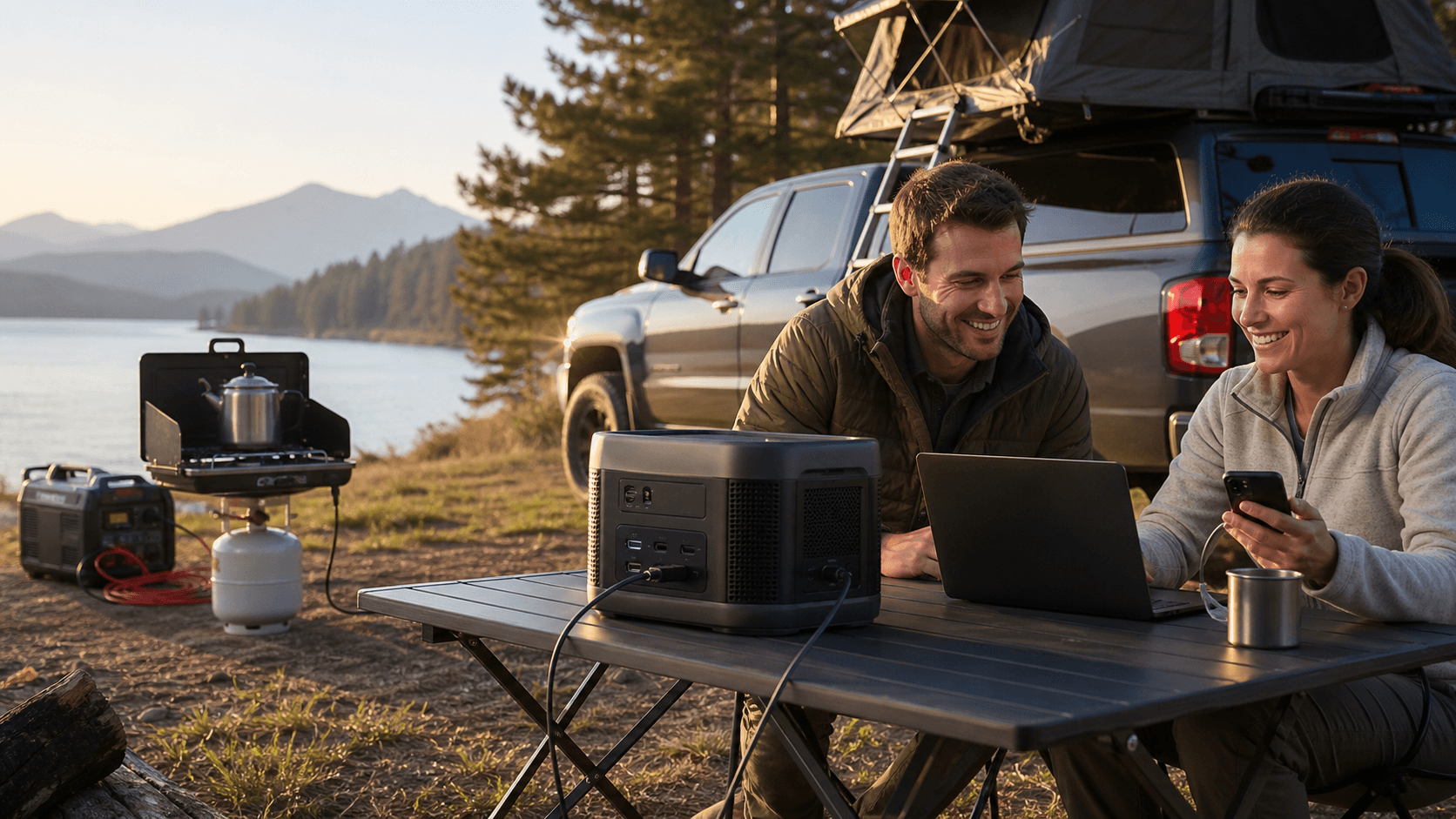
Portable power stations avoid all of this because they run on stored battery power. There are no fumes, no exhaust, and almost no sound beyond a small fan now and then. You can:
- Charge phones and cameras while everyone sleeps
- Run a small fan to keep air moving in a tent
- Keep a 12V fridge or cooler humming along quietly
You stay inside the rules and keep the campground peaceful, instead of being the site everyone is glaring at across the fire.
Grab-and-Go Simplicity for Short Weekend Trips
Most weekend campers do not need to power a whole house. We are usually running a handful of small items, like:
- Phones and tablets
- A Bluetooth speaker
- LED lanterns or string lights
- A 12V or small AC fridge or cooler
- A CPAP machine for overnight use
- Maybe a laptop for a movie or some quick work
Now think about what it takes to keep those going with a camping generator. You deal with fuel runs, gas cans, maybe mixing oil, choking the engine, pulling a cord, and hoping it starts after sitting in the garage. Then you have to haul the unit, keep it level, and store gas safely so it does not leak in your vehicle.
With a portable power station, the routine is very different. You charge it at home, toss it in the trunk or truck bed, and go. At camp, you put it where you want it, press one button, and plug in your devices. No mess, no fuel smell, no pull cord.
Transport is easier too. Power stations are often:
- More compact and box-shaped, so they pack nicely
- Simple to carry with built-in handles
- Free of loose gas, so they can ride inside without worry
At Garage Gear Direct, we look for portable units built for real trips, not just pretty spec sheets. Rugged housings, solid handles, and well-placed outlets make it faster to set up camp and get straight to relaxing.
Smarter, Safer Power for Families and Gear
When we camp with kids, pets, or a lot of electronics, safety matters as much as comfort. Good portable power stations come with built-in protections that help watch over both.
Inside, smart battery management systems can provide:
- Short-circuit protection
- Overcurrent and overvoltage protection
- Temperature monitoring and auto shutoff
That helps keep sensitive gear like phones, laptops, drones, and camera batteries safer from power spikes and weird voltage drops. A basic camping generator outlet usually gives you raw AC power. If the load changes or the unit is not running smoothly, your devices feel that.
Portable power is also easier to place around curious hands and paws. There is:
- No hot exhaust pipe to burn a child or pet
- No open fuel or gas cans to spill or sniff
- No carbon monoxide risk if you keep it in a tent vestibule or inside an SUV with some airflow
Many units add quality-of-life touches like built-in LED lights, simple screens that show remaining power, and sometimes app control. That means you can check the time left on your fridge or CPAP while you sit by the fire, instead of walking back and forth to a noisy camping generator in the dark.
Overall, battery power feels more like an appliance and less like a small engine, which is what most families want on a quick escape.
Solar, Recharging, and What Size You Really Need
One common worry is, will a portable power station actually last all weekend? For a typical summer trip, the answer is usually yes, if you size it correctly and use it for the right things.
Think about what you really run:
- Phone and tablet charging only takes small bursts
- LED lights sip very little power
- Small fans and CPAP machines are steady but not huge draws
- A 12V fridge or cooler cycles on and off instead of running full blast nonstop
What drains power fastest are things like electric kettles, hair dryers, and big heaters. Most campers skip those or run them off other setups, so you may not need as much battery as you think from past generator habits.
To choose a size, it helps to know:
- Watts tell you how much power a device pulls at one moment
- Watt-hours tell you how much energy a battery can store over time
- Continuous output is what the station can provide steadily
- Peak output is what it can handle for short surges
For many weekend campers, a mid-size station is enough for lights, charging, a fan, and a compact fridge. If you run heavier tools or want backup power at home, you might step up a level.
Solar recharging adds another layer of freedom. While you hike, fish, or sit in the shade, a folding solar panel can quietly top off the battery. That way, you come home with charge left for storms, power outages, or your next project in the garage.
At Garage Gear Direct, we like modular setups where the power station and solar panel are designed to travel together. Foldable panels that can handle rough weather, simple connectors, and easy storage make a big difference when you are packing up on a Sunday afternoon.
Upgrade Your Next Weekend Trip with Smarter Power
For short camping trips, a portable power station often beats a camping generator in every way that actually matters. You get quiet operation, no fumes, safer use around kids and pets, and simple setup that fits into a fast Friday departure. You skip the gas runs, the cord pulling, and the worry about campground rules.
The key is to think about what you truly need for two or three days, not what a job site or full RV might use. Right-sized, pro-grade portable power keeps your fridge cold, your lights on, and your devices charged, all without stealing attention from the forest, the lake, or the open sky.
At Garage Gear Direct, we build our lineup around serious DIYers, overlanders, and campers who want gear that works as hard as they do. When you match the right power station and solar kit to your vehicle and trip style, weekend camping starts to feel easier, quieter, and a lot more fun.
Power Your Next Off-Grid Adventure With Reliable Backup Energy
Whether you are planning a weekend in the woods or a long off-grid trip, we make it simple to find a dependable camping generator that fits your needs. At Garage Gear Direct, we focus on reliable, easy-to-use options so you can enjoy the outdoors without worrying about power. If you need help choosing the right setup, just contact us and our team will walk you through the best options for your next adventure.