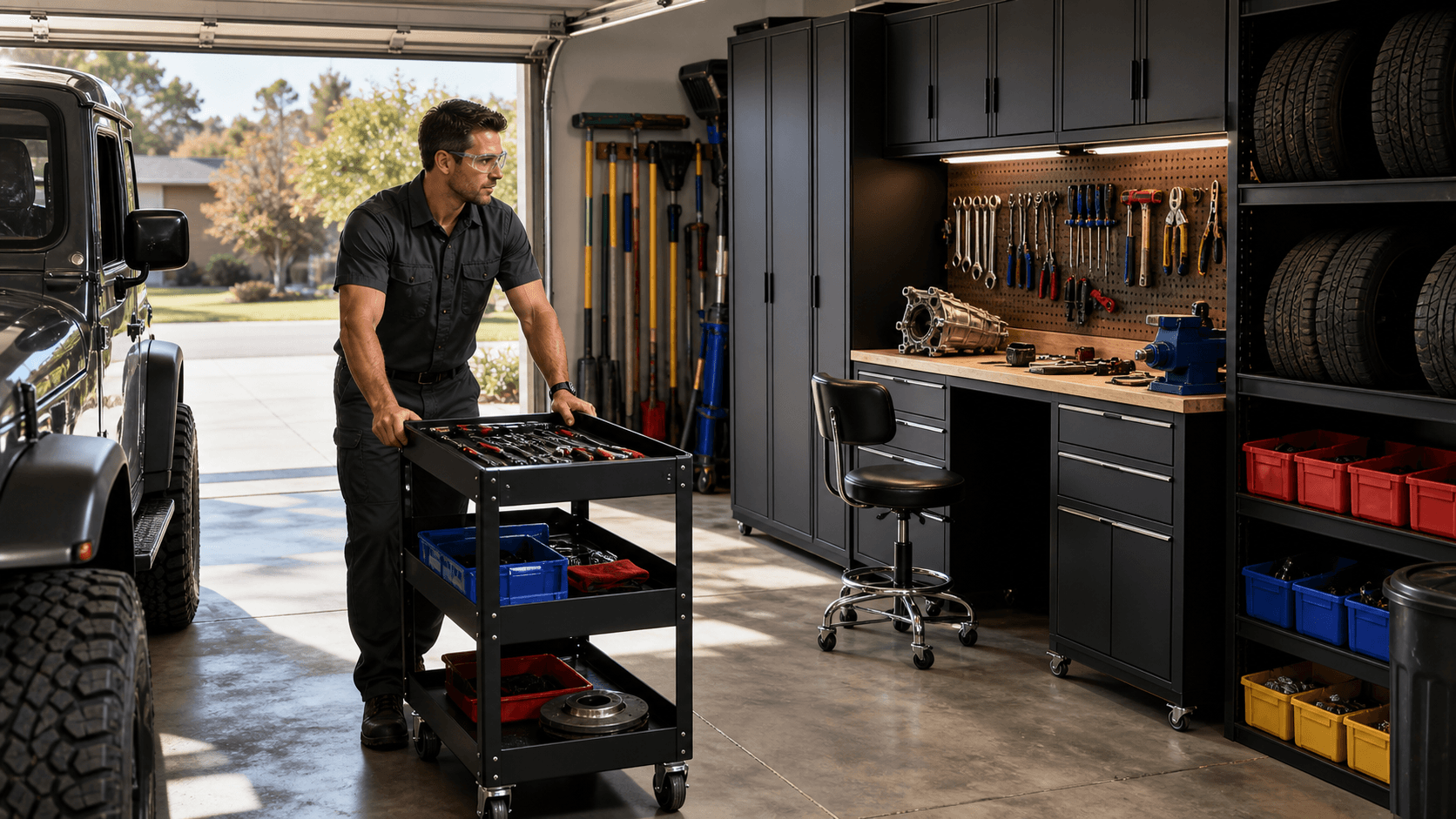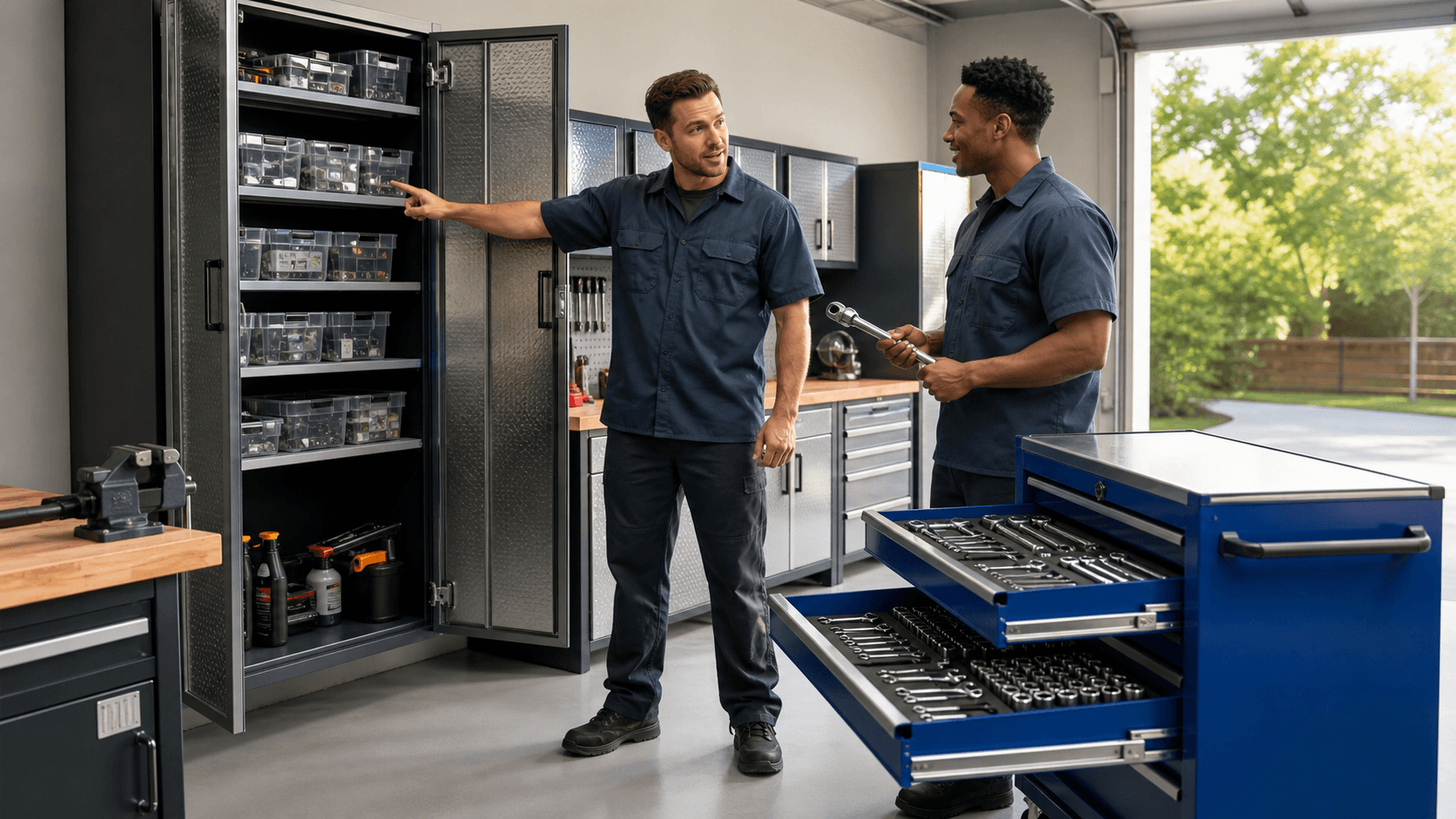
Turn Your Garage Into a Real Working Shop This Summer
A good garage cabinet or toolbox can turn weekend chaos into a smooth, simple workflow. When tools have a real home, projects move faster, the floor stays clear, and you spend less time hunting for a missing wrench.
Early summer is when everything seems to hit at once. There are car tune-ups to handle, yard equipment that needs attention, and DIY projects that keep piling up. If your tools are scattered across benches, stacked in plastic bins, or buried in flimsy shelves, the garage can start to feel like a maze. That is when the big question pops up: Is it smarter to put money into a wall-mounted garage cabinet system, a heavy-duty rolling toolbox, or both?
The right answer depends on how you actually work, how your space is laid out, and what kind of tools you own. Let us walk through the real pros and cons so you can get organized before peak summer projects and road trips hit, and your garage starts working more like a real shop.
How You Really Use Your Garage Matters Most
Before thinking about brands, colors, or drawer counts, step back and ask what your garage really is to you.
For most people, it falls into one of a few roles:
- Vehicle and maintenance hub, a place to park, do oil changes, rotate tires, and detail
- DIY workshop, focused on woodworking, metal projects, and steady home repairs
- Hybrid space, part serious shop, part family storage for bikes, sports gear, and lawn tools
Space and layout make a big difference too:
- Size and shape of the garage, single bay versus two or three bays, plus ceiling height
- Open wall space that could hold a full run of cabinets or a shorter cabinet and bench setup
- Need for mobility, like rolling tools around cars, out to the driveway, or over to a side yard
- Access points, such as house doors, steps, and windows that might limit where big pieces can go
Think about how hard you push the space. Someone who wrenches on cars several days a week has different needs than a weekend tinkerer. Ask yourself:
- How often you work in the garage during a typical week
- What you own now, from hand tools and power tools to detailing gear and diagnostic tools
- How often you clear space for a new project or rearrange cars and equipment
Once you are clear on how you really use the room, the choice between garage cabinet systems and heavy-duty toolboxes starts to make sense.
When a Garage Cabinet System Is the Smart Move
If your main goal is to get stuff off the floor and create a clean, finished wall of storage, a garage cabinet system is usually the best first step. This is especially true in garages where parking space is tight and clutter is creeping in from every side.
A strong garage cabinet setup works well when:
- You are tired of seeing clutter and want doors to hide visual mess
- You need both tall cabinets and upper cabinets for bulky bins, paint, and yard gear
- You like a built-in look that makes the whole wall feel finished and permanent
Pro-grade garage cabinets bring some real advantages:
- They turn vertical wall space into prime storage and free up floor area
- Shelves and zones help you separate automotive supplies, yard tools, and household items
- Doors that close and lock keep chemicals, sharp tools, and expensive gear safer around kids or guests
Not all cabinets are the same, so it pays to focus on quality details. Things to look for include:
- Heavy gauge steel, not thin, flimsy panels that flex when loaded
- Reinforced shelves with high weight ratings for jugs of fluids, tools, and parts
- Durable finishes that stand up to scratches, oil, and humidity in hot summers and cold winters
- Thoughtful layouts that pair cabinets with work surfaces and wall systems for a true shop feel
In many garages, a strong cabinet line along one wall becomes home base for everything that does not need to move every time you turn a wrench.
Where Heavy-Duty Toolboxes Outperform Cabinets
Garage cabinets shine for bulk storage, but a heavy-duty rolling toolbox often wins when you are deep in a project and grabbing tools every few minutes.
A serious toolbox is usually the right call if:
- You work on different sides of a vehicle and want tools to roll with you
- You own a big range of sockets, wrenches, pliers, and specialty tools
- You need fast, clear access so you are not opening cabinet doors all day
Good rolling toolboxes offer some clear advantages:
- Mobility, so you can pull tools next to the car, into the driveway, or across the shop
- Deep, full extension drawers that let you see every tool at a glance
- Strong steel and reinforced corners that hold up when loaded and moved often
- Heavy-duty casters that roll smooth even when the box is packed
There is a real difference between big box basics and heavy-duty units:
- Drawer slides with serious weight ratings, so they do not sag under socket sets
- Solid locking systems to protect tools when the garage door is open or you are away on trips
- Modular designs that let you start with a core box and add top chests or side cabinets as your set grows
For serious DIYers and pros, a good toolbox becomes the heart of the work area, holding the tools that earn their keep every time a project starts.
Garage Cabinet vs. Toolbox, which Is Right for You
Both options have strengths. Choosing between a garage cabinet and a toolbox comes down to your top priorities.
Side-by-side, here is how they compare:
- Organization, cabinets are great for broad zones, toolboxes are better for organizing by size and type
- Space efficiency, cabinets win for using wall height, toolboxes win in tight layouts that need mobile storage
- Access speed, toolboxes make daily-use tools easy to grab, cabinets are better for less-used supplies
Thinking about long-term ownership helps too. It is easy to fill cheap storage and then feel stuck. Many people are happier when they:
- Start with a small but solid cabinet run and a real heavy-duty box, then grow from there
- Put money into quality upfront instead of replacing bent, worn pieces later
- Choose storage that can move with them or fit into a future garage layout if life changes
Your lifestyle and the season play a role as well. Summer often means open garage doors, more outdoor work, and more chances for tools to wander off. Families may need safer places for chemicals and sharp tools, plus clear spots for sports and camping gear. If you think you might add a project car, new hobbies, or even a side business out of the garage, planning for growth now saves headaches later.
Build Your Ideal Setup with a Smart Hybrid Plan
For many serious DIYers, the best answer is not cabinets or toolbox, it is both. A smart hybrid layout uses each piece for what it does best.
A simple but effective approach is:
- Use a garage cabinet system for chemicals, detailing supplies, power tools, and bulk storage
- Keep your heavy-duty toolbox loaded with the hand tools you reach for all the time
- Create clear zones so oil changes, brake jobs, and woodworking each have a natural home base
Before buying anything, map out your space. Measure wall lengths, note outlets and windows, and think about where vehicles park in both hot and cold seasons. Then make a quick inventory of your tools and gear. Sort items into what needs to roll with you and what can live on the wall or in tall cabinets.
A quick sketch on paper can help you see where a cabinet run, workbench, and toolbox can sit without blocking doors or tight spots. From there, you can focus on pro-grade garage cabinets and tool storage with real load ratings, solid construction, and finishes built for real-world use. That is how we like to help people turn a cluttered space into a working garage that feels closer to a professional shop and keeps working season after season.
Transform Your Garage Into a Space You Actually Use
If you are ready to turn clutter into clean lines and smart storage, our team at Garage Gear Direct can help you choose the right garage cabinet setup for your space and budget. We will walk you through layout options, finishes, and accessories so everything has a dedicated place. Have questions or need a custom recommendation before you order? contact us and we will respond with a tailored plan.