Turn Your Garage Into a Powerhouse with LiFePO4
A LiFePO4 battery can turn a basic garage into a serious power hub for projects, storage, and backup. Instead of hunting for outlets or worrying about outages, you can have clean, steady, rechargeable power ready for whatever you are building, fixing, or storing. That matters if your garage is more than a parking spot and you rely on it for tools, equipment, and extra appliances.
At Garage Gear Direct, we focus on gear that keeps serious DIY and trade spaces productive, including power solutions built around LiFePO4 batteries. LiFePO4 stands for lithium iron phosphate, a type of lithium battery chemistry known for long life, safety, and steady power delivery. In a garage, that can mean running corded tools, keeping a freezer cold during an outage, supporting lighting and small air compressors, feeding an inverter for backup power, or integrating with a solar setup for off-grid capability.
What Makes a LiFePO4 Battery Different
Traditional garage power usually means lead-acid batteries and standard outlets from the grid. Lead-acid types, like AGM or flooded batteries, are heavy, dislike deep discharges, and tend to sag in voltage as they drain. Many common lithium-ion batteries, such as NMC or NCA types, offer more energy in a smaller package but can be more sensitive to heat and overcharging.
LiFePO4 is a different chemistry that trades some energy density for stability and long life. It has a flatter discharge curve, which means the voltage stays more consistent while the battery empties. It also tends to have lower internal resistance, so it can deliver current more efficiently, which helps your inverters and tools perform closer to their rated output for longer.
When you browse LiFePO4 product pages, you will see terms like cycles, depth of discharge, and continuous vs surge output. A cycle is one full charge and discharge. Depth of discharge, or DoD, is how much of the total capacity you actually use before charging again. Continuous output is what the battery or inverter can supply all the time, while surge output is the short burst needed to start motors, like an air compressor or fridge. In a garage, those details matter, because starting loads often spike, and repeated deep discharges can wear weaker batteries quickly.
Key Benefits of LiFePO4 for Garage Power
One of the biggest benefits of a LiFePO4 battery is lifespan. Compared to many lead-acid batteries that fade after relatively few deep cycles, LiFePO4 can handle significantly more charge and discharge cycles, especially at deeper DoD. For a busy garage where you are running power tools most days or using backup power through frequent outages, that extended life helps spread the cost over many more years of use.
LiFePO4 also offers higher usable capacity. With many lead-acid batteries, you only want to use a portion of the rated capacity before recharging, or you shorten their life. By contrast, LiFePO4 chemistry can typically be discharged to a deeper level, often in the 80 to 90 percent range, with far less impact on longevity. Because the voltage stays flatter as the battery drains, tools, inverters, and electronics see more consistent power instead of sluggish performance as the battery nears empty.
Safety is another key advantage. LiFePO4 chemistry is known for strong thermal stability and a low tendency toward thermal runaway when compared to several other lithium chemistries. Quality packs pair that chemistry with an integrated Battery Management System, or BMS, which watches for overcharge, over-discharge, short circuits, and high temperatures. For a garage that may see temperature swings, stacked gear, and heavy use, that kind of built-in protection adds peace of mind.
Smart Ways to Use LiFePO4 in Your Garage
LiFePO4-powered portable power stations work well for garages with limited outlets or where you often work outside the building. You can plug in corded tools, lights, and fans, and in some cases even welders, as long as you stay within the inverter rating. For mobile tradespeople working out of vans or trailers, swapping lead-acid house batteries for LiFePO4 reduces weight while providing longer runtime between charges, which makes jobsite days smoother.
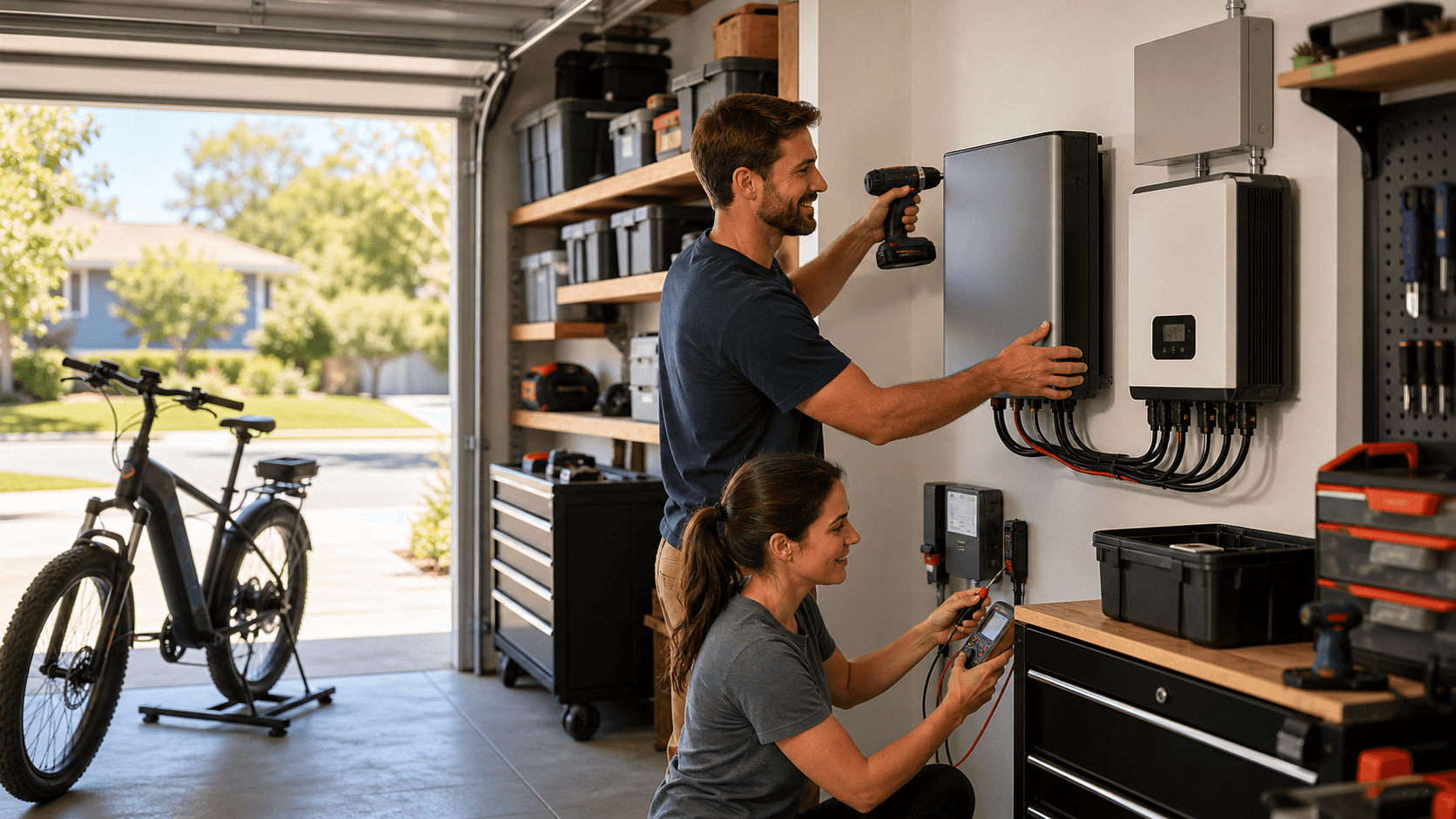
A LiFePO4 battery bank also shines for backup and off-grid power. Many garages hold extra fridges or freezers, sump pumps, and network gear that you do not want going down during an outage. Paired with a properly sized inverter and an appropriate transfer switch, a LiFePO4 system in the garage can support critical circuits, keeping food cold and water moving while lights and basic electronics stay on.
If you are interested in solar, LiFePO4 pairs naturally with rooftop or ground-mount solar near your garage. The chemistry handles regular cycling well, which is ideal for daily solar charge and discharge. For detached shops or barns where running new utility lines is expensive, a solar array feeding a LiFePO4 bank can make the structure partially or fully independent from the main house service, while still giving you reliable power for tools, lights, and small machinery.
Choosing the Right LiFePO4 Battery for Your Setup
Getting sizing right starts with your tools and loads. Add up the wattage of what you want to run at the same time, and pay attention to the starting surge needs of items like air compressors or refrigerators. Once you know the total watts, you can match an inverter that can handle both the continuous and surge requirements. For the battery, watt-hours divide by your typical load gives a rough estimate of runtime, and it is smart to factor in inverter efficiency and avoid planning to use every last watt-hour on a regular basis.
Voltage and form factor also play a role. Common choices include:
- 12V systems for smaller portable setups and light loads
- 24V systems for midsize shops and more efficient inverter operation
- 48V systems for larger whole-garage or partial home backup installations
Many LiFePO4 batteries are modular, so you can start with one battery and add more in parallel or series as your needs and budget grow.
When comparing options, it helps to look beyond just capacity. You want quality cells, a clearly specified BMS, cycle life expectations, and evidence of meaningful testing such as recognized safety certifications where available. Clear spec sheets make it easier to understand what the battery can realistically handle in a busy garage environment. At Garage Gear Direct, we focus on curating pro-grade power solutions, tools, and storage that fit serious DIY and trade use, so we pay close attention to how battery systems will stand up to demanding workspaces.
Turn Your Garage Power Plan Into Reality
LiFePO4 battery technology offers a practical upgrade over traditional lead-acid and many low-end lithium options if you depend on your garage for real work. Longer cycle life, higher usable capacity, stronger safety characteristics, and the flexibility to handle portable, backup, and solar roles all help turn the garage into a more capable power center instead of a weak link.
The next step is to look honestly at how you use your space. Do you need reliable backup for freezers and pumps, cleaner portable power for tools, or a solar-ready battery bank for a detached shop? Once you know the top one or two priorities, it becomes much easier to choose LiFePO4 batteries, inverters, and accessories that fit your tools, layout, and expectations, so your garage power finally matches the way you work.
Power Your Next Adventure With Reliable Off-Grid Energy
If you are ready to upgrade your setup with dependable backup power, we can help you choose the right LiFePO4 battery for your needs. At Garage Gear Direct, we focus on solutions that are safe, long lasting, and easy to integrate into your existing system. Reach out through our contact page and we will walk you through options, sizing, and installation questions so you can move forward with confidence.